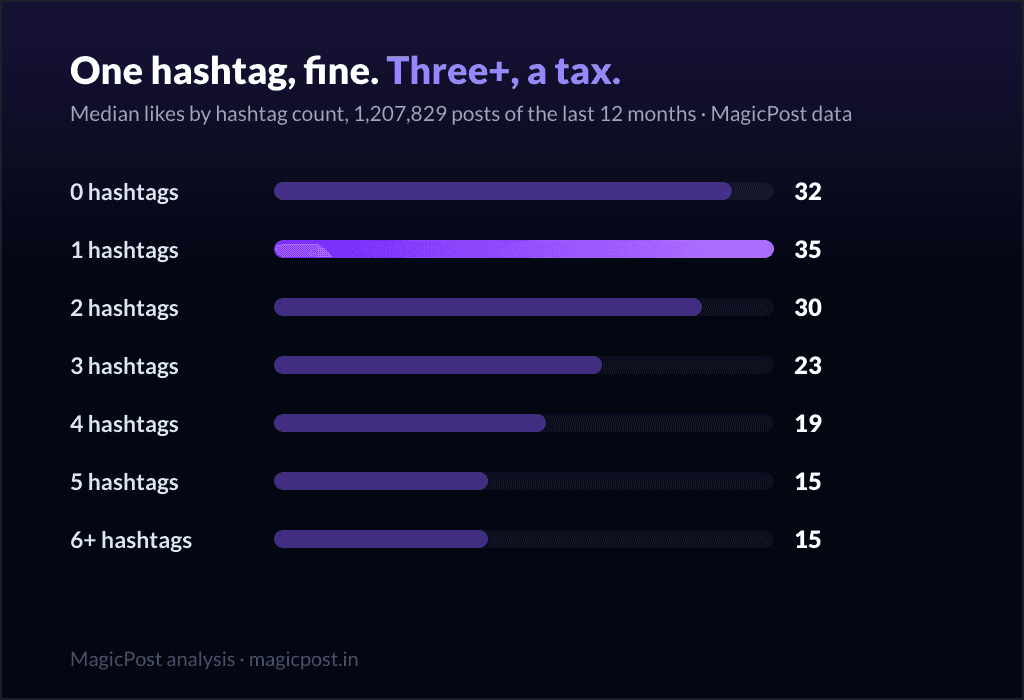
So che hai bisogno di aiuto con i tuoi hook perché hai cliccato su questo articolo, e so che il mio hook sta funzionando perché non sei ancora sceso.
Questa è la potenza di un hook che ferma lo scroll.
Su LinkedIn, hai meno di un secondo per convincere qualcuno che il tuo post vale il suo tempo. Se la tua linea di apertura non suscita curiosità, tensione, sorpresa o valore, il tuo pubblico continuerà semplicemente a scorrere.
Sotto c'è un elenco di hook interessanti che potresti voler provare:
Che cos'è un gancio di LinkedIn?
Un gancio di LinkedIn è una frase che cattura l'attenzione e fa fermare la tua rete durante lo scorrimento e interagire con il tuo post.
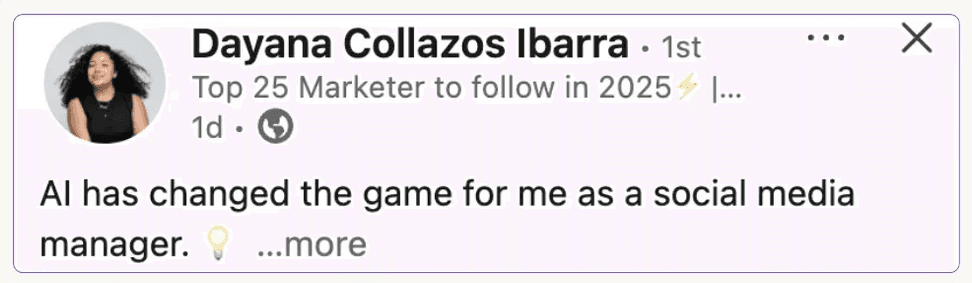
Un buon gancio crea curiosità, genera emozione o stabilisce autorità offrendo un valore immediato. Può essere una domanda con cui ci si può identificare, un fatto inaspettato o una statistica di settore.
In ogni caso, il tuo gancio è quello che convince la tua rete di LinkedIn a interagire o a continuare a scorrere.
Quindi, come puoi scrivere i migliori ganci per LinkedIn?
3 Suggerimenti per Scrivere Hook Coinvolgenti su LinkedIn
1. Rendi il Tuo Hook di LinkedIn Relazionabile
Per far sì che le persone interagiscano con il tuo contenuto, parla delle loro sfide, esperienze o obiettivi. Considera il tuo pubblico di riferimento e ciò che gli interessa di più.
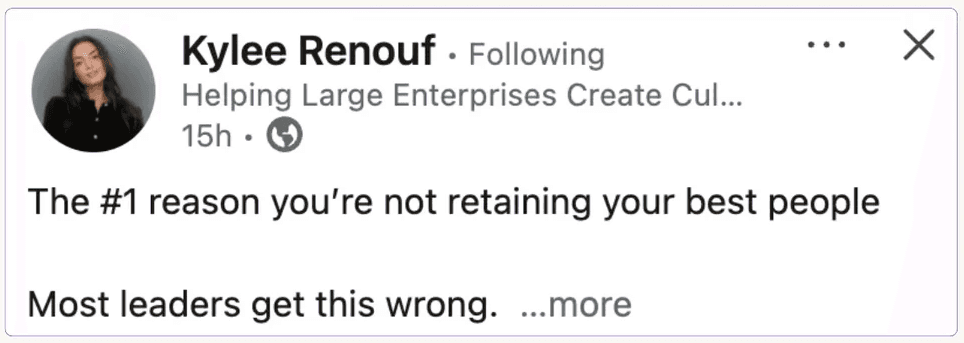
Stanno cercando di far crescere la loro attività, ottenere un nuovo lavoro o fare networking con i leader del settore?
2. Crea Curiosità
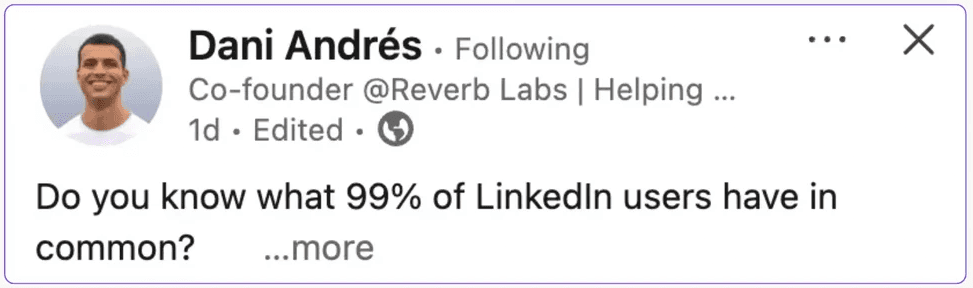
Il tuo hook di LinkedIn dovrebbe lasciare il tuo pubblico desideroso di saperne di più. Prometti qualcosa di interessante senza rivelare la risposta completa.
3. Sii Specifico
Hook vaghi su LinkedIn non attireranno l'attenzione di nessuno.
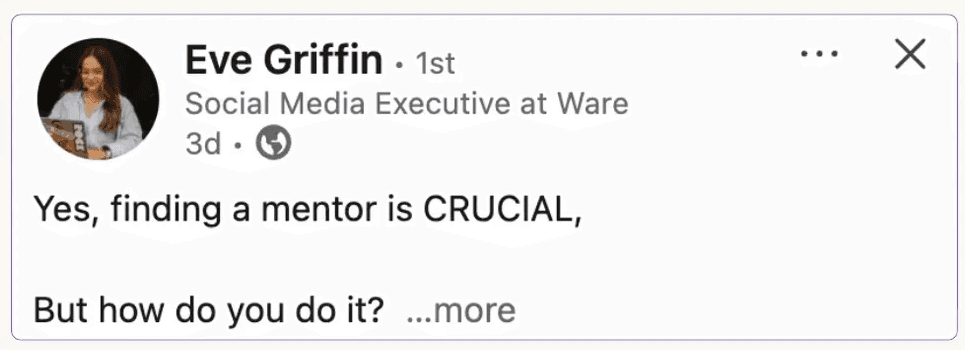
Stabilisci aspettative chiare e dai al tuo pubblico un motivo per cliccare su “Vedi di più.” Mostra il valore del tuo post utilizzando numeri o statistiche.
Usa il Generatore di Hook di LinkedIn di MagicPost
Hai difficoltà a trovare un hook per LinkedIn che renda il tuo post virale?
Puoi utilizzare il generatore di hook gratuito di MagicPost per scrivere hook che attireranno l'attenzione della tua rete.
Tutto ciò che devi fare è inserire il tuo argomento e lasciare che l'AI di MagicPost scriva l'hook per far sì che le persone vogliano leggere di più.
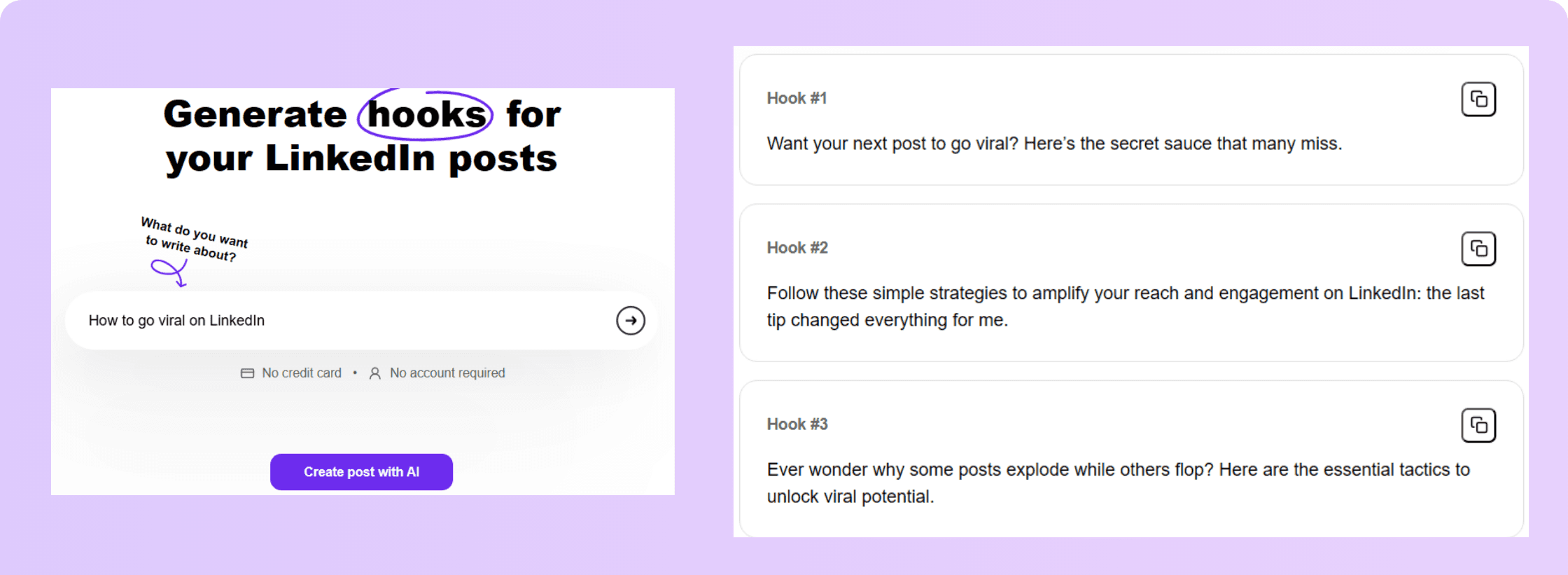
La parte migliore? È 100% gratuito e puoi generare quanti più hook vuoi senza dover effettuare registrazioni.
20 Esempi di Hook per LinkedIn per Maggiore Coinvolgimento
Non sei sicuro di quale hook utilizzare per il tuo prossimo post su LinkedIn? Dai un'occhiata a questi 20 tipi di hook per LinkedIn per far diventare virale il tuo post.
1. L'Hook della Domanda
Hai mai inviato una richiesta di connessione su LinkedIn e non hai mai ricevuto risposta?
Perché funziona: Una domanda forte suscita immediatamente curiosità e fa riflettere i lettori sulle proprie esperienze.
Quando usarlo: Usalo per mettere in evidenza una lotta comune o per introdurre un argomento che interessa il tuo pubblico.
2. L'Hook Statistico
Lo sapevi che il 70% degli utenti di LinkedIn non interagisce mai con i post?
Perché funziona: Numeri sorprendenti catturano l'attenzione e danno credibilità al tuo messaggio.
Quando usarlo: Usalo quando presenti informazioni supportate da dati o enfatizzi la portata di un problema.
3. L'Hook della Citazione
“L'unico modo per fare un ottimo lavoro è amare ciò che fai.” – Steve Jobs
Perché funziona: Le citazioni attingono a saggezza familiare e creano rapidamente risonanza emotiva.
Quando usarlo: Usalo quando condividi lezioni, riflessioni o cambi di mentalità ispirati dalla citazione.
4. L'Hook Sfida
Il networking tradizionale è morto.
Ecco perché credo che le connessioni online siano il futuro.
Perché funziona: Un'affermazione audace e provocatoria crea attrito che ferma lo scroll.
Quando usarlo: Usalo per sfidare le credenze comuni o per introdurre una nuova prospettiva non convenzionale.
5. L'Hook Divertente
Perché i scheletri non si combattono tra loro? Non hanno il coraggio.
Perché funziona: L'umorismo rompe la monotonia del feed e fa sì che i lettori ti apprezzino subito.
Quando usarlo: Usalo per aggiungere personalità o per passare da uno scherzo a un'intuizione aziendale significativa.
6. L'Hook Motivante
Il successo non deriva da ciò che fai occasionalmente, ma da ciò che fai costantemente.
Ecco come rimanere costante e fare progressi reali.
Perché funziona: Frasi motivazionali scatenano ispirazione e coinvolgimento emotivo.
Quando usarlo: Usalo per incoraggiare buone abitudini, disciplina o strategie di crescita.
7. L'Hook della Storia Personale
Ho appena completato un grande progetto che ha richiesto mesi di duro lavoro.
Perché funziona: Storie autentiche costruiscono fiducia e relatabilità.
Quando usarlo: Usalo quando condividi lezioni da vittorie, fallimenti o momenti decisivi personali.
8. L'Hook “Come-Fare”
Vuoi migliorare il tuo profilo LinkedIn in soli 5 minuti?
Perché funziona: Una chiara promessa di valore pratico fa sì che le persone clicchino su “Mostra di più”.
Quando usarlo: Usalo quando dai istruzioni passo dopo passo o analizzi un processo.
9. L'Hook Risorsa
Hai difficoltà nella gestione del tempo? Questo ebook mi ha aiutato a aumentare la mia produttività.
Perché funziona: Offrire una risorsa preziosa ti posiziona come utile e competente.
Quando usarlo: Usalo quando condividi strumenti, modelli, o guide che raccomandi personalmente.
10. L'Hook che Demolisce i Miti
Tutti dicono che devi postare ogni giorno per crescere su LinkedIn.
Ma io ho fatto crescere la mia rete con solo alcuni post a settimana.
Perché funziona: Svelare un mito sfida ciò che le persone pensano di sapere, catturandone l'attenzione.
Quando usarlo: Usalo per correggere malintesi o introdurre un approccio più efficace.
11. L'Hook dello Studio di Caso
Abbiamo testato 3 strategie di coinvolgimento su LinkedIn. Una ha avuto un impatto superiore del 300% rispetto alle altre.
Perché funziona: Risultati reali creano immediatamente curiosità e credibilità.
Quando usarlo: Usalo per mostrare esperimenti, successi dei clienti o risultati basati su dati.
12. L'Hook Problema-Soluzione
Ti senti sopraffatto dalla tua lista di cose da fare?
Perché funziona: Far emergere un punto dolente fa sentire immediatamente compresi i lettori.
Quando usarlo: Usalo quando offri una soluzione pratica a un problema comune.
13. L'Hook “E Se”
E se potessi raddoppiare il tuo coinvolgimento su LinkedIn senza postare 3 volte a settimana?
Perché funziona: “E se” suscita immaginazione e curiosità riguardo a nuove possibilità.
Quando usarlo: Usalo per introdurre innovazioni, scorciatoie o strategie inaspettate.
14. L'Hook “Questo o Quello”
Post brevi e incisivi o articoli più lunghi e approfonditi?
Perché funziona: Contrasti suscitano dibattiti e incoraggiano commenti.
Quando usarlo: Usalo quando confronti strumenti, strategie o tendenze per stimolare il coinvolgimento.
15. L'Hook FOMO
Tutti stanno parlando dell'ultimo aggiornamento dell'algoritmo di LinkedIn.
Perché funziona: Il FOMO spinge le persone a restare informate e a non perdere l'opportunità.
Quando usarlo: Usalo per discutere tendenze, aggiornamenti o cambiamenti importanti che il tuo pubblico dovrebbe conoscere.
16. L'Hook delle Tendenze
La crescita degli strumenti AI sta trasformando la creazione di contenuti.
Rimanere al passo con questa tendenza ti dà un vantaggio competitivo.
Perché funziona: Le tendenze attraggono attenzione perché le persone vogliono rimanere rilevanti.
Quando usarlo: Usalo quando discuti spostamenti di settore o nuove opportunità.
17. L'Hook Dietro le Quinte
Ti sei mai chiesto come progettiamo prodotti innovativi?
Perché funziona: Condividere il processo costruisce trasparenza e fiducia.
Quando usarlo: Usalo quando presenti flussi di lavoro, cultura del team o progetti in fase di sviluppo.
18. L'Hook di Accelerazione
Ci sono voluti 3 anni per padroneggiare questa strategia.
Te la spiegherò in un post su LinkedIn.
Perché funziona: Promettere una scorciatoia attrae immediatamente interesse.
Quando usarlo: Usalo quando fornisci risultati rapidi o metodi semplificati.
19. L'Hook Emotivo
Le mie mani tremavano. Non potevo credere che stesse accadendo...
Perché funziona: L'emozione è uno dei più forti attrattori di attenzione.
Quando usarlo: Usalo per storie vulnerabili, grandi svolte o momenti drammatici.
20. L'Hook di Annuncio
Finalmente è qui! Dopo 3 anni di sviluppo del prodotto, siamo entusiasti di lanciare...
Perché funziona: Grandi notizie creano eccitazione e curiosità.
Quando usarlo: Usalo per lanci, aggiornamenti importanti o traguardi personali significativi.
Conclusione
Ecco qua, 20 frasi accattivanti per LinkedIn per catturare l'attenzione, stimolare l'interazione e rendere i tuoi post impossibili da ignorare.
Ora è il tuo turno: scegli una frase, aggiungi il tuo tocco unico e guarda le tue notifiche prendere vita.
Short first lines win
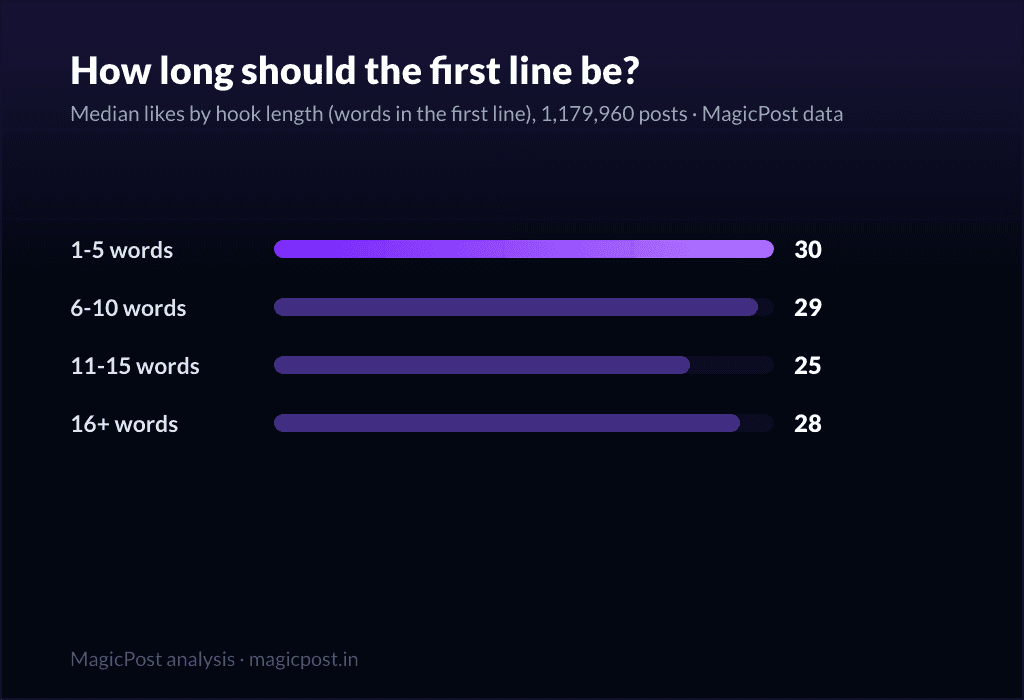
First line length | Posts measured | Median likes |
1 to 5 words | 144,760 | 30 |
6 to 10 words | 436,663 | 29 |
11 to 15 words | 280,014 | 25 |
16+ words | 318,523 | 28 |
The shortest first lines win: 1 to 5 words earn 30 median likes, and it stays high through 10 words (29), dips in the 11-to-15 band (25), and recovers slightly past 16 words (28, often the start of a longer narrative open). Punchy beats paragraph. The first line is a door, not the room. Make it small enough to walk through.
Put the three findings together and the rule writes itself: a short, specific statement beats a long, vague question. That is the opposite of the standard hook advice, and it is what 1.2 million posts show.
Write hooks that sound like you, not like a template. The MagicPost AI post generator drafts openers in your own voice and tone, and it already writes with these patterns in mind: short first lines, specifics over vague questions, no engagement-bait.
How this fits the rest of the anatomy
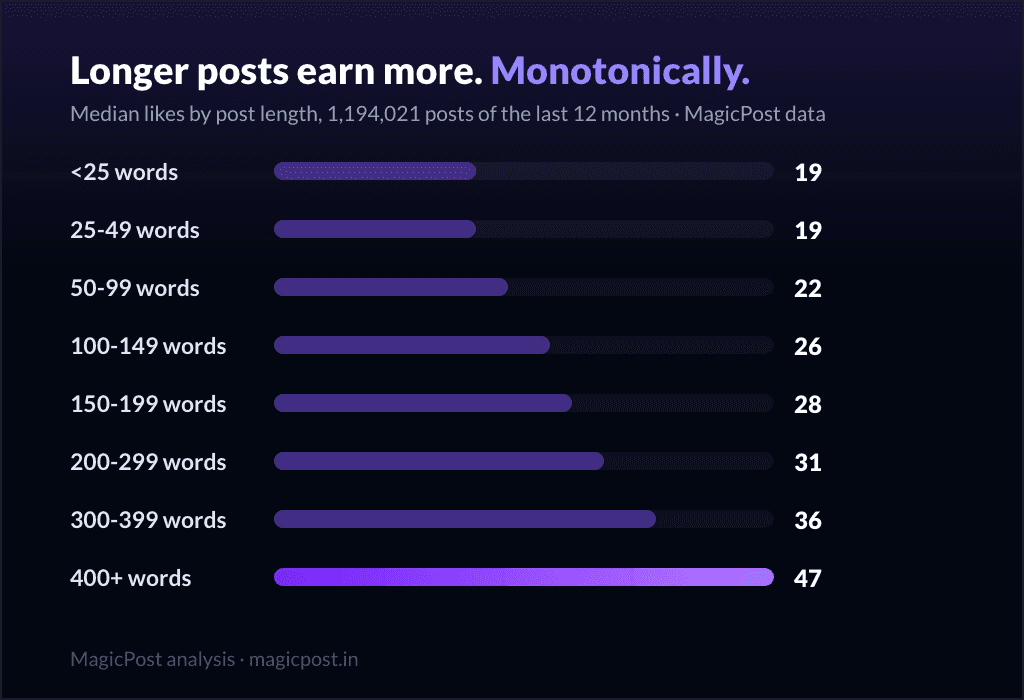
The hook does not work alone. A great first line still needs a post worth the click behind it (longer, structured text outperforms short takes in every length band we measured), and the format and the algorithm's other levers set the ceiling the hook lets you reach.
Even the opener emoji plays a part: the one marker that clears the "see more" line is worth choosing on purpose, which our LinkedIn emoji data breaks down. The hook gets the read; everything else keeps it.
20 LinkedIn hook examples, grouped by what works
Now the craft. The data tells you the shape of a winning first line (short, specific, rarely a question). It cannot write the line for you.
So here is a working library, grouped by type, with the strongest patterns first and the question-style openers flagged for what the data says about them. These are examples to adapt in your own voice, not measured templates. (Want to see hooks in the wild instead of on a page? You can browse 2M+ real posts and study how top creators open.)
Number and result hooks (the overperformers)
The data's favorite. Open with a specific, countable claim:
The data point. "We tested 3 LinkedIn engagement strategies. One had 300% more impact than the others."
The statistic. "70% of LinkedIn users never engage with a single post. The other 30% do three things in common."
The fast-track. "It took me 3 years to learn this. I will give it to you in one post."
The case study. "I rewrote one cold email. Reply rate went from 4% to 19%."
The how-to with a number. "Improve your LinkedIn profile in 5 minutes. Here are the 5 fixes."
Contrarian and myth-busting hooks
A bold statement that creates friction. Statements, not questions, so they hit the brevity rule too. (The best of these puncture a real LinkedIn myth your audience half-believes.)
The challenge. "Traditional networking is dead. Online connections are the future."
The myth-buster. "Everyone says you must post daily to grow. I grew with two posts a week."
The unpopular take. "Your cold outreach is fine. It is the offer underneath it that's losing."
The reframe. "You do not have a productivity problem. You have a priorities problem."
Story and confession hooks
Open mid-scene. Emotion and vulnerability earn the read:
The cold open. "My hands were shaking. I read the email three times."
The confession. "I got fired on a Tuesday. It was the best thing that happened to my career."
The personal win. "I just wrapped a project that took 9 months. Here is what almost killed it."
The turning point. "Five years ago I had 200 followers and zero clients. One change fixed both."
Data point and trend hooks
Anchor to something concrete and current:
The trend. "AI tools just changed content creation for good. Most teams are still posting like it is 2021."
The behind-the-scenes. "We ship a product every 6 weeks. The process fits on one page."
The resource. "This one template cut my proposal time in half. Stealing it is encouraged."
The announcement. "After 3 years of building, it is finally live."
Question hooks (use sparingly, given the data)
These are the ones the data says underperform by 34%. They are not banned, but make them earn their place: tie them to a sharp, specific tension, and never use a generic "Thoughts?" opener.
The relatable struggle. "Ever sent a connection request and heard nothing back?" (Use only when the pain is sharp and universal.)
The "what if." "What if you could double your engagement posting half as often?" (Works best when the rest of the post actually delivers the proof.)
The problem call-out. "Drowning in a to-do list that never ends?" (Pair it immediately with a concrete fix, or it reads as bait.)
Pick a hook, rewrite it in your own words and your own numbers, and keep the first line short. The data is on the side of the writers who do.
Where this data comes from
The measured numbers here are ours, run on our own corpus rather than a cited study. Figures: 1,179,958 LinkedIn posts published over the last 12 months (reshares, deleted and excluded posts filtered out), grouped by a property of the first line, compared on median engagement. "Opens with a question" means the first line of the post contains a question mark; "contains a number" means the first line contains a digit; hook length counts the words in the first line. The follower-band control re-runs the question split inside each band (under 5k, 5k to 50k, 50k+). We use medians throughout, not means, so a few viral posts cannot tilt any cell. The hook examples are craft, offered as patterns to adapt, not measured templates. The figures reflect our June 2026 pull and shift as the corpus grows.
FAQ
Cos'è una hook su LinkedIn?
Per scrivere un gancio accattivante per LinkedIn, inizia con una frase breve che crea emozione o curiosità. Usa statistiche, domande riconoscibili o fatti sorprendenti.
Le hook a domanda funzionano su LinkedIn?
I migliori ganci per LinkedIn sono quelli che catturano rapidamente l'attenzione del tuo pubblico e suscitano curiosità. I ganci per LinkedIn che performano meglio includono una domanda, una statistica, una storia o una dichiarazione audace.
Che tipo di hook su LinkedIn ottiene più engagement?
Un hook di LinkedIn diventa virale se suscita curiosità, sorprende o condivide un'opinione forte che fa reagire, commentare o condividere le persone.
Quanto dovrebbe essere lunga una hook su LinkedIn?
Short. First lines of 1 to 5 words earn the most engagement (30 median likes), and performance stays high through 10 words (29), then dips for longer openers (25 for 11 to 15 words). The first line is a door, not the room: keep it small enough to walk through, then let the post deliver.
Su LinkedIn dovrei aprire con un dato o con una storia?
Both beat a question. A first line with a number earns 35 median likes versus 26 without, and a short, specific statement (a result, a confession, a bold claim) consistently outperforms a vague opener. A story works well as a "cold open" that drops the reader mid-scene. Pick whichever you can make specific in five words or fewer.
> Put it to work. MagicPost pulls your drafting, scheduling and analytics into one place, hooks included, so your first lines perform instead of guessing.