Content Creation

Saad Mouaouine
Laatst bijgewerkt: 27 feb 2026
Most people treat LinkedIn like a broadcasting channel. They post when they feel inspired, go quiet for two weeks, and wonder why nothing compounds. A content marketing strategy changes that entirely.
The difference between creators who build real audiences on LinkedIn and those who fade out isn’t talent ideas. It’s having a deliberate system: the right topics, consistent formats, a realistic cadence, and a way to measure whether it’s working.
This content marketing strategy guide walks you through every component of a LinkedIn content marketing strategy, from defining your audience to building the execution system that keeps the whole thing running.
Short Answer: A LinkedIn content marketing strategy is a system, not a mood board. Define a specific audience, build 3 to 5 content pillars, balance your post types (40% thought leadership, 30% trends, 20% stories, 10% promotion), and post 3 to 5 times per week.
Format matters: polls and carousels travel furthest, text posts the least. Results compound at 3 to 6 months, but only if you have a repeatable workflow that doesn't depend on motivation. Track engagement quality and inbound actions, not just likes.
What Is a Content Marketing Strategy?
A content marketing strategy is a plan for creating and distributing content that attracts a specific audience and moves them toward a business goal. On LinkedIn, that means deciding what to post, who it’s for, what formats to use, when to publish, and how to measure whether it’s working.
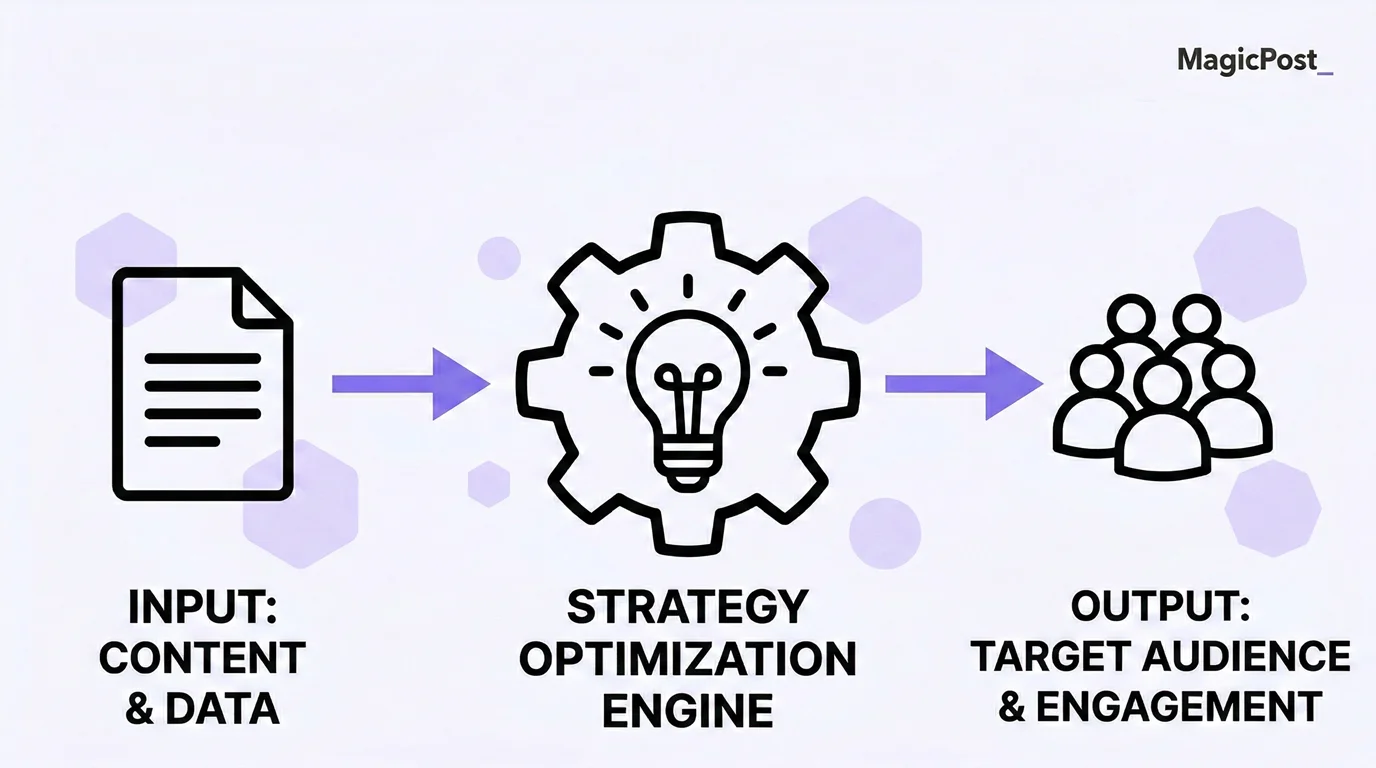
The key word is “system.” A strategy isn’t a content calendar, a list of post ideas, or a mood board. It’s the framework that connects your expertise to your audience’s needs consistently enough and for long enough that trust builds and opportunities follow.
Why Is LinkedIn the Right Platform for a Content Marketing Strategy?
LinkedIn is the right platform for a content marketing strategy because the audience is different.
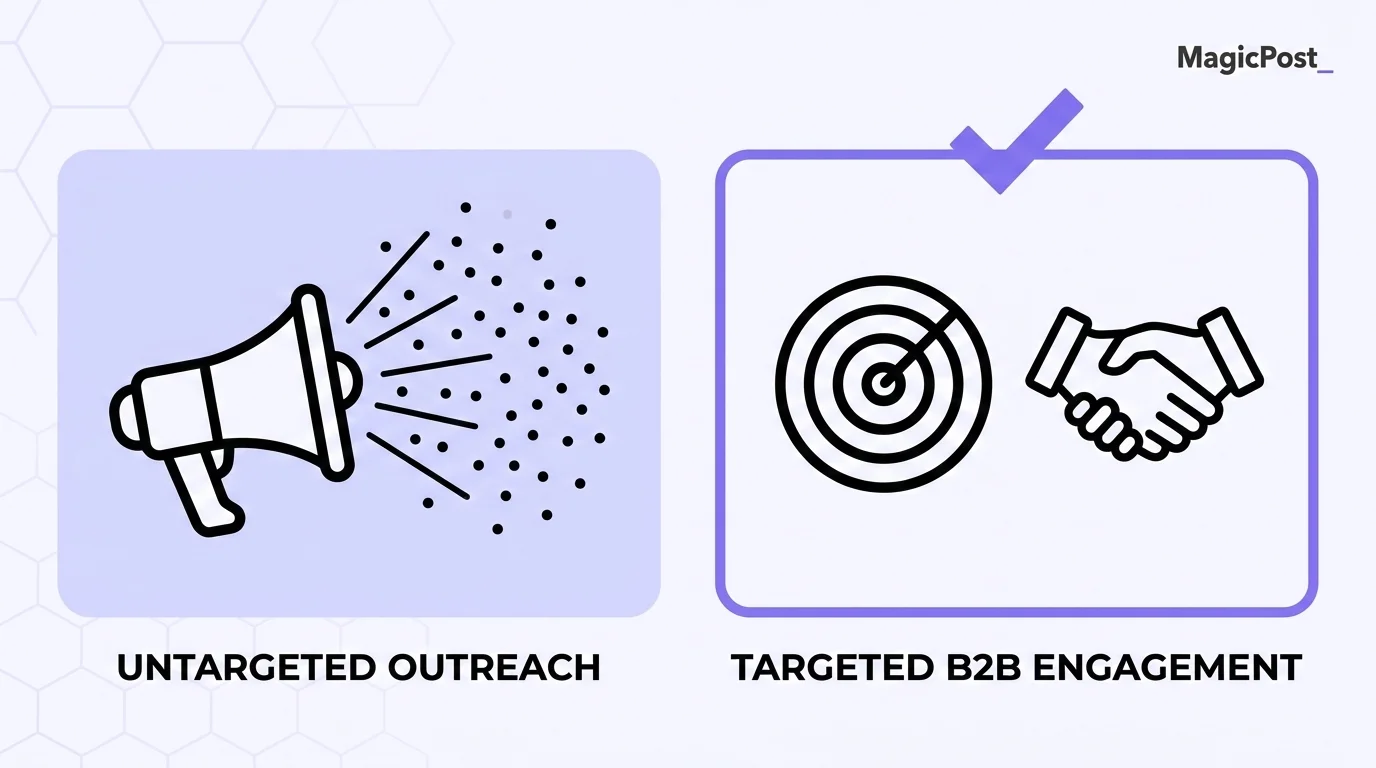
According to Sprout Social’s 2025 LinkedIn statistics, 4 out of 5 LinkedIn members drive business decisions, and the platform’s audience has twice the buying power of the average web audience.
Put simply, you’re not posting into a general social feed. You’re publishing directly into the professional networks of the people most likely to hire you, buy from you, or refer you.
The platform’s B2B performance is hard to ignore:
97% of B2B marketers use LinkedIn for content marketing
62% say it produces leads for them
15–40% of all B2B leads from social media come from LinkedIn
There’s also a structural advantage for consistent creators. According to 6sense’s 2024 B2B Buyer Experience Report, B2B buyers complete roughly 70% of their purchasing journey before ever contacting a vendor.
→ This means they’re forming opinions and shortlisting solutions long before anyone sends an outreach message. In short, content is how you get into that shortlist before the decision is made.
What Are the Main Components of a LinkedIn Content Marketing Strategy?
A solid LinkedIn content strategy has five components. If you miss one, the system weakens. If you get all five working together, the results compound.
Component | What it means in practice |
|---|---|
Target audience | Who you’re creating content for and what they actually care about |
Content pillars | The 3 to 5 topic areas you’ll consistently post about |
Content mix | The balance of formats and post types across your calendar |
Posting cadence | How often you publish and at what times |
Measurement | How you track whether the strategy is working and what to adjust |
How to Define Your Target Audience on LinkedIn?
To define your target audience on LinkedIn, you should start specific, not broad.

Note the difference:
“Marketing professionals” is not an audience.
“B2B SaaS marketers at companies with 50 to 200 employees who are responsible for content but don’t have a dedicated team” is an audience.
Too define yours, answer four questions:
What job titles do they hold, and what industry are they in?
What problems are they actively trying to solve that your work helps with?
What content do they already engage with on LinkedIn?
What would make them stop scrolling, read your post, and think about you?
The last question matters most. LinkedIn’s algorithm prioritizes content that generates meaningful engagement from relevant people.
A post that sparks five genuine comments from your audience will outperform one with fifty generic reactions from people who’ll never buy from you.
Pro Tip: MagicPost’s Inspiration Library feature is useful here. You can filter 500,000+ viral LinkedIn posts by niche, format, engagement level, and date, so you can see what’s already working with the audience you’re trying to reach before you create a single post. See also How to Create Engaging Content on LinkedIn.
What Content Pillars Should You Build Your Strategy On?
Content pillars are the recurring topic areas your posts will rotate through. Three to five is the right number for most creators.
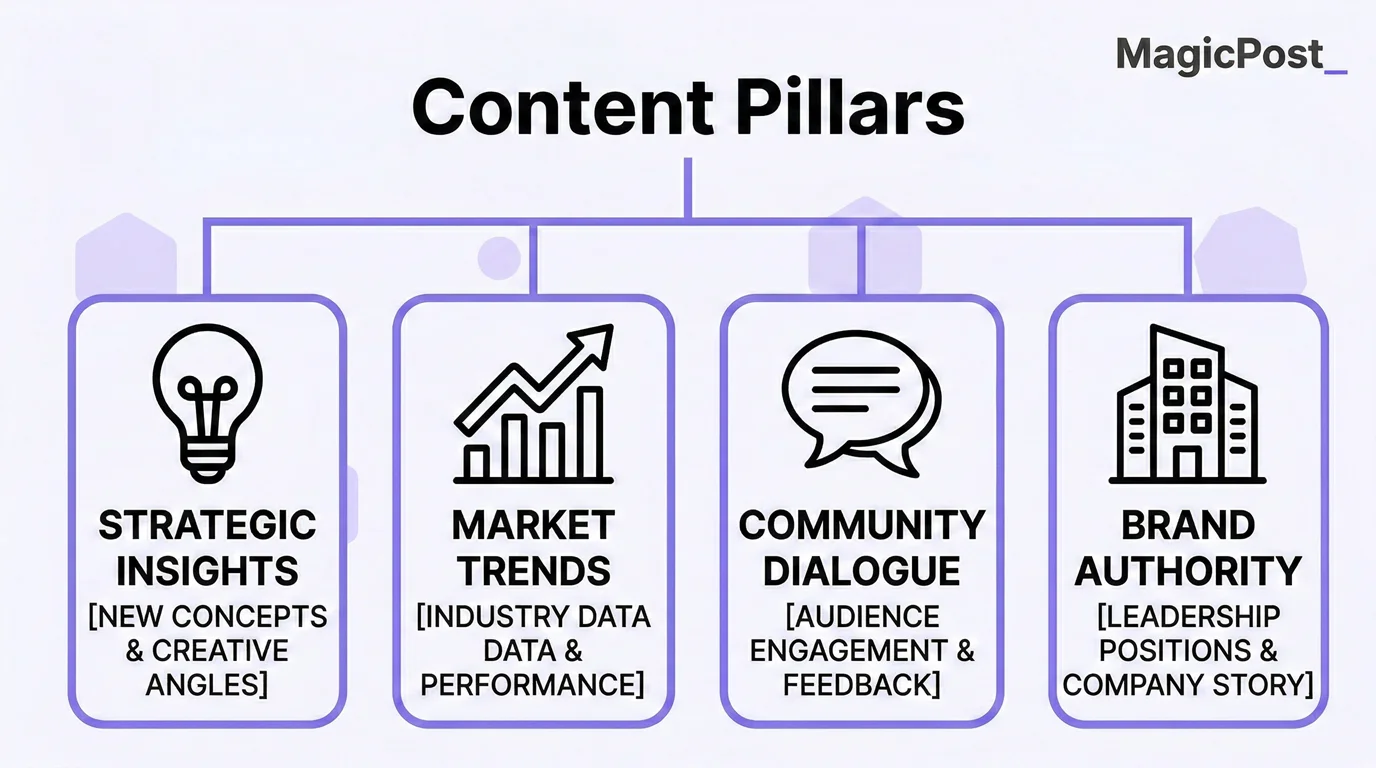
Too few and your content feels repetitive; too many and you lose topical focus, which matters more than most people realize.
LinkedIn's algorithm builds a picture of your expertise over time. According to AuthoredUp’s analysis of over 620,000 LinkedIn posts, posting consistently about a defined topic area increases the likelihood that the algorithm will distribute your content to the right audience.
Here are a few examples of how pillars might look across different profiles:
Profile Type | Example content pillars |
|---|---|
Independent consultant | Client lessons, industry trends, frameworks, personal stories, occasional offers |
SaaS founder | Product thinking, team building, startup realities, market commentary, case studies |
Agency owner | Client results, process insights, industry news, hiring and culture, service education |
B2B marketer | Campaign strategy, channel performance, creative thinking, industry data, career lessons |
For a deeper guide to building a coherent content approach, check out LinkedIn Posting Strategy.
What Is the Right Content Mix for a LinkedIn Strategy?
Your content mix has two dimensions: the type of posts you publish and the formats you use. Both matter.
Post Types: What You Say
A widely used practitioner framework for LinkedIn content breaks your posts into four categories:
Post type | Share | What it looks like |
|---|---|---|
Thought leadership | 40% | Opinions, frameworks, hard-won lessons, contrarian takes on your industry |
Industry trends | 30% | News reactions, data commentary, observations about what’s shifting in your field |
Personal stories | 20% | Behind-the-scenes, failures, wins, process posts that humanize your work |
Promotion | 10% | Your product, service, offer, or a direct CTA |
The 10% promotional ceiling is worth taking seriously. LinkedIn’s algorithm actively reduces reach on posts it identifies as overtly sales-focused. One promotional post in ten keeps your distribution healthy while still giving you regular opportunities to convert.
Formats: How You Say It
Format affects reach as much as content does. Each format has different algorithmic weight and audience appeal.
AuthoredUp’s 2025 analysis ranks formats by reach multiplier (how much further a post travels compared to the baseline). The results may surprise you:
Format | Reach multiplier | Strengths | Best used for |
|---|---|---|---|
Poll | 1.64x | Top-performing format, highest relative distribution | Industry questions, audience research, debate topics. Use sparingly to avoid appearing spammy |
Document/Carousel | 1.45x | High engagement, saves, and shares | Frameworks, step-by-step guides, data breakdowns |
Image post | 1.18x | Visual hook, higher comment rate than text | Quotes, stats, infographics, behind-the-scenes photos |
Video | 1.10x | Strong dwell time signal, stable performance | Explanations, talking-head insights, behind-the-scenes |
Text post | 0.88x | Easy to write, highly personal, best for voice and opinion | Thought leadership, stories, hot takes |
Note: Absolute reach dropped across all formats year-over-year, so the multipliers reflect relative performance, not raw numbers.
A realistic week might rotate across two or three formats. You don’t need to master all four at once. Pick the ones that suit how you think and communicate, and add others once your baseline is established.
For more on formats and how to write posts that perform, check out How to Write LinkedIn Posts and LinkedIn Hooks: How to Stop the Scroll.
How Often Should You Post as Part of Your LinkedIn Content Strategy?
Research consistently points to 3 to 5 posts per week as the cadence that places you in the top 10% of active LinkedIn creators. Only 7.1% of LinkedIn’s one billion users post consistently, which means regular creators already have a structural advantage over the vast majority of the platform.
That said, the right cadence is the one that you can actually sustain at quality. A rushed post published every day does less for your strategy than a thoughtful post published three times a week. Two important rules:
Never post twice within a 24-hour window. LinkedIn’s algorithm assigns less reach to a newer post if a previous one is still gaining traction.
Consistency matters more than frequency. A steady 3x per week for six months outperforms a burst of daily posting followed by a two-week gap every time.
For details on frequency and how to scale up sustainably, check out Best Frequency to Post on LinkedIn.
How to Turn a Content Strategy Into a Working System?
This is where most content strategies fall apart. A strategy document sitting in Notion doesn’t post itself. The execution gap is the distance between knowing what to do and actually doing it consistently, week after week, when you have fifteen other things competing for your attention.
Closing that gap requires a simple, repeatable workflow. Here’s one that works:
Set a weekly slot for batching ideas. Twenty to thirty minutes, once a week, using your content pillars as prompts. Don’t try to come up with ideas on the day you need to write.
Draft in batches, not one post at a time. Write two or three posts in a single session. Batching reduces cognitive load and keeps quality more consistent.
Schedule everything in advance. Once posts are drafted, assign each one a date and time and let a scheduling tool handle publication. Don’t resort to manual reminders or copy-pasting at 9 a.m.
Do a weekly five-minute review. Check what’s coming up, fill any gaps, and note which recent posts outperformed. That data feeds back into your next batch of ideas.
MagicPost’s Idea Generator produces six tailored post ideas per theme. The AI Content Creator drafts posts in your tone for you to review and edit. Once the post is ready, you pick a date and time and the platform publishes automatically, including recommending optimal posting windows based on your audience’s activity data.
Here’s how that compares to a fully manual approach:
Step | Manual workflow | With MagicPost |
|---|---|---|
Idea generation | ❌ Brainstorm from scratch each session | ✅ AI generates six ideas per theme in seconds |
Writing | ❌ 30 to 60 minutes per post | ✅ AI drafts in seconds, you review and refine |
Scheduling | ❌ Phone reminder, manual copy-paste to LinkedIn | ✅ Pick a date and a time, MagicPost publishes automatically |
Timing | ❌ Guess or check generic best-time articles | ✅ MagicPost recommends times based on your audience data |
Consistency | ❌ Depends on motivation and free time | ✅ Systematic, scheduled, and runs in the background |
Performance review | ❌ Manual export, separate spreadsheet | ✅ Built-in analytics inside the same platform |
How to Measure Whether Your Content Marketing Strategy Is Working?
The most common mistake is tracking vanity metrics: impressions go up, likes go up, and you feel like things are working, while none of it connects to actual business outcomes.
A better framework tracks three levels:
Visibility: impressions, reach, and follower growth rate. Are people seeing your content?
Engagement quality: comments (especially substantive ones), saves, shares, and engagement rate. Are people genuinely responding?
Business impact: profile visits after posting, inbound DMs, website referral traffic. Is it translating into real opportunity?
LinkedIn’s native analytics cover the first two levels. Connecting the third requires paying attention to who’s reaching out and using UTM parameters on any links you share so you can attribute website traffic back to specific posts.
For a full breakdown of what to track and the benchmarks to compare against, check out How to Measure Content Performance on LinkedIn.
What Are the Most Common LinkedIn Content Strategy Mistakes?
Knowing what to avoid saves you as much time as knowing what to do, so pay attention to these common mistakes:
Starting too broad. Trying to appeal to everyone produces content that resonates with no one. The more specific your audience and pillars, the stronger your engagement.
Optimizing for likes instead of leads. A post with 200 likes from random accounts is less valuable than one with 20 comments from people in your target market.
Posting without reviewing. Without a monthly look back at your top and bottom performers, you’re flying blind. Your analytics are the only honest feedback you have.
Quitting before it compounds. LinkedIn content strategy takes time. Most creators who see real results have been posting consistently for three to six months minimum. The algorithm rewards patience.
Treating every post as a sales pitch. LinkedIn users scroll past promotional content fast. The 10% rule exists for a reason.
Ready to Build Your LinkedIn Content Marketing Strategy?
A LinkedIn content marketing strategy is only as strong as the system behind it. The framework matters, but execution is what actually builds the audience, earns the trust, and generates the opportunities.
MagicPost gives you the tools to close the gap between strategy and execution. Generate ideas, draft posts with AI assistance, schedule them at optimal times, and track what’s working, all in one platform built specifically for LinkedIn.
Try MagicPost for free; no credit card is required. Start your free trial and go from content strategy to scheduled posts in a single session.
Veelgestelde vragen
What is a content marketing strategy?
A content marketing strategy is a plan for creating and distributing content that attracts a specific audience and drives a business goal. On LinkedIn, it means defining your audience, your content pillars, your formats, your posting cadence, and how you measure success.
Is LinkedIn good for content marketing?
Yes, particularly for B2B. According to Sprout Social, 97% of B2B marketers use LinkedIn for content marketing, 62% say it produces leads for them, and the platform accounts for up to 40% of all B2B leads generated through social media.
The audience quality and professional intent make it the strongest organic content channel for most B2B creators.
How long does it take to see results from a LinkedIn content strategy?
Most creators start to see meaningful traction at three to six months of consistent posting. The first month builds a baseline. Months two and three establish topical authority with the algorithm. By months four to six, compounding engagement and inbound interest typically start to show.
Consistency matters more than any single post.
How often should I post as part of my LinkedIn content strategy?
Three to five times per week is the research-backed sweet spot. If that's not sustainable right now, two to three quality posts per week beat five rushed ones. Never post twice in the same 24-hour window. Check out Best Frequency to Post on LinkedIn for more details.
Do I need a large following for LinkedIn content marketing to work?
No. Reach on LinkedIn is driven by engagement quality, not follower count. A post that generates meaningful comments from relevant professionals will reach far beyond your existing followers through second and third-degree connections.
Many creators have built significant inbound pipelines from audiences of a few hundred followers.
Can MagicPost help me execute my content marketing strategy?
Yes. MagicPost combines AI-assisted writing, scheduling, and analytics in one platform built for LinkedIn. You can generate ideas, draft posts, schedule them to publish automatically at optimal times, and review performance data without switching between tools. Learn more at magicpost.in.