" height="26.80529977783203px" id="tymKb8bqC" width="128.00300311279295px"/><path d="M 0 2.417 L 0 0 L 12.909 0 L 12.909 2.417 Z" fill="rgb(126, 78, 253)" height="2.417099999999998px" id="aYr4em6zK" transform="translate(128.341 22.325)" width="12.908999999999992px"/></svg>)

"/><stop offset="1" stop-color="rgb(118, 37, 250)"/></linearGradient></defs><g d="M 19.242 21.22 L 19.362 6.204 L 19.272 6.204 L 13.757 21.22 L 10.161 21.22 L 4.796 6.204 L 4.706 6.204 L 4.825 21.22 L 0 21.22 L 0 0 L 7.283 0 L 12.109 13.607 L 12.229 13.607 L 16.844 0 L 24.247 0 L 24.247 21.22 Z M 26.421 26.113 L 26.421 23.445 L 41.407 23.445 L 41.407 26.113 Z" fill="transparent" height="26.112508199679183px" id="DvfaAIHYn" width="41.40731898311435px"><path d="M 19.242 21.22 L 19.362 6.204 L 19.272 6.204 L 13.757 21.22 L 10.161 21.22 L 4.796 6.204 L 4.706 6.204 L 4.825 21.22 L 0 21.22 L 0 0 L 7.283 0 L 12.109 13.607 L 12.229 13.607 L 16.844 0 L 24.247 0 L 24.247 21.22 Z" fill="rgb(46, 46, 46)" height="21.220180016149442px" id="pLsxRCobd" width="24.247352589074694px"/><path d="M 0 2.668 L 0 0 L 14.986 0 L 14.986 2.668 Z" fill="url(%23yD9d4I5GR-3279285344-linear-gradient)" height="2.6675085048549647px" id="yD9d4I5GR" transform="translate(26.421 23.445)" width="14.986002836263765px"/></g></svg>)




Bénédicte Rivory
Social feeds move fast. Revenue targets do not.
When reps rely on manual posting, random DMs, and scattered spreadsheets, social selling turns into noise instead of a pipeline. Social selling turns LinkedIn into a predictable acquisition channel. It helps reps show up with consistent content, track every touchpoint, and trigger the next best action without extra admin work.
This list focuses on tools that actually move deals forward in 2026: AI assistants for LinkedIn content, engagement pods, and CRM platforms built for social selling workflows.
Top 12 Social Selling Tools Compared (2026)
1. MagicPost
Rating
⭐⭐⭐⭐⭐ (TrustPilot)
Overview
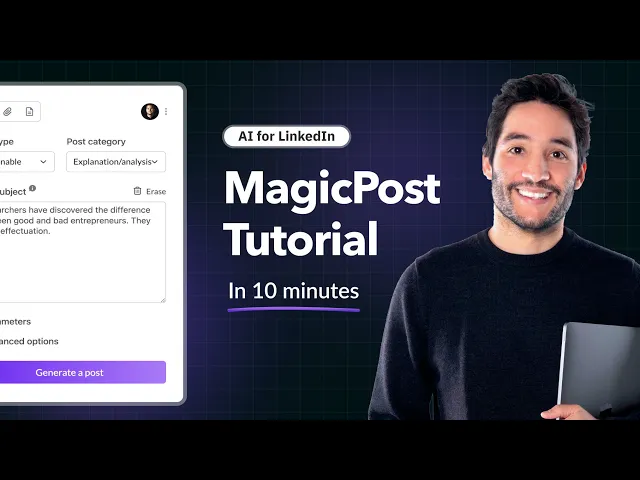
MagicPost is an AI-powered LinkedIn content platform built for founders, SDR teams, and agencies that want social selling to run on rails. It generates post ideas, hooks, and full LinkedIn posts, then schedules them and tracks performance, all inside a LinkedIn-verified app.
Instead of reps writing from scratch, MagicPost turns a short brief, call notes, or a URL into ready-to-publish content aligned with the ICP and current pipeline priorities. For teams, it standardises posting rhythm, messaging angles, and reporting across multiple profiles.
Pros
Generates ideas, hooks, and complete LinkedIn posts in seconds, based on templates and viral post inspiration, so reps never face a blank page.
Native scheduling and tagging keep personal and company pages active without adding admin work for sales or marketing.
Access to performance metrics for LinkedIn posts and creators helps identify formats and topics that actually trigger profile visits, replies, and inbound leads.
Web-based, LinkedIn-verified application reduces the risk compared with aggressive browser automation tools often used for pods or scraping.
Designed for multi-seat usage (Business plan), so agencies or revenue teams can manage several profiles and a company page from one workspace.
Cons
Focuses mainly on LinkedIn; teams that also need deep X/Twitter, Instagram, or TikTok workflows still rely on a broader social suite in parallel.
Advanced analytics and CRM-style tracking do not replace a full sales engagement or CRM platform for complex account-based motions.
Pricing
Starter – from $39/month per seat (about $27/month with annual billing) for up to 30 generated posts per month, plus ideas generator, hooks generator, and scheduling.
Creator – from $59/month per seat (about $39/month with annual billing) with unlimited post generation, post inspirations, and LinkedIn metrics.
Business – custom pricing from 5 seats, with multi-account management, company pages, and priority support.
Best for B2B teams that bet on content-led social selling on LinkedIn and want a single tool to ideate, write, and schedule posts for multiple sellers.
2. Taplio
Rating
⭐⭐⭐ (G2)
Overview

Taplio is an AI LinkedIn platform for solo creators, founders, and sales teams that want consistent content, basic relationship tracking, and light prospecting from one place. It focuses on three pillars: AI content creation, scheduling, and LinkedIn-specific analytics so profiles stay active with minimal manual work.
Beyond posting, Taplio helps users discover warm leads by pulling likers and commenters from LinkedIn posts into contact lists, then centralises engagement (comments, DMs, replies) in a single dashboard. For social sellers, it acts as a LinkedIn command centre: plan content, follow up on engagement, and identify high-intent prospects without leaving the tool.
Pros
AI creates post drafts, hooks, and carousels tailored to LinkedIn so reps and founders spend less time staring at a blank editor.
Scheduling and queueing keep personal profiles consistent, with post analytics that go deeper than native LinkedIn stats.
Relationship Builder captures people who like or comment on posts and turns them into warm lead lists for follow-up.
Auto-plug comments and audience feeds help maintain visibility with target accounts and influencers at scale.
Cons
100% focused on LinkedIn; teams that want unified workflows across other social networks still need an additional scheduler or social suite.
Pricing sits at the higher end of the LinkedIn tool market, especially for users who only need basic posting and analytics.
Bad customer reviews
Pricing
Starter – from $39/month for core posting, scheduling, viral post inspiration, basic analytics, and limited AI/engagement credits.
Standard – from $65/month with more AI credits, commenting credits, and access to lead list building from LinkedIn search and engagement.
Pro – from $199/month with maximum automation limits, enriched lead access, and bulk DM/auto-DM features for larger-scale social selling programmes.
Best for creators and lean sales teams that want an all-in-one LinkedIn growth and engagement hub with strong AI and warm lead capture, and are ready to use advanced automation responsibly.
3. Shield Analytics
Rating
⭐⭐⭐ (G2)
Overview
Shield Analytics is a LinkedIn-only analytics platform for creators, sales leaders, and social selling teams that want deeper insight than native LinkedIn stats. It centralises all post and profile data in a single dashboard so teams can understand what content works, how often to post, and which profiles actually drive reach and engagement.
For social selling, Shield helps revenue teams monitor posting consistency, benchmark top-performing posts, and track audience growth across multiple personal profiles. It suits organisations that already have a content engine in place and now need data to optimise social selling output, not another content editor.
Pros
Centralised LinkedIn analytics for multiple personal profiles, making it easier to monitor how several sellers perform over time.
Visual dashboards show impressions, engagement rates, follower growth, and top-performing posts, which helps refine content themes for social selling.
Audience demographics (role, company, location) inform ICP fit and help align posting topics with the right buyer personas.
Team features allow managers to compare profiles, spot who posts consistently, and tie LinkedIn efforts to pipeline conversations.
Cons
No native content creation or scheduling; teams must pair Shield with a social publishing or AI content tool such as MagicPost or Taplio.
Reviews frequently mention pricing vs. value, with some users calling it expensive for analytics-only functionality.
UX and data consistency (date filters, loading speed) come up as pain points in user feedback, especially for teams that manage many profiles.
Pricing
Personal plan – from $27/month per profile (or $225/year when billed annually) after a 14-day free trial.
Business/team pricing scales per profile at similar per-seat rates, with shared dashboards and admin controls.
Best for B2B teams that already post actively on LinkedIn and now want to professionalise social selling with granular performance data and team-wide analytics.
4. folk CRM
Rating
⭐⭐⭐⭐⭐ (G2)
Overview

folk CRM is an AI CRM built for large teams and SMBs that treat relationships as the core of social selling. Instead of forcing reps into rigid sales objects, folk organises people, companies, and deals in flexible lists and pipelines. The folkX Chrome extension captures LinkedIn profiles in one click, enriches contacts, and pushes them into structured views where AI suggests the next best actions.
For social selling, folk connects LinkedIn, email, calendar, and even WhatsApp timelines so every interaction with a prospect lives in one place. Reps can segment audiences, send highly personalised outreach at scale, and keep pipelines clean without spending evenings updating fields manually.
Pros
One-click capture from LinkedIn and Sales Navigator via folkX, with automatic enrichment and deduplication, ideal for building social-selling lead lists in real time.
Multi-channel timelines (email, calendar, WhatsApp, notes) give a full picture of each relationship before sending a DM or follow-up.
AI features like Magic Fields, AI icebreakers, and suggested next best actions help reps craft contextual messages from real interactions instead of generic templates.
Flexible lists and pipelines work for founders, SDRs, and AMs: small teams can start simple, then add structure as the motion scales.
Strong fit for agencies and B2B teams that combine LinkedIn outreach, email, and WhatsApp in the same sales process.
Cons
No perpetual free plan; only a free trial, which can be a blocker for solo creators testing many tools.
Advanced roles, permissions, and some automation features are available on higher tiers, which can increase cost for larger teams.
Focused on B2B workflows; companies that mainly sell via high-volume e-commerce social ads may need additional tools.
Pricing
Standard – from $20 per member/month billed annually (or $25/month billed monthly), including core CRM features, folkX, AI assist, and collaborative pipelines.
Premium – from $40 per member/month billed annually, with advanced automation, permissions, and reporting for larger sales organisations.
Best for medium to large sales teams, agencies, start-ups, and solopreneurs.
5. LinkedIn Sales Navigator
Rating
⭐⭐⭐⭐ (G2)
Overview

LinkedIn Sales Navigator is LinkedIn’s own social selling environment for B2B teams that live on the platform. It adds advanced search, saved lead lists, alerts, and InMail credits on top of standard LinkedIn so reps can find, track, and engage decision-makers more efficiently.
For social selling, Sales Navigator helps reps spot buying signals, monitor accounts, and build targeted lead lists based on role, industry, company size, and geography. Combined with good content tools like MagicPost, it becomes the prospecting backbone behind a LinkedIn-led pipeline.
Pros
Native integration with LinkedIn’s full graph, including advanced lead and account search filters designed for B2B prospecting.
Lead and account lists, alerts, and recommended leads keep reps focused on high-intent buyers and warm accounts.
Smart features like Buyer Intent, Spotlights, and TeamLink (on higher plans) help identify people more likely to respond and leverage internal connections.
Ties directly into LinkedIn’s Social Selling Index (SSI), giving teams a way to measure progress on social selling behaviour over time.
Cons
Does not handle email outreach, inbox warming, or phone data; teams still need extra tools for multichannel sales.
Pricing sits at the higher end of the market, especially when rolling it out across large sales teams.
Learning curve exists for new users; without a clear playbook, reps underuse advanced filters and alerts.
Pricing
Core – from $119.99/month per user (or about $89.99/month with annual billing, region-dependent).
Advanced – from $179.99/month per user (lower effective price on annual contracts, region-dependent).
Advanced Plus – custom annual pricing starting around $1,600/year per seat for deep CRM integrations and enterprise controls.
Best for mid-size and large B2B sales teams that treat LinkedIn as a primary prospecting channel and need structured, account-based social selling rather than simple posting or engagement pods.
6. LaGrowthMachine
Rating
⭐⭐⭐⭐⭐ (G2)
Overview
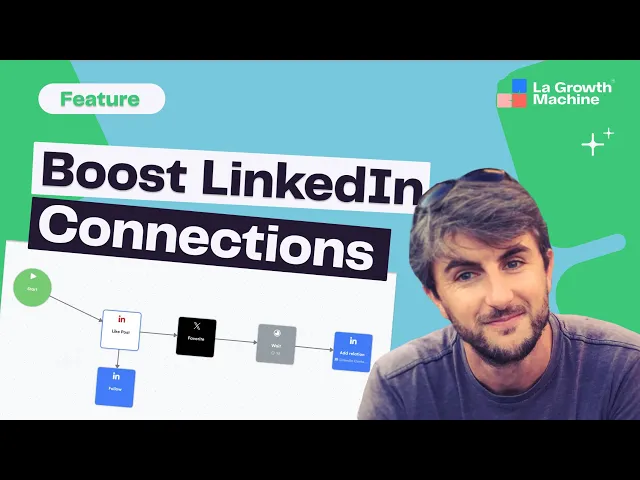
LaGrowthMachine is a multichannel outbound and social selling platform that connects LinkedIn, email, X/Twitter, and calls in a single sequencing engine. It targets GTM and sales teams that want to move beyond single-channel LinkedIn automation and build orchestrated social selling journeys: profile visits, social warming, connection requests, DMs, and follow-up emails.
For social sellers, LaGrowthMachine turns engagement into structured campaigns. Reps can import leads from LinkedIn or Sales Navigator, enrich them automatically, then run sequences that warm profiles, send voice notes, and switch channels based on replies. A unified inbox consolidates LinkedIn and email responses so each lead feels like one continuous conversation instead of scattered outreach.
Pros
True multichannel engine: automates LinkedIn, email, and X/Twitter (plus calls on higher tiers) from one interface, ideal for social selling motions that combine content, DMs, and follow-up emails.
Visual sequence builder with pre-made templates makes it easier to design complex journeys with profile visits, connection requests, DMs, emails, and manual tasks.
Built-in lead enrichment (company data, verified emails) reduces time spent cleaning lists before launching social selling campaigns.
Unified inbox centralises replies from LinkedIn and email so reps manage conversations by lead instead of hopping across tabs.
Advanced features such as social warming, LinkedIn intent import (likers, commenters, attendees), A/B tests, and CRM sync make it attractive for mature outbound teams.
Cons
More complex than a simple “post and engage” tool; teams without a clear outbound strategy can feel overwhelmed by options.
Pricing sits above many single-channel LinkedIn tools, which may be overkill for small teams that only need light automation or content support.
As with any automation-heavy platform, misuse (high volume, poor targeting) can create compliance and reputation risks on LinkedIn if guardrails are not enforced.
Pricing
Basic – from €60/month per identity when billed monthly (lower effective rate on annual billing), with LinkedIn + email channels and up to 250 enriched leads per month.
Pro – from €120/month per identity, adding calls, more enriched leads, more active campaigns, unified inbox, social warming, A/B testing, and advanced integrations.
Ultimate – around €120–195/month per identity depending on billing and region, with 1,000 enriched leads per month, unlimited campaigns, and deeper CRM integrations (HubSpot, Pipedrive).
Best for growth and sales teams that run serious multichannel social selling and want to orchestrate LinkedIn touches, emails, and calls from one outbound engine rather than stitching multiple tools together.
7. Podawaa
Rating
⭐⭐⭐⭐ (G2)
Overview

Podawaa is a LinkedIn engagement pod platform designed to increase the reach of your posts by coordinating likes and comments from groups of users. Instead of relying only on organic engagement, Podawaa connects profiles inside “SmartPods” so each new post receives a predefined volume of interactions within minutes.
For social selling, Podawaa aims to improve visibility at the top of the funnel: more impressions, more profile visits, and more chances for prospects to see your content. It offers both “give & get” community pods and fully paid, anonymous boosting where company or executive posts receive engagement without employees having to participate manually.
Pros
SmartPods and targeting options help align engagement with relevant audiences, not just random accounts.
A mix of free community pods and paid “boost” plans suits different needs, from solo creators to agencies managing multiple LinkedIn pages.
Can quickly amplify reach on important posts (product launches, case studies, webinars) to trigger more organic engagement and social proof.
Company-focused plans let marketing teams boost leaders’ and brand pages’ content without asking every employee to join pods manually.
Cons
Engagement pods sit in a grey area with LinkedIn’s rules; overuse or obvious “fake engagement” can create brand and account-risk issues.
Automated comments can sound generic or robotic if not configured carefully, which may hurt credibility with sophisticated B2B buyers.
Does not replace a true social selling stack: there is no native CRM, sequencing, or AI content engine, so teams must pair it with tools like MagicPost and folk CRM.
Pricing
Podawaa splits pricing into Community (give & get) and Premium (pay & grow anonymously) plans:
Community Free – €0/month, up to 5 posts boosted/month, Chrome extension required.
Pro Community – from €29.99/month, Chrome extension required, with more boosted posts and “Super Boost” capabilities.
Company Elite (Premium) – around €99.99/month, no extension, boosts company posts anonymously with set monthly boost limits.
Agency Gold (Premium) – around €165–199.99/month depending on offer and billing, for agencies that boost many users or pages with higher limits.
Best for teams that prioritise visibility and social proof on LinkedIn posts and accept the trade-offs of pod-based engagement.
8. Waalaxy
Rating
⭐⭐⭐⭐⭐ (G2)
Overview

Waalaxy is a multichannel prospecting and social selling platform built around LinkedIn. It automates invitations, profile visits, and messages, then adds cold email, email finder, and basic CRM-style views so teams run outbound and social selling from a single interface.
For social sellers, Waalaxy turns LinkedIn searches or Sales Navigator lists into structured campaigns. Reps import leads, enrich them with verified emails, and run sequences that mix connection requests, DMs, and follow-up emails. A unified inbox helps manage replies by contact instead of by channel, so each prospect experiences one continuous conversation.
Pros
Strong LinkedIn automation feature set: visits, connection requests, messages, and InMails, all controlled with quotas that respect LinkedIn’s limits.
Ready-made multistep campaigns let teams launch social selling sequences in minutes instead of building flows from scratch.
Integrated email finder and enrichment turn LinkedIn leads into full contact records with work emails for follow-up.
CRM sync with HubSpot, Pipedrive, Salesforce, and others keeps campaigns aligned with pipeline and avoids duplicate data.
AI assistance for messaging and reply detection helps teams personalize outreach and stop sequences automatically when a prospect responds.
Cons
UI and feature depth create a learning curve, especially for small teams new to automation-heavy social selling.
Reporting and analytics remain lighter than full CRMs or advanced revenue platforms, so teams still rely on external tools for deep performance tracking.
Recent price increases make Waalaxy significantly more expensive than some competitors, which raises questions about value for simple LinkedIn-only use cases.
Pricing
Freemium – €0/month, up to 80 invitations per month and basic LinkedIn automation to test campaigns.
Pro – from 19€/user/month (about $21/user/month) with up to 300 invitations/month, unlimited campaigns, CRM sync, and 25 email finder credits.
Advanced – from 49€/user/month (around $44/user/month) with 800 invitations per month and live chat support.
Business – from 69€/user/month (around $66/user/month) with LinkedIn + email sequences, automated email follow-ups, multiple sender accounts, and 500 email finder credits.
Elite – around 245€/user/month (about $273/user/month) with Sales Navigator included, 10k email finder credits, coaching, and premium support.
Best for B2B teams that want to industrialize social selling on LinkedIn and email with automated sequences, while keeping pipeline tracking in a dedicated CRM.
9. Hootsuite
Rating
⭐⭐⭐⭐ (G2)
Overview

Hootsuite is a full-scale social media management platform that helps marketing and sales teams plan content, monitor conversations, and respond to prospects across multiple networks. For social selling, it centralises LinkedIn, X/Twitter, Facebook, and Instagram into one dashboard so reps and marketers can track mentions, engage with target accounts, and keep brand profiles active without juggling several tabs.
Streams and boards make it easier to follow specific keywords, competitor accounts, or industry conversations. This gives social sellers a live feed of opportunities to comment, answer questions, or jump into threads where buyers are already discussing their problems.
Pros
Supports all major social networks, which is ideal for teams that combine LinkedIn social selling with a broader brand presence on other platforms.
Streams and social listening capabilities help identify buying signals in real time: questions about your category, competitor complaints, or posts from target accounts.
Shared inbox and collaboration features allow marketing and sales to coordinate replies so prospects receive fast, consistent answers.
Built-in analytics and reporting give managers a view of reach, engagement, and response times across channels.
App directory includes integrations with CRMs, helpdesks, and other GTM tools to connect social conversations with pipeline and support.
Cons
Hootsuite is not a specialised LinkedIn prospecting tool; it lacks advanced lead lists, enrichment, and true sales sequences.
Pricing can be high for small sales teams that only need LinkedIn and a few basic dashboards.
The interface is powerful but dense; without a clear workflow, users can feel overwhelmed by streams and configuration options.
Pricing
Hootsuite publicly lists several plans (USD pricing for annual billing may vary slightly by region):
Professional – from $99/month for 1 user and up to 10 social accounts.
Team – from $249/month for 3 users and up to 20 social accounts.
Enterprise – custom pricing with higher account limits, advanced permissions, and enterprise governance.
Best for brands and revenue teams that treat social selling as part of a wider social media strategy, and need one place to monitor conversations and coordinate responses across networks rather than only automating LinkedIn.
10. Buffer
Rating
⭐⭐⭐⭐ (G2)
Overview
Buffer is a social media management platform that helps marketing and sales teams plan, publish, and analyse their content on LinkedIn, X/Twitter, Facebook, Instagram, and other channels. For social selling, Buffer mainly serves as a content launchpad: it keeps profiles active, builds social proof, and ensures sales teams always have something relevant to share.
Teams can prepare LinkedIn posts in batches, schedule them for the best times, then track performance in a simple dashboard. Combined with a CRM like folk CRM and a more specialised tool like MagicPost for post generation, Buffer becomes a distribution hub for all social selling content.
Pros
Multi-network support, ideal for teams that do more than just LinkedIn and also use Instagram or X/Twitter for nurturing.
Very simple scheduling and queueing, which helps sales teams maintain a regular posting rhythm without having to think about it every day.
Clear dashboards to track engagement, reach, and clicks, without becoming overly complicated.
Collaboration features (approval, shared drafts) useful for coordinating marketing and sales on social selling content.
Integrations with other tools (for example Canva, certain CRM suites or helpdesk tools) to reduce copy-pasting.
Cons
Less specialised for LinkedIn than MagicPost or Taplio: no advanced features for viral hooks, LinkedIn-specific ideation, or fine-grained creator management.
No real “sales” layer: no sequences, no prospect management, no deal context.
The analytics features remain more basic than those of platforms dedicated to social selling performance or LinkedIn creators.
Pricing
(Prices in USD, based on public plans, generally billed monthly/annually)
Essentials – starting at around $6/month per social channel (discounted annual price), for basic scheduling and analytics.
Team – starting at around $12/month per social channel, with collaboration and advanced permissions.
Agency – starting at around $120/month to manage a larger portfolio of accounts and clients.
Best for teams that want a simple, reliable scheduler and analytics hub.
11. lemlist
Rating
⭐⭐⭐⭐⭐ (G2)
Overview
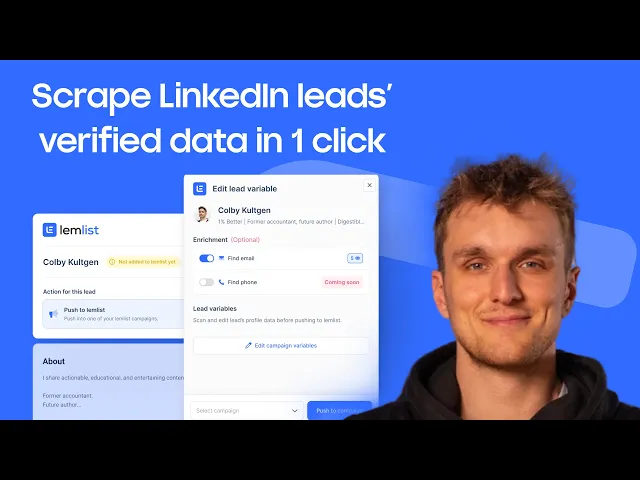
lemlist is a multichannel outbound platform that combines email, LinkedIn, and calling in one place. It targets SDR teams and founders who want to run social selling and cold outreach as structured, trackable campaigns instead of random DMs and emails.
For social selling, lemlist helps reps build prospect lists, warm them up on LinkedIn with profile visits and connection requests, then follow up with personalised emails and tasks. Playbooks, shared templates, and dashboards make it easier for GTM leaders to standardise outreach quality and measure replies, meetings, and pipeline across the team.
Pros
True multichannel sequences that mix LinkedIn profile visits, connection requests, InMails, emails, and manual tasks in a single flow.
Campaign builder stays readable even for complex sequences, which helps teams design and iterate social selling motions quickly.
Strong personalisation options for emails (images, variables, website screenshots) support highly tailored outreach at volume.
Shared templates and playbooks help keep tone, messaging, and positioning consistent across multiple SDRs and AEs.
Native integrations with CRMs like HubSpot, Pipedrive, and Salesforce keep contact and deal data in sync.
Cons
LinkedIn features are powerful but still require careful configuration to stay within platform limits and avoid account risk.
Interface and feature set can feel heavy for very small teams that only need basic LinkedIn outreach and a few email touches.
Email deliverability and list quality still depend on external factors (domains, warmup, data providers), so results are not “plug-and-play.”
Pricing
Email Starter – from $39/user/month, focused on email outreach campaigns.
Smart – from $69/user/month, adds multichannel features (LinkedIn steps, tasks) and more advanced automation.
Scale – from $99/user/month, for larger teams with advanced reporting, review workflows, and more sending capacity.
Best for SDR and growth teams that see social selling as part of a broader outbound engine and want to orchestrate LinkedIn touches and emails from one place.
12. Salesloft
Rating
⭐⭐⭐⭐⭐ (G2)
Overview

Salesloft is a sales engagement platform that helps revenue teams orchestrate email, calls, LinkedIn, and other touchpoints from one place. For social selling specifically, it lets SDRs and AEs include LinkedIn profile views, connection requests, and InMail-style steps inside structured cadences, so social actions stop being “nice to have” and start being part of a repeatable playbook.
Instead of each rep improvising on LinkedIn, Salesloft centralises messaging, cadence structure, and reporting. Social touches sit next to emails and calls in the same workflow, which makes it easier to test, standardise, and scale a social selling motion across dozens or hundreds of sellers.
Pros
Multichannel cadences where LinkedIn tasks (view profile, send connection request, send message) are embedded alongside email and phone steps.
Strong template and snippet system so reps use social copy that has already been tested and approved by enablement or marketing.
Robust reporting on engagement, meetings booked, and pipeline created per cadence, which helps prove the impact of social selling steps.
Integrates deeply with CRMs like Salesforce and HubSpot, keeping contact and opportunity data aligned with outbound activity.
Conversation and call analytics (on higher tiers) help leaders coach reps on messaging across channels, including social.
Cons
Built and priced for serious sales orgs; often too heavy and expensive for very small teams or solo founders.
Social features are powerful but still task-based: Salesloft does not replace a content engine like MagicPost or a relationship-first CRM like folk CRM.
Implementation and onboarding require time and clear ownership; without this, teams underuse the more advanced capabilities.
Pricing
(Salesloft uses quote-based pricing; public ranges from industry benchmarks)
Entry-level plans typically start around $100–$125 per user/month for core cadence and email features.
More advanced packages with dialer, conversation intelligence, and deeper analytics usually sit in the $125–$175+ per user/month range depending on volume and contract length.
Best for mid-market and enterprise sales teams that want to industrialise outbound and embed LinkedIn social selling steps directly into their cadences.
Top 12 Social Selling Tools in 2026 – Overview
Best for | Best Social Selling Feature | Starting price | |
|---|---|---|---|
Startups, founders, SDR teams, agencies | AI-generated LinkedIn posts and hooks plus native scheduling in a LinkedIn-verified app. | From $27/month (Starter, annual) or $39/month monthly | |
Solo creators, founders, lean sales teams | Warm-lead capture from post engagement combined with AI content and carousel engine. | From $39/month | |
Teams already posting on LinkedIn | Team-level LinkedIn content and profile analytics to refine social selling topics and formats. | From $12/month (Solo) | |
Medium to large sales teams, Agencies, Startups | One-click LinkedIn capture with folkX plus AI next-best actions on multi-channel timelines (email, WhatsApp, calendar). | From $20/user/month (Standard) | |
Mid-size and large B2B sales teams | Advanced LinkedIn lead and account search with saved lists and buying-intent alerts. | From $119.99/user/month (Core) | |
Growth and outbound teams | Automated sequences mixing LinkedIn, email, X/Twitter, and calls, with unified inbox for replies. | From €60/month per identity (Basic) | |
Teams focused on boosting LinkedIn reach | Smart engagement pods that coordinate likes and comments to amplify key LinkedIn posts. | Free (Community); paid from €29.99/month | |
Agencies and sales teams scaling outreach | Automated LinkedIn + email sequences with lead enrichment and CRM sync. | Freemium; paid from ~€19/month | |
Brands and GTM teams with multi-network presence | Cross-network streams and social listening to spot buying signals and respond from one inbox. | From $99/month (Professional) | |
Small teams wanting simple scheduling | Lightweight multi-network scheduling and basic analytics to keep sales profiles consistently active. | Free plan; paid from $6/month per channel | |
SDR and growth teams | Multichannel outreach that combines LinkedIn steps, email, and calls in one prospecting workspace. | From $69/user/month (email) and $99/user/month (multichannel) | |
Mid-market and enterprise sales orgs | LinkedIn profile and message tasks embedded directly into sales cadences with detailed performance tracking. | Typically from ~$125–$165/user/month (quote-based) | |
Conclusion
A social selling tool is more than just an addition to social media. It serves as the layer that links content, conversations, and profiles to your pipeline, ensuring that every post and every interaction plays a distinct role in the sales process. The right platform enables your team to consistently engage with the appropriate audience, publish messages that initiate meaningful business discussions, and track the progression from the first impression to a scheduled meeting.
In this comparison, tools specialize in different functions: some provide in-depth analytics, others coordinate multichannel outreach, and some manage engagement on a large scale. However, for most B2B teams that depend on LinkedIn, the primary challenge remains unchanged: creating compelling posts weekly and maintaining active profiles without overwhelming founders and sales representatives.
MagicPost directly addresses this issue. It focuses on LinkedIn, utilizes AI to eliminate friction from ideation and writing, and simplifies scheduling so that social selling evolves into a consistent habit rather than an infrequent endeavor. When the objective is to transform LinkedIn into a reliable acquisition channel, MagicPost is the most efficient starting point for constructing a social selling engine that genuinely facilitates revenue.