Notions de base de LinkedIn

Camelia Khadraoui
Dernière mise à jour : 15 janv. 2026
LinkedIn is an essential tool for salespeople looking to find new clients.
In addition to sharing your new promotion at work, you could also take advantage of the 1 billion users at your finger tips and turn them into clients.
But since LinkedIn is a networking platform, sending cold-email style messages usually doesn’t get replies. These messages can seem too pushy and won’t help your business grow.
If you want to do LinkedIn outreach effectively without coming across as spammy, this article will guide you on how to grow your sales using LinkedIn.
TL;DR
LinkedIn outreach means proactively building B2B relationships through personalized messaging. For the best results, follow these five steps:
Optimize Your Profile: to build instant trust.
Personalize Invitations: Mention specific details a bot couldn't find.
Strategic Follow-Ups: Stay persistent but always add value (never "just checking in").
Low-Friction Messaging: Keep it under 75 words and ask simple questions instead of requesting long meetings.
Avoid "Pitch-Slapping": Never sell in the first message, and do not spam.
The Golden Rule: Be human, stay brief, and prioritize connection over conversion.
What Is LinkedIn Outreach?
LinkedIn outreach means sending personalized messages and following up at the right time to build business relationships and hopefully turn people into clients.
Unlike inbound marketing, where you wait for people to come to you, outreach means you take the first step.
This approach is about connecting with professionals on LinkedIn for networking, sales, or hiring, and focusing on personal, value-driven messages instead of sending the same message to everyone.
LinkedIn outreach typically involves:
Identifying prospects through LinkedIn Sales Navigator.
Sending personalized connection requests.
Engaging with prospect content (likes and thoughtful comments).
Developing multi-touch message sequences to move the lead toward a specific goal (e.g., a meeting or a demo).
Why LinkedIn Outreach Still Works in 2026
Even with new platforms, private groups, and advanced AI tools, LinkedIn remains the main place for global business.
It’s where professionals build their reputation, show their credibility, and start important conversations. But why is LinkedIn outreach valuable?
1. You build trust
With bots writing emails, deepfakes pretending to be executives, and spam everywhere, people are much more careful about who they talk to.
A strong LinkedIn profile helps prove your identity.
Before replying, prospects can instantly verify who you are by checking your work history, recommendations, shared content, endorsements, and mutual connections.
This transparency makes people less skeptical and helps conversations feel safer and more real.
2. You can reach decision-makers directly
With over 1.2 billion professionals, including more than 10 million C-level executives, LinkedIn is the only place where you can reach founders, CEOs, or department heads without going through assistants or generic contact forms.
Your message lands in the same inbox whether you’re reaching a junior marketer or a Fortune 500 executive. This level of access is unique in B2B.
3. You’re more likely to get replies
LinkedIn outreach often works better than traditional cold emails because it happens in a more social and casual environment.
Instead of landing as faceless pitches in a crowded inbox, your messages arrive with a name, a face, and shared connections that build instant familiarity.
This personal touch changes how people view your messages. Even if it’s a cold outreach, it feels warmer, more relevant, and less intrusive.
In short, LinkedIn outreach still works in 2026 because it brings together identity, access, and context like no other channel. As long as trust and relevance matter in business, LinkedIn will lead B2B lead generation.
5 Steps for a Practical LinkedIn Outreach Strategy
Before you send any messages, make sure your profile is ready for viewers. Here are five steps to help you build a workflow that gets results:
Step 1: Optimize your LinkedIn profile
Your profile is the first thing potential buyers see. A strong profile boosts your personal brand and makes you seem more approachable and trustworthy.
To look your best online, check this list of elements you need to fix:
Add a professional profile photo
Use a high-quality, professional headshot that looks friendly. Add a nice banner picture that you can customize using design platforms such as canva. Think of adding logos of your previous clients for endorsement. Read our article on Do’s and Don’ts of LinkedIn profile pictures.
Write a compelling headline
While your profile photo helps build trust, the headline serves as a “magazine cover” statement that compels others to learn more about you.
Create a headline that’s more than just your job title. Mention your specialty, the value you offer, and who you help. You can use this guide to create a headline that grabs leads’ attention.
Add a compelling summary
Write a summary that shares your story. Explain what you do, how you help potential buyers, and what makes you different. Keep your tone friendly and your language direct.
Tip: Add keywords that match your industry and role to help people find you in searches.
Add important experience and skills
List your relevant job experiences and describe your roles, responsibilities, and achievements.
Add skills that fit your sales role, like Business Development, Lead Generation, CRM Software, and Negotiation.
Ask colleagues, clients, and managers to endorse you. Endorsements boost your credibility and show you’re skilled in the areas you listed.
Customize your URL
Customize your LinkedIn profile URL to make it cleaner and more professional, especially if you plan to add it to business cards or email signatures.
By following these tips, you can create a LinkedIn profile that shows your professional skills and catches the eye of potential leads.
Step 2: Personalize invitations to connect
After making an initial contact, you can follow up with direct messages if the person has accepted your connection request.
You can use this channel to provide value by sharing industry insights and other relevant content that address the prospect’s pain points.
Generic messages like “I see we are both in the [Industry] sector” don’t work anymore. In 2026, people expect highly personalized messages. For sales professionals, making a strong first impression is key.
The rule is to mention something a simple bot wouldn’t know. For example, talk about a podcast they were on, a unique comment they made, or a personal story from their About section.
The goal is to show you took the time to learn about them personally.
When you send a connection request, mention something specific about the lead, such as a shared connection, a relevant event, or something interesting on their profile.
This shows real interest and makes it more likely they’ll accept your request, moving them into your sales process.
Step 3: Send targeted InMail to people outside of your network
LinkedIn InMail is a premium feature that lets users send messages directly to other LinkedIn members, even if they are not connected.
It remains one of the most reliable outreach tools, especially when paired with LinkedIn research. Start by reviewing your target’s profile to understand their role, interests, and recent activity. One way to find email addresses is by exporting your LinkedIn contacts.

While not everyone shares their email, for those who do, you can save their information in a secure location outside LinkedIn.
The next step is to send your message, to do so:
1. Go to the profile of the user you’d like to send an InMail message to. You can also search for a member and send a new InMail message from the messaging page or conversation windows.
2. Click the More button on their introduction section.
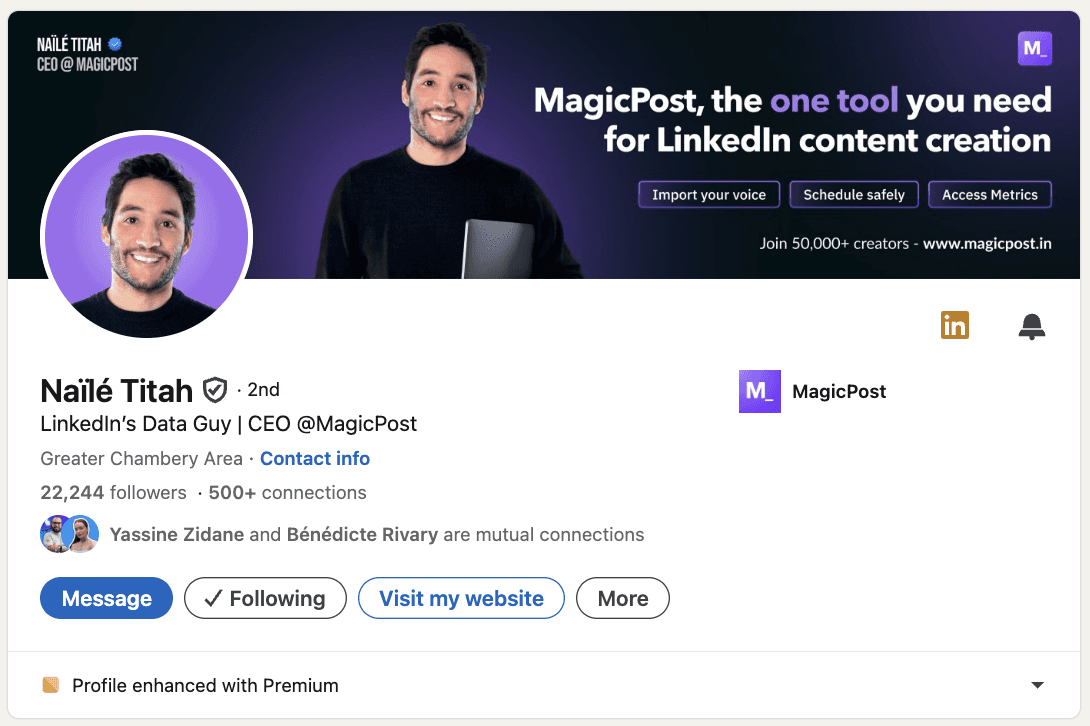
3. Select Message [Name of the member] from the dropdown.
4. Type the Subject field (optional) in the New message pop-up window.
5. Type the message in the text box:
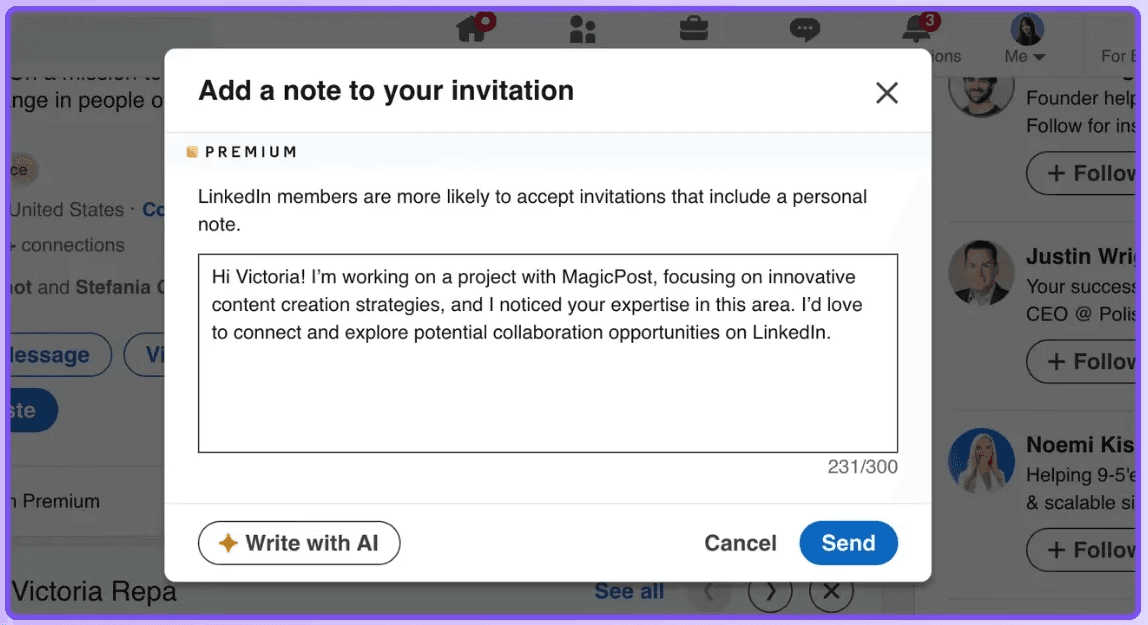
P.S. If you have a Basic (free) account, you must upgrade to a Premium account to use InMail. You can’t message a member if they’ve chosen not to receive InMail in their message preferences settings.
If a member has the Open Profile Premium feature enabled, you can message them for free.
Step 4: Do Follow-Ups (But do not spam)
Most people quit after the first message. However, data suggest that the second or third follow-up often yields the highest response rate.
Timing: Wait 3 to 5 days between each message.
Value-Add: Don’t send a “just checking in” message. Instead, share something useful, like a case study, industry report, or a helpful tool.
Step 5: Write a LinkedIn message that gets replies
Start by leaving behind the “me-centric” approach.
The most successful LinkedIn outreach messages follow a specific psychological framework: Low Friction, High Relevance.
High Friction: “Can we hop on a call Tuesday at 2 PM?”
Low Friction: “I put together a 2-page PDF on how [Competitor] solved this, would you like me to send it over?”
If your message feels like a “task” for the recipient to solve, they will ghost you. However, if it feels like a friendly and genuine compliment or valuable information, they will reply.
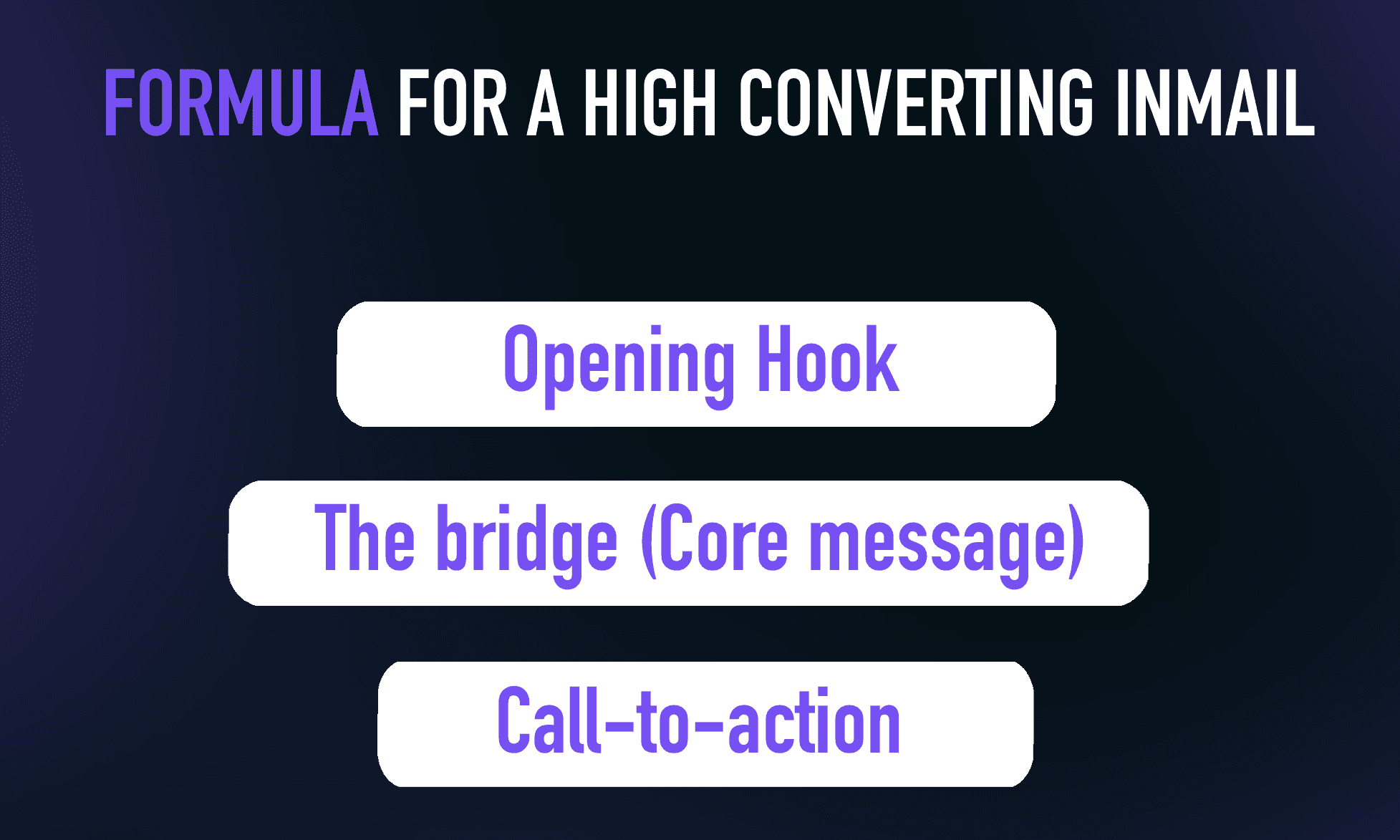
Here is the formula for a high-converting message:
1. The Opening Hook:
Start with a “micro-niche” observation. Instead of “Hi [Name],” try “Loved your take on [Specific Topic] in yesterday’s post.”
2. The Bridge:
Connect your expertise to their current situation. Use a “Trigger Event,” such as a new job promotion, a company funding round, or a recent interview.
3. The Call-to-action:
Never ask for a 30-minute call in the first message. That is a “high-friction” ask. Instead, ask a “closed-ended” question or offer a resource.
Pro Tip: Keep your messages under 75 words. On mobile devices, long messages are often ignored because they look like work. Short, punchy paragraphs are easier to digest while scrolling.
Additional tips for a great LinkedIn Outreach message:
Personalize your message
Skip the generic template and add something unique for each lead. For example, mention a connection, shared interests, or a recent post they engaged with.
Use a friendly tone
Start off your communication with a friendly tone, highlighting any leads’ milestones or complimenting their success.
Reference their content
Mention a specific post or article they’ve shared, and explain how it impacted you or why it’s relevant to your outreach.
Be clear
Make sure your message shows why you’re reaching out, whether you’re offering insights, suggesting a partnership, or introducing your product or service.
Make it human
Remember, there’s a real person behind every LinkedIn profile. Keep your outreach genuine and relatable. Don’t sound too stiff or robotic; it’s a networking platform, after all.