

"Make money on LinkedIn" isn’t just a buzzword; it’s an effective way for B2B companies to grow.
If you’re not generating leads on LinkedIn in 2026, you may be missing out on opportunities. With over 1 billion users and more decision-makers logging in daily, LinkedIn has become the top platform where B2B buyers spend time before making a purchase.
In fact, studies show that 4 out of 5 LinkedIn members influence business decisions, making it the most profitable place to spark conversations, build trust, and convert prospects (without spending a cent on ads).
What Are B2B Leads on LinkedIn?
B2B leads on LinkedIn are potential business clients who show interest in your products or services through the platform.
These leads might be professionals, founders, decision-makers, managers, or buyers who match your ideal customer profile. They may engage with your content, visit your profile, reply to your messages, or ask for more information.
Unlike traditional cold leads, LinkedIn B2B leads are more relevant and show clear intent. Because LinkedIn is a professional platform, people are more open to talking about work, finding solutions, and making buying decisions.
This is why LinkedIn is one of the best places to find and build relationships with potential clients.
Simply put, a B2B lead on LinkedIn is any business professional who:
Fits your target audience,
Shows interest or engages with you,
And can be moved toward a sales conversation through your content, networking, or social selling.
This mix of relevance, intent, and easy access is what makes LinkedIn a powerful platform for B2B lead generation.
Why Use LinkedIn to Generate B2B Leads
In 2026, LinkedIn is still the top platform for B2B lead generation, beating all other social networks in both reach and conversion.
As LinkedIn evolves, it has become the go-to place for professionals to connect, sell, and grow without relying on ads or cold calls.
Here’s what makes LinkedIn stand out in 2026:
1. It’s Where Decision-Makers Spend Their Time
LinkedIn brings together millions of CEOs, founders, HR managers, and specialists who use the platform for business. It’s the only major network where your ideal clients spend time every day..
2. Organic Reach Is Still Strong
Most social networks limit how many people see your posts, but LinkedIn’s algorithm still rewards content that offers real value.
By posting regularly, even small accounts can reach a large audience, get more profile visits, and attract inbound leads without paying for ads.
3. Perfect for Social Selling
LinkedIn began the trend of modern social selling. It brings together content, networking, and relationship-building in a simple way.
This makes it the best place to connect with prospects before making a sales pitch.
4. Advanced Prospecting Tools
Tools like Saleshandy Lead Finder & Sales Navigator improved search filters, and smarter AI suggestions make it easier to find the right prospects and guide them through your sales funnel.
5. Trust-Based Marketing
People buy from people, not ads. LinkedIn values authenticity, expertise, and real conversations. If you show up regularly and build authority, you’ll have a real advantage.
In short, if you want steady B2B growth in 2026, LinkedIn isn’t just an option. It’s a must-have strategy.
Why You’re Not Getting Leads on LinkedIn
Most people struggle to generate leads on LinkedIn because their entire approach is flawed from the start. They reach out to the wrong people, their profile looks like a giant red flag, and their DMs are screaming, “I’m going to pitch you.” Here is why you’re not getting any leads:
1.You’re reaching out to the wrong people
Most users send connection requests to anyone who looks vaguely relevant, rather than narrowing down to a true Ideal Customer Profile.
When your outreach isn’t targeted, your acceptance rate drops, your DMs fall flat, and you waste time on people who were never going to buy in the first place.
2.Your profile looks like a giant red flag
If your photo, headline, or banner gives off “salesperson energy,” prospects instantly assume you're about to pitch them.
A pitchy or poorly optimized profile kills trust before the conversation even starts, meaning people decline your request without ever clicking through.
3.Your DMs are basically cold emails
Long paragraphs, copied templates, and self-centered messages are the fastest way to get ignored.
LinkedIn DMs work like texting, not emailing, and when you drop heavy, automated-looking messages into someone’s inbox, they delete them before reading the second line.
4.Your follow-ups are repetitive and pushy
Most follow-ups simply repeat the same message, add pressure, or feel automated... all of which turn buyers off instantly.
Instead of opening a conversation, you end up annoying the prospect, damaging your credibility, and lowering your chances of booking a meeting.
5.You’re getting ignored or even blocked
When messages feel salesy, generic, or irrelevant, prospects don’t just ignore them; some will block you to avoid seeing future messages.
This not only ends the conversation but also hurts your ability to reach others in similar networks.
6.You’re not using a DM framework built for LinkedIn
Success on LinkedIn requires short, personalized, conversational messages, not long pitches or feature lists. Without a simple framework that hooks attention and encourages a reply, your outreach never builds momentum and rarely turns into real conversations.
Here is how to do it.
How to Generate B2B Leads on LinkedIn in 2026
The foundation of a strong LinkedIn lead-generation strategy begins with avoiding the common traps most sellers fall into: automated InMails, generic pitches, and overly formal messages that read like recycled cold emails.
These approaches blend into the noise and are instantly ignored. Instead, be strategic about how you connect, present yourself, and start conversations.
1. Social Selling
Social selling means building trust in public, then moving the conversation to private messages when the time is right.
Rather than sending cold pitches, share helpful insights where your buyers spend time, look for signs they’re interested, and reach out only when someone is a clear match.
The process is simple: be relevant first, ask next, and then book the meeting.
Sharing expert posts regularly, leave thoughtful comments on your ideal clients’ content, send targeted connection requests, and follow up quickly with specific references.
When you do this well, you’ll get warmer replies, more meetings, and shorter sales cycles because buyers already recognize your name before you reach out.
If you want to learn more, check out our full guide that explains What Is Social Selling?
2. Stop Using InMails
To consistently generate B2B leads on LinkedIn in 2026, you must stop blending in with the thousands of sellers spamming inboxes and instead adopt a modern, buyer-centric approach.
The strategy below is based on real data, real buyer psychology, and real results.
LinkedIn pushes InMails a lot, yet they remain one of the weakest channels for lead generation.
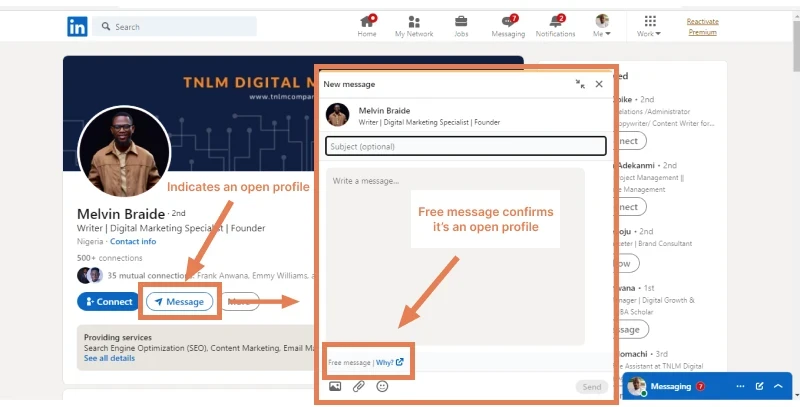
Why InMails Don’t Work
Buyers instantly know it’s a sales message:
InMails are primarily used by sales reps and recruiters. This means the moment a buyer sees “InMail,” their guard goes up. They assume it’s automated, impersonal, and irrelevant.
Extremely low response rates:
Seasoned LinkedIn users ignore InMails entirely, often without opening them, because they’ve learned that 99% of them contain generic pitches.
Inactive users receive your messages:
InMail doesn’t check whether someone is active on the platform. Some users log in only once or twice a year, meaning your message never gets seen.
They cost money and limit your flexibility:
Higher plans give more InMails, but the cost does not correlate with results.
The Better Alternative
Focus your time on sending connection requests and native DMs.Connecting directly ensures that the person is active, you can message freely, without limits, you can build casual, natural conversations, and follow up using formats that stand out
InMails feel like ads. Connections feel like people.
3. Send Connection Requests Without a Note
Most notes are sent by salespeople, so buyers are conditioned to see them as a pitch before even opening the message.
On top of that, generic lines like “I’d like to add you to my network” instantly trigger defensiveness. Instead of helping you stand out, they make you look exactly like the people your prospects avoid.
Notes are usually written by salespeople, and buyers have seen every generic template such as:
“We swim in the same circles!”
“You have an interesting background!”
“Would love to add you to my network.”
These instantly signal:“I’m about to pitch you.”
And unless your note is truly, deeply personalized (which 99% aren’t), you’re better off skipping it entirely.
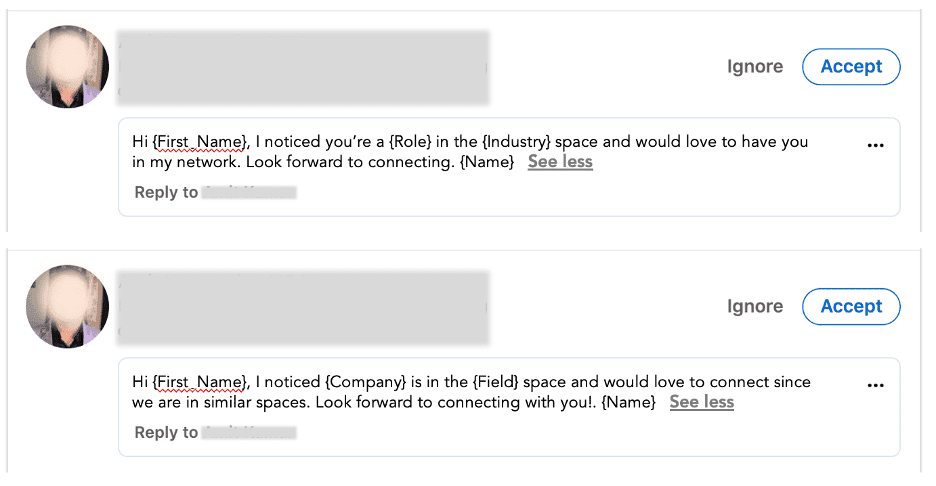
Notes are usually written by salespeople. Buyers have seen every generic template such as:
“We swim in the same circles!”
“You have an interesting background!”
“Would love to add you to my network.”
These instantly signal:“I’m about to pitch you.”
4. Don’t Look Like a Salesperson
Your profile is the #1 factor in whether someone accepts or rejects your connection request. Buyers make a split-second decision based on just three elements:
First, they look at your photo. Then, their eyes jump to your headline. Finally, they take in your banner and the overall vibe of your page.
If your photo, headline, or banner gives off ‘salesperson energy,’ prospects assume you're about to pitch them and decline before even clicking your profile. Here is how you can fix them:
Profile Photo
Your profile photo has to work hard for you: it needs to be high-quality, show you smiling, and keep the background simple and clean. A smile instantly signals friendliness and friendliness leads to higher acceptance rates.
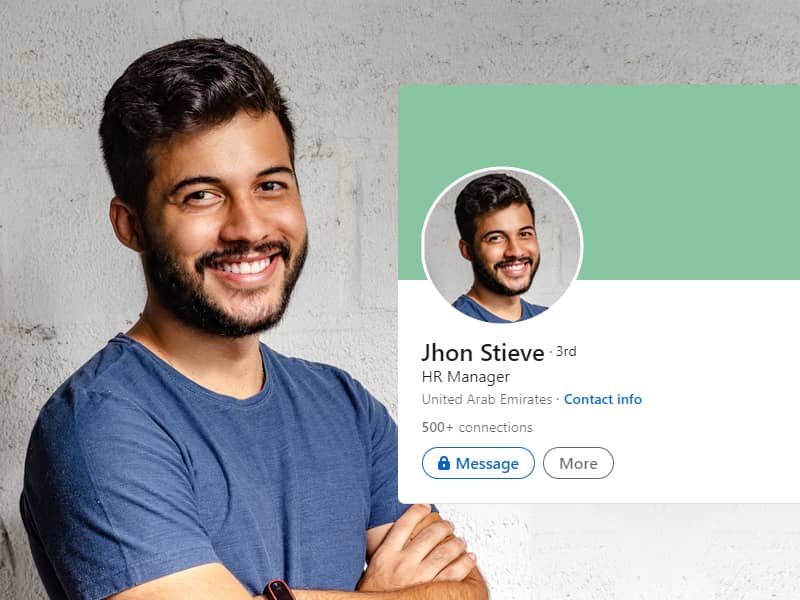
The equation is simple: Smiling = friendly = higher acceptance.
💡For the perfect LinkedIn profile picture, check LinkedIn Profile Picture: Do’s and Don’ts
Headline
Some headlines instantly tank your chances. The worst offenders are the classic “Sales at X” or “Business Development at Y,” because buyers see the word sales and immediately brace for a pitch.
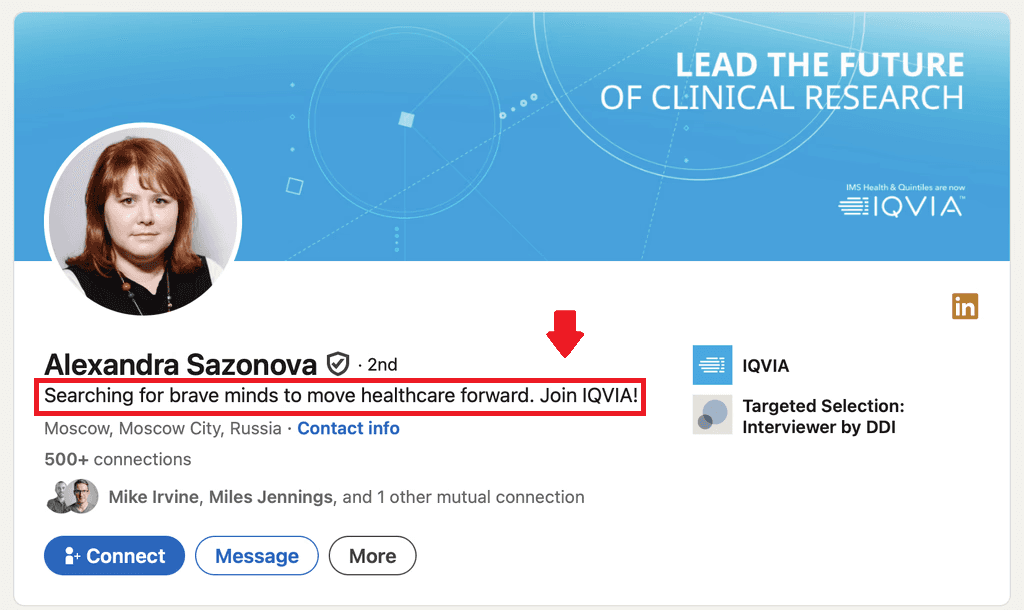
Stronger options focus on being helpful, human, and non-pitchy, like:
“Helping [organism] achieve [specific outcome]”
“Hey business owners 👋”
“Making sure you never get ignored online.”
Something friendly, human, and most importantly, non-pitchy.
💡 For more information, you might be interested in reading our article about How to Write Your LinkedIn Headline
Banner, About, and Activity
Buyers don’t just glance at your profile; they often click through to check if you’re active, credible, and human. That means your banner should be branded, your About section should be clear, and your Featured section should display strong posts or links.
And yes, consistent engagement matters too whether that’s liking, commenting, resharing, or posting your own content.
To sum it up, buyers often click to check if you have:
A branded banner
A clear About section
Featured posts or links
In short: Active profiles = trustworthy profiles.
Too lazy to write your own? Use MagicPost's Free tool LinkedIn Summary Generator
5. Use the One-Sentence DM
LinkedIn DMs are not emails, yet most people still treat them like emails. They send long messages, pitch-heavy paragraphs, copy-pasted cold emails, and even automation spam — all of which get ignored instantly.
LinkedIn DMs actually work more like texting: short, simple, and conversational.
That’s where the One-Sentence Message Framework comes in. You pair a quick observation about the person with a simple question. It can sound like:
“Looks like your website is on Shopify, happy with the conversions?”
“Saw you're hiring a senior BD manager, are the applicants qualified so far?”
“Noticed you're growing fast. Have you reviewed your employee benefits recently?”
“Saw you're posting a lot of text content, ever considered switching to vindeo?”
Your goal here is not to book a meeting. Your only goal is to get a reply.
Once they respond, that’s when a real conversation can begin.
6. Don’t Be Annoying
Most follow-ups get ignored because they feel repetitive, pushy, or obviously automated. The real winning approach is to switch the medium entirely.
Best options can be:
Voice notes
Short videos
GIFs
PDF one-pagers
Video and voice notes work especially well because they can’t be automated, are rare, show genuine effort, and build trust almost immediately.
Additional tip: You can keep them short, around 30 seconds, and use a friendly tone, a smile, and a casual environment.
And if they still don’t respond? Stop. And shift to engaging with their content instead, and circle back in 2-3 months.
Wrapping Up
Earning money on LinkedIn in 2026 isn’t about chasing followers. It’s about building relationships that lead to results.
When you combine social selling, a good content strategy, and steady nurturing, your network will start working for you.
So next time you scroll through your feed, remember: every comment, every post, and every connection could be a lead waiting to happen. Once those comments arrive, you can turn LinkedIn engagement into leads by scoring each engager against your ICP.