You have seen the post a hundred times. Someone shares a genuinely useful idea, then ends with a line like "Comment GUIDE and I'll send you the full playbook." The comment count explodes. The author DMs the link to everyone who asked. That is the comment-gated lead magnet, and it is the most common way creators turn a LinkedIn post into an email address.
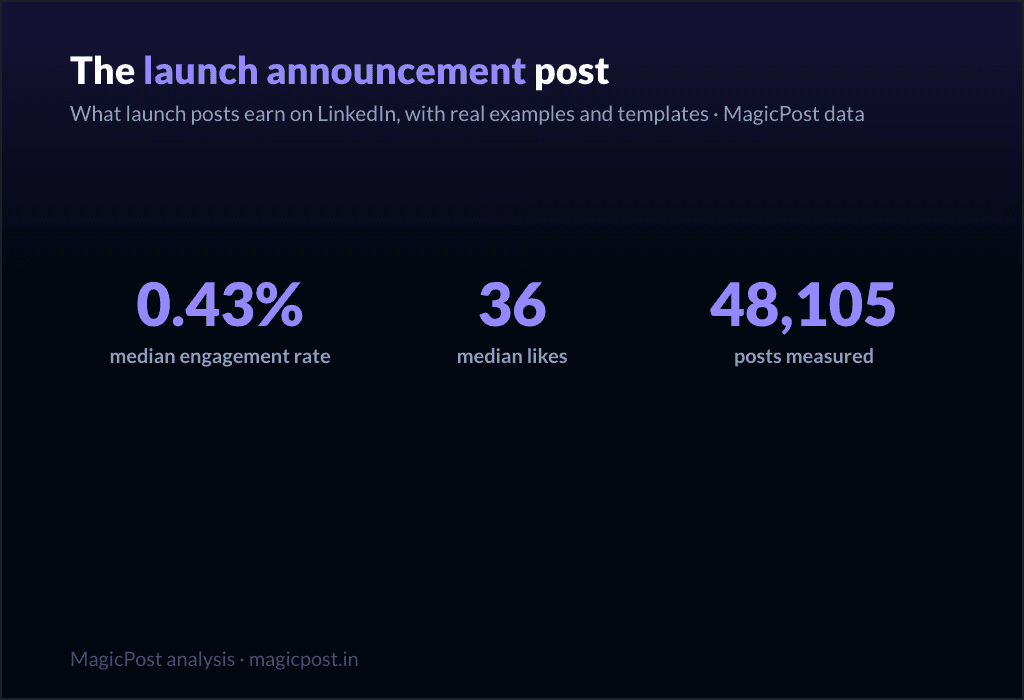
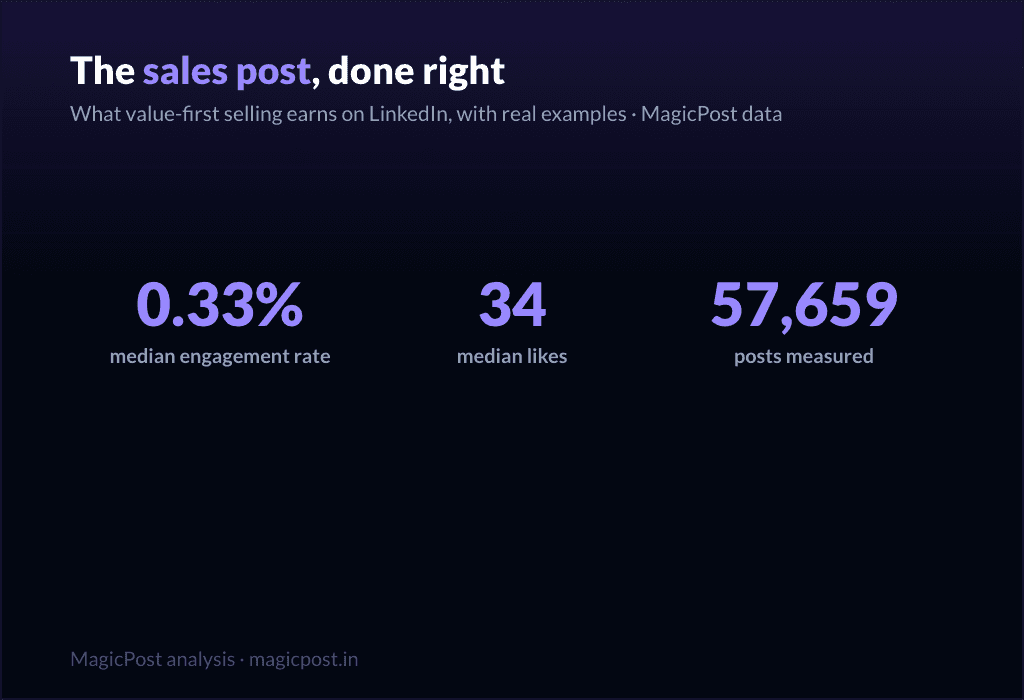
So does it work? We measured it. Across 11,530 comment-gated lead magnet posts in the last 12 months, the median earns a 0.40% engagement rate. The platform-wide median across 1.14 million posts is 0.39%. So the format lands almost exactly on the average post, and crucially above the direct sale, which medians 0.33%.
That headline has two halves. The good half: comment-gating is the gentlest way to ask for an email. The blunt half: a chunk of those comments are transactional, people typing one word to get a file, not because the post moved them. This page gives you the verdict, two post mechanics that run the gate cleanly, and the salvaged advice on building a magnet worth trading an email for.
How the comment-gated lead magnet ranks against a direct sale
Here is the comment-gated post next to the direct sale it is usually compared with:
Post type | Posts measured | Engagement rate | Median likes | Median comments |
Comment-gated lead magnet | 11,530 | 0.40% | 39 | 17 |
Platform median (all posts) | 1,141,932 | 0.39% | - | - |
Value-first selling | 57,659 | 0.33% | 34 | 11 |
Read the comment column first, because it is the whole mechanic. The gated post earns a median 17 comments against 11 for the direct sale. That is the gate working: the post asks for a comment, and people comply because a comment is the price of the file.
That engagement used to buy a little reach. Until late July 2026, posts ending on a “Comment KEYWORD” line got slightly more impressions than their author's average post (9% more). Since the week of July 27, 2026, they get about half (52% fewer), even though people still comment to get the file.
Our LinkedIn comment bait study dates the break week by week, on 684,000 posts. (For the full ranking, see which LinkedIn post types actually get engagement.)
The trade-off of a comment-gated lead magnet
Here is the part most lead-magnet guides skip. A median of 17 comments looks like a thriving conversation. It mostly is not: a large share are a single word typed to trigger a DM, by people who skim the file once and never reply. The engagement is real on the dashboard and thin in the relationship.
That trade is defensible if you make it on purpose. You are spending the appearance of a conversation, and since late July 2026 about half your usual reach, to collect email addresses. That can be worth it, but it is not the deep engagement a story or contrarian take earns.
So the gated post is a tool, not a personality: lean on it every post and your feed becomes a vending machine the algorithm stops rewarding.
Want the gated post written so the value carries it, not the gate? The hard part is making the post useful enough to deserve the ask. MagicPost's AI LinkedIn post generator turns your magnet and your topic into a post that teaches first and gates last, so the comment is earned by the value, not begged for at the end.
What a comment-gated post actually looks like
The posts that earned the most engagement here do not lead with the ask. They deliver a complete, free idea, and the gated resource sits underneath. Three verbatim examples from our corpus. The clearest lead-magnet framing in the set is a story that ends in an offer because people kept asking for it:
"I’ll never forget this talk. But what most people don’t know is how much I wish I had done differently,how I could’ve managed my nerves, paced myself better, and handled the tech issues (my mic broke in the middle of the talk!). Over the years, so many people have asked for advice on becoming a better public speaker." Simon Sinek, 5,890 likes (post)
The resource is positioned as the answer to demand the author did not manufacture, so the gate reads as generous. Same teach-first shape here, where the whole post is a complete idea before any ask:
"You can lose the job. Lose the business. Lose the money. But you cannot afford to lose yourself. So why do so many people ignore the one thing they'll live with forever? Themselves. I see people do it all the time: They'll spend 10 hours grinding at work." Justin Welsh, 8,440 likes (post)
And a third, the "you are not alone" preview that makes the reader want the full version:
"You feel like a mess. But they think you're a machine. The gap between how you see yourself and how the world sees you is massive. Inside your head? It is loud. You are overthinking every move. You are doubting every decision. You feel like you are just making it up as you go. But nobody else hears the noise." Justin Welsh, 6,840 likes (post)
The pattern across all three: the post is valuable before the gate exists. A reader who never comments still leaves with something. That is what keeps the format above the platform median, and the line between a lead magnet and engagement bait.
Two templates for the gated post
Starting structures, not scripts. Fill in your own facts. Both put the value before the gate.
One update before you copy them: since the week of July 27, 2026, a “Comment KEYWORD” line costs a post about half its usual impressions.
Both templates still work with the last line swapped: put the resource in the first comment (posts that do sit 11% below their author's average, the same as before the break), or end on a real question and send the file to the people who answer.
1. The value-stack gate
Give away a self-contained lesson, then offer the expanded version as the magnet.
[Complete, useful idea, delivered in full. The reader can act on this alone.]
Here's the thing: this is the short version.
The full [checklist / template / breakdown] has [the 3-4 extra things it adds].
If you want it, comment "[WORD]" and I'll send it over.
(Following helps it reach you, but the file's yours either way.)
Why it works: the post already paid the reader, so the comment feels like opting into more, not buying access. The free idea earns the attention; the gate converts a slice of it.
2. The preview gate
Show one real piece of the resource, the most useful step, then gate the rest.
Here's [one concrete, screenshot-able piece of the resource: a single step, one
template field, the one stat that surprised people].
That's [step 3] of [the full thing]. The other [N] steps cover [the outcomes].
Comment "[WORD]" for the full [resource]. I'll DM it today.
Why it works: the preview removes the gamble. The reader is commenting on proof, not a promise, and the "I'll DM it today" sets the fast-delivery expectation where the format keeps or loses its credibility.
The DM is where the lead is won or lost
The post is the easy part. The lead is won or lost in the DM that follows. Two rules:
Deliver fast, exactly what you promised. The gate is a promise: comment, get the file. Honor it within hours, and send the actual resource, not a "here's a link to book a call." Break it once and the next gated post is ignored.
Then start a conversation. The file is the open, not the close, and your one chance to turn a one-word commenter into a reply. Ask one genuine question tied to the resource. That is the lead.
Running the comment flood by hand scales badly. MagicPost's LinkedIn engagement tools help you keep up with the comments and DMs a gated post generates, so the follow-up that wins the lead does not get buried under the hundred that just wanted the file.
How to build a magnet worth gating
The mechanics only pay off if the thing behind the gate is good. The salvaged essentials:
Solve one painful problem, completely. Narrow wins. "10 things to set up before you launch" beats "the complete guide to launching," because a specific promise feels deliverable and a broad one feels like homework.
Create desire with useful-but-incomplete value. Give a real win, then leave the reader wanting the next step, so they think "if this is free, what's the paid version?" That is the bridge from a free file to a customer.
Keep the format fast. Short, practical tools beat long ebooks: a checklist, template, cheat sheet, quick-start guide, or short mini-course, each a fast result with no reading required.
Make delivery one step. The moment the reader has to hunt for the file or fill in a second form, you have spent the goodwill the post built.
When a magnet underperforms, it is almost never the design. It is alignment: too broad, not painful enough, or aimed at the wrong audience. Fix the fit first.
The verdict
Comment-gated lead magnets work, with two asterisks. At 0.40% they clear the 0.39% median and beat the direct sale's 0.33%, but the median 17 comments are partly transactional, so judge the format as a capture tool, not proof people loved your post.
And since the week of July 27, 2026, the “Comment KEYWORD” line costs the post about half its impressions: keep the magnet, and deliver it through a link in the first comment or to the people who answer a closing question. Run it when the magnet is worth the friction and the DM follow-up wins the lead.
The direct sale is the harder ask; this is its gentler cousin (see the LinkedIn sales post playbook, and the full LinkedIn post templates hub). To make the comment land more reach, how to comment effectively for better reach on LinkedIn covers the mechanics.
Where the data and examples come from
Every engagement figure here comes from MagicPost's own corpus, the same one used across this cluster: LinkedIn posts published over the last 12 months, reshares and excluded posts filtered out, deleted posts removed, then classified by post type. For each category we report the median of likes-plus-comments over follower count, not the mean, so a handful of viral posts cannot pull a type's number off true. The comment-gated lead magnet is measured on 11,530 posts, value-first selling on 57,659, and the platform median on 1,141,932 posts. The example posts are real, public posts pulled verbatim, each linked to its source. One confounder worth flagging: the creator who runs a clean gated post tends to give well elsewhere, so part of the 0.40% reflects intent, not the format alone. The direction holds: gating outperforms selling on engagement rate. Reach is measured separately, against each author's average post, in the comment bait study linked above.
FAQ
Do comment-gated lead magnets work on LinkedIn?
Comment-gated lead magnets work on LinkedIn as a capture tool, with one change in 2026. Measured across 11,530 comment-gated lead magnet posts over the last 12 months, the median earns a 0.40% engagement rate, just above the 0.39% platform median and above the 0.33% direct sale, mostly through comments (median 17, versus 11 for a sale).
Since the week of July 27, 2026, though, posts ending on a “Comment KEYWORD” line get about half the impressions of their author's average post, according to MagicPost's study of 684,000 LinkedIn posts. The magnet still works; the keyword gate is now the costly way to deliver it.
What is a comment-to-get post on LinkedIn?
A post that offers a free resource (a checklist, template, or breakdown) in exchange for a comment. The author writes a useful post, ends with "comment WORD and I'll send it," then DMs the resource to everyone who comments. The comment is the gate, the low-cost action the reader takes to receive the file. The comment signals interest and inflates the post's comment count, which used to push the post into more feeds. Since late July 2026, these posts get about half the impressions of their author's average post.
Does a comment-gated post still get more reach on LinkedIn?
No: since late July 2026, a comment-gated LinkedIn post gets about half the impressions of its author's average post (52% fewer), in MagicPost's study of 684,000 posts. Until then it got slightly more (9% more). It still collects comments, a median of 17 against 11 for a sale, so the gate now trades reach for a list of names.
How do I make a LinkedIn lead magnet that actually converts?
Solve one specific, painful problem completely, in a fast format (a checklist, template, or short guide beats a long ebook). Make it useful but incomplete enough that the reader wants the paid next step, then run the post so the value comes before the gate. Most magnets fail on alignment, not design: too broad, not painful enough, or aimed at the wrong audience. Fix the fit first.
Is comment-gating just engagement bait?
It can be, and the line is the value. Engagement bait asks for a comment and gives nothing back; a real lead magnet delivers a complete, useful post first and gates only a genuine deeper resource. The format clears the platform median (0.40% versus 0.39%) precisely because the surviving examples are useful before the ask. Gate something worthless and the one-word comments stop fooling readers and the algorithm alike.
Turn the comment flood into actual leads. MagicPost brings the drafting, the scheduling, and the analytics together in one workspace, so the post that delivers your magnet gets read and the follow-up that wins the lead does not get lost in the rush.