" height="26.80529977783203px" id="tymKb8bqC" width="128.00300311279295px"/><path d="M 0 2.417 L 0 0 L 12.909 0 L 12.909 2.417 Z" fill="rgb(126, 78, 253)" height="2.417099999999998px" id="aYr4em6zK" transform="translate(128.341 22.325)" width="12.908999999999992px"/></svg>)

"/><stop offset="1" stop-color="rgb(118, 37, 250)"/></linearGradient></defs><g d="M 19.242 21.22 L 19.362 6.204 L 19.272 6.204 L 13.757 21.22 L 10.161 21.22 L 4.796 6.204 L 4.706 6.204 L 4.825 21.22 L 0 21.22 L 0 0 L 7.283 0 L 12.109 13.607 L 12.229 13.607 L 16.844 0 L 24.247 0 L 24.247 21.22 Z M 26.421 26.113 L 26.421 23.445 L 41.407 23.445 L 41.407 26.113 Z" fill="transparent" height="26.112508199679183px" id="DvfaAIHYn" width="41.40731898311435px"><path d="M 19.242 21.22 L 19.362 6.204 L 19.272 6.204 L 13.757 21.22 L 10.161 21.22 L 4.796 6.204 L 4.706 6.204 L 4.825 21.22 L 0 21.22 L 0 0 L 7.283 0 L 12.109 13.607 L 12.229 13.607 L 16.844 0 L 24.247 0 L 24.247 21.22 Z" fill="rgb(46, 46, 46)" height="21.220180016149442px" id="pLsxRCobd" width="24.247352589074694px"/><path d="M 0 2.668 L 0 0 L 14.986 0 L 14.986 2.668 Z" fill="url(%23yD9d4I5GR-3279285344-linear-gradient)" height="2.6675085048549647px" id="yD9d4I5GR" transform="translate(26.421 23.445)" width="14.986002836263765px"/></g></svg>)
Création de contenu

Saad Mouaouine
Most B2B sales teams have a cold outreach problem. Reply rates on cold emails have dropped to between 1% and 5%, and cold LinkedIn messages aren’t far behind. Buyers are busier, more skeptical, and good at ignoring anything that smells like a sales pitch.
The sales reps closing deals on LinkedIn aren’t necessarily sending more messages. They’re building a presence that makes outreach feel warm by the time it lands.
That’s content-first social selling on LinkedIn, and this guide covers how to do it, measure it, and make it sustainable without it consuming your whole day.
What Is Social Selling on LinkedIn?
Social selling on LinkedIn is the practice of using your personal profile and content to build relationships with potential buyers, establish credibility in your space, and generate inbound pipeline before any direct sales conversation begins.
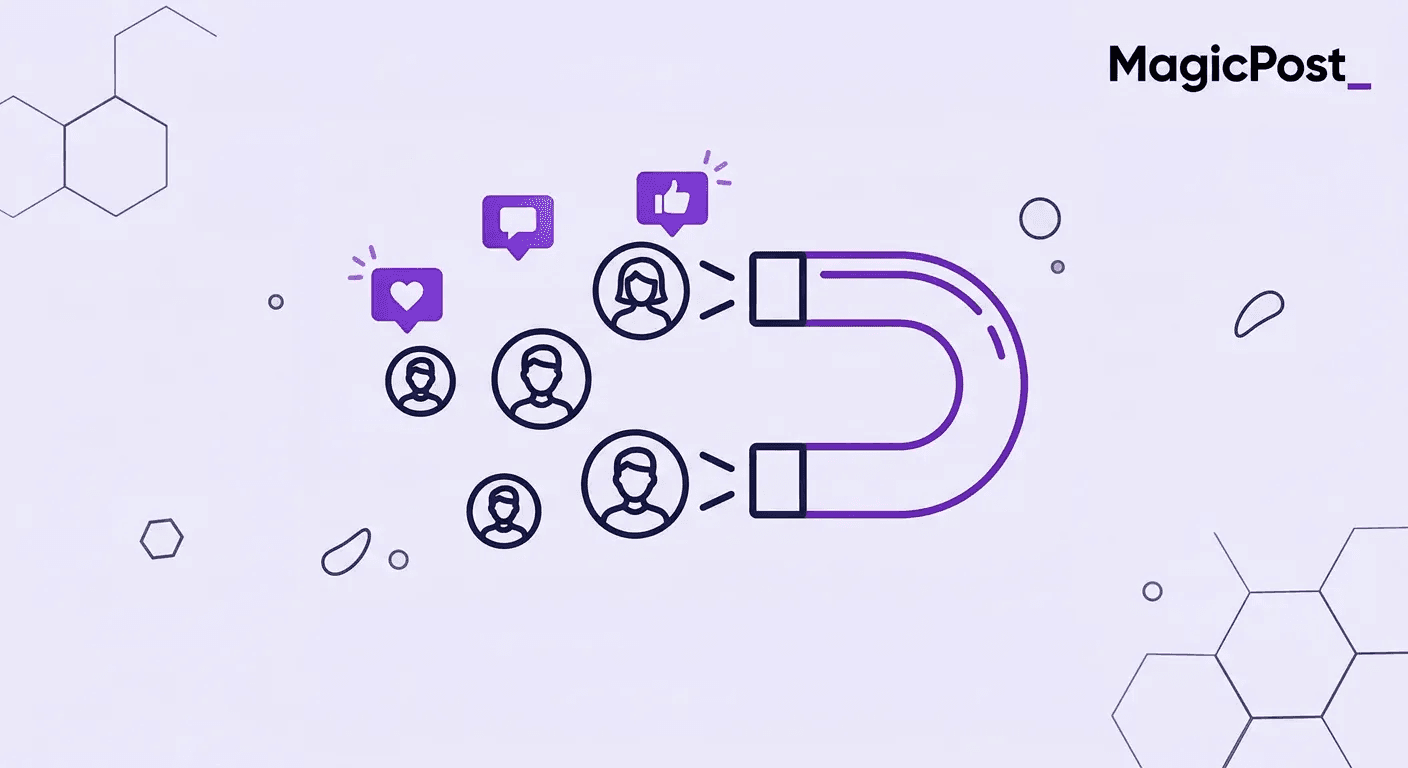
It’s measured by LinkedIn’s Social Selling Index (SSI), a 0–100 score across four pillars:
Professional brand
Finding the right people
Engaging with insights
Building relationships
Sales reps with high SSI scores are 51% more likely to hit quota than those who don’t engage with the platform.
📌 Content-first social selling specifically means building that presence through consistent posting rather than leading with outreach, turning your feed into a pipeline asset before you send a single message.
Why Is LinkedIn Cold Outreach Alone Not Enough in 2026?
Cold outreach has a math problem. Even with a well-targeted list and a decent message, a 2% to 3% reply rate means 97 out of every 100 contacts ignore you. This is a recognition problem, not a messaging problem: people reply to people they’ve heard of.

Data backs this up:
Research from LinkedIn and Edelman found that 90% of B2B decision-makers’ attention and purchase decisions are influenced by referrals from people they know and respect.
LinkedIn research showed that exposure on LinkedIn is associated with as much as a 50% increase in down-funnel rates across all channels.
By the time a buyer takes a meeting, they’ve already formed a view of who they trust. If you’re not visible during that research phase, you’re not in the running.
Content is how you get visible during that phase. A sales rep who regularly posts practical insights in their sector isn’t doing marketing; they’re doing warm-up at scale. When that rep’s outreach message lands in a prospect’s inbox, it lands differently.
By the Numbers |
|---|
51% of social sellers are more likely to achieve quota than non-social sellers. |
Salespeople who use LinkedIn to build relationships have a Social Selling Index (SSI) score that’s 45% higher than those who don’t. |
Only 1% of LinkedIn’s monthly users share content weekly, but that 1% generates 9 billion impressions. The platform is starved for creators. |
What Is the LinkedIn Social Selling Index? (SSI)
LinkedIn’s Social Selling Index is a score between 0 and 100 that measures how effectively you’re using the platform for sales. You can check your SSI score for free; it updates daily. The score is built on four equally weighted pillars:
SSI Pillar | What It Measures | How to Improve It |
|---|---|---|
Establish your professional brand | Profile completeness, content quality, and follower growth | Complete your profile fully. Post consistently. Use the LinkedIn headline generator to sharpen how you describe what you do. |
Find the right people | How effectively you identify and research prospects | Use Sales Navigator or LinkedIn search to engage with decision-makers in your sector rather than broadcasting to everyone. |
Engage with insights | Quality of your interactions with others' content and your own post engagement | Comment substantively on posts in your niche. Share perspectives, not just reposts. |
Build relationships | Growth of your network with relevant connections and quality of follow-up | Connect with intent. After someone engages with your content, reach out with context. Use the LinkedIn outreach message templates as a starting point. |
The SSI isn’t a vanity metric. It’s a reasonable proxy for how well your LinkedIn activity maps to actual sales behavior. The best way to improve it quickly is consistent content, which directly boosts the professional brand pillar and generates the engagement that lifts the others.
✅ Pro Tip: Check your SSI score at the start of the week and use it as a quick diagnostic. If your score is dropping, it usually means your posting has gone quiet or your engagement has gone passive. Both are fixable in a day.
How Does Content-First Social Selling Actually Work?
Content-first social selling isn’t about posting thought leadership for its own sake. The focus is on building the conditions that make outreach land. Here’s how:
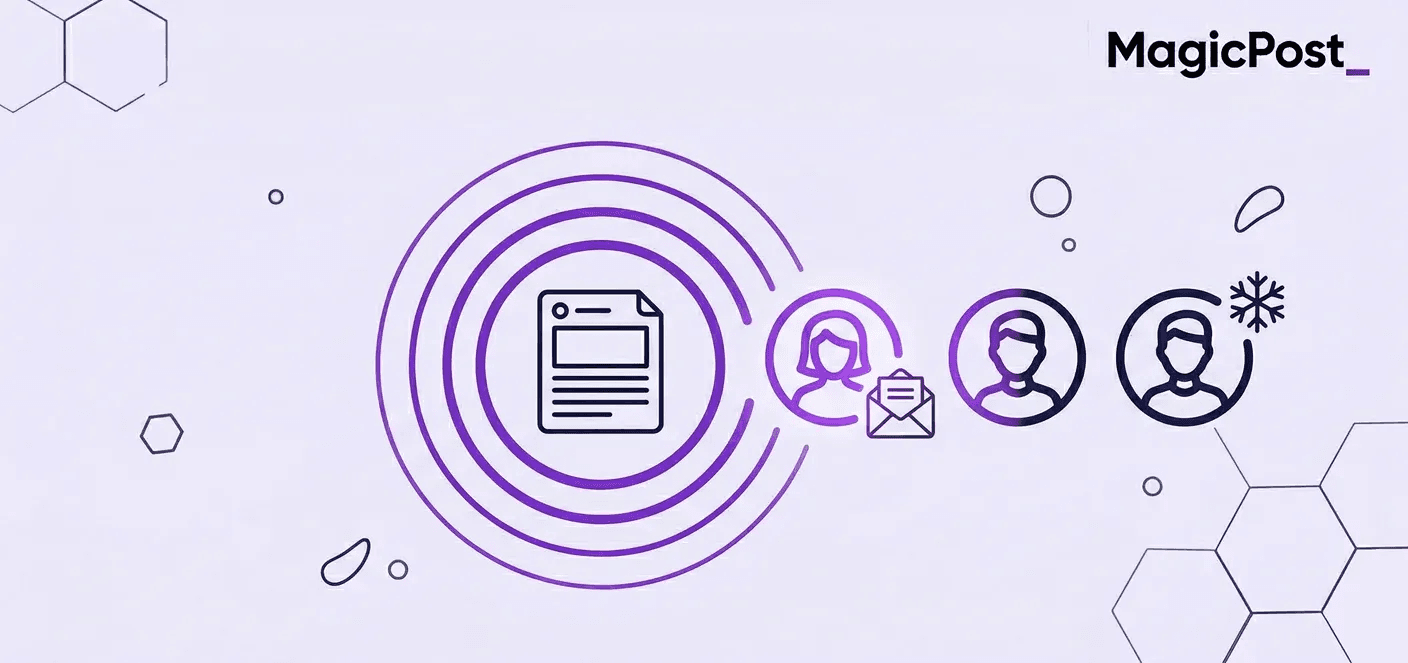
Every post you publish reaches people in your network and, if it performs, well beyond it.
Document carousels generate 3x more engagement than plain text posts; multi-image posts generate about 2x. Learn more in our LinkedIn post types breakdown.
When your ideal customers engage with your content (a like, a comment, or a share), they’re signaling interest before any commercial conversation has started. Those signals are warmer than any intent data you can buy.
What Kinds of Posts Work for LinkedIn Sales?
The most effective content for social selling is specific, opinionated, and tied to real-world experience. In practice, that means:
Lessons from client situations: what you saw, what surprised you, what you would do differently. No names needed.
Contrarian takes on common advice: disagreement generates comments. Comments signal to the algorithm that your content is worth distributing.
Breakdowns of a framework, process, or tool: teaching something specific positions you as the person who knows their domain, not just someone who posts.
Short data-backed observations: one stat, one implication, and your view on it. It’s clean and fast to read.
What doesn’t work is generic motivational content, thinly-veiled product pitches, and company news that only your colleagues care about.
If your post could’ve been written by anyone in your sector, it’s not doing the job. For format guidance and structure, see our breakdown of LinkedIn post best practices and the best LinkedIn hooks to open with.
How Often Should Sales Reps Post?
Consistency matters more than frequency. Three posts a week is a solid target; it keeps you visible without making posting your new job.
The best time to post on LinkedIn varies by audience, but Tuesday to Thursday mornings tend to perform well for B2B.
More important than the day is the golden hour: the first 60 minutes after a post goes live is when the algorithm decides how widely to distribute it. Be around to respond to early comments.
✅ Pro Tip: Batch-write your posts at the start of the week rather than writing one the morning you need it. Thirty minutes on a Monday morning can cover your whole week. Schedule them in advance and your morning is free for actual selling.
What Does a Social Selling Routine Actually Look Like?
The reason most sales reps abandon social selling isn’t motivation; it’s time. A 90-minute daily LinkedIn ritual isn’t compatible with a quota-carrying role. The routine that sticks is the one that fits inside 20 minutes.
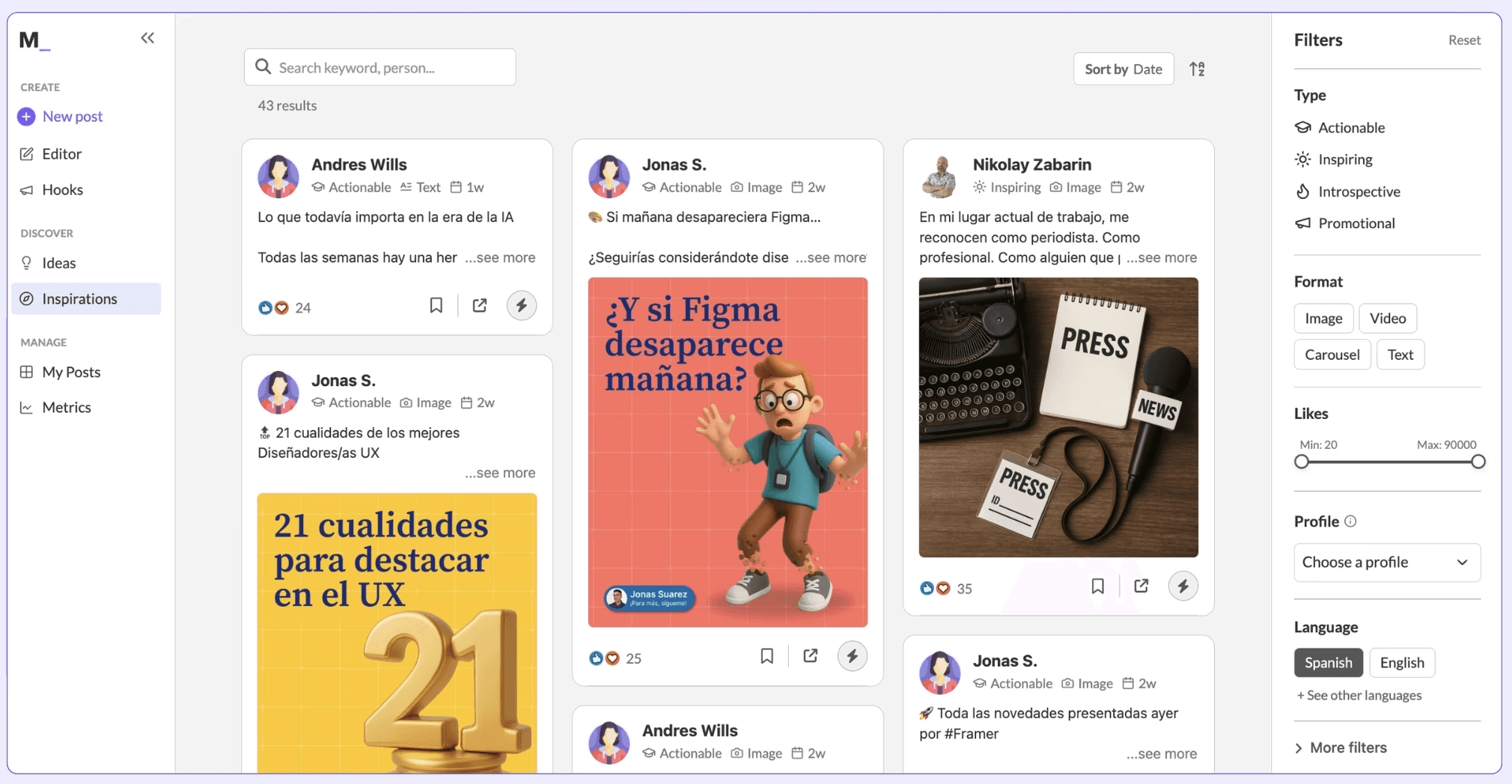
Here’s a 20-minute social selling routine:
5 minutes: Check your notifications and reply to any comments on your last post. A reply in the first hour extends your post’s reach. Even a short, genuine response counts.
5 minutes: Leave two or three substantive comments on posts from people in your target accounts or sector. Don’t say “Great post.” Write a sentence or two that add something.
10 minutes: Draft or review today’s post. If you’re using a LinkedIn Management Tool trained on your voice, this is reviewing rather than writing from scratch. Adjust the hook, check the formatting, and schedule it.
The ten-minute drafting window is where most reps get stuck. Staring at a blank page, second-guessing the angle, spending twenty minutes on a hook… It adds up fast.
👍 MagicPost connects to your LinkedIn profile, learns your writing style from past posts, and generates drafts in your voice based on the subject you give it. Pick the post type, input the topic, and get a draft ready to edit rather than a blank canvas to fill. Scheduling via LinkedIn's official API means you’re never manually copying and pasting at 8 a.m. to hit the right window.
Task | Manual | With MagicPost |
|---|---|---|
Drafting a post | ❌20–40 min of blank-page writing | ✅ Generate a voice-matched draft in seconds; edit and go |
Formatting for mobile | ❌ Manual spacing, preview in LinkedIn | ✅ Use the free post previewer before you publish — see exactly how it looks |
Finding angles and ideas | ❌ Scroll for inspiration; often blocked | ✅ Use the post idea generator or viral post library to find what's performing in your niche |
Scheduling | ❌ Native scheduler or manual publish at peak time | ✅ One-click schedule via official API; no reach suppression risk |
Tracking performance | ❌ Check LinkedIn analytics manually | ✅ Dashboard shows impressions, engagement, and follower growth in one place |
How Do Sales Teams Scale Social Selling Across the Whole Team?
Individual social selling works. But when an entire sales team is active on LinkedIn, the effect compounds.
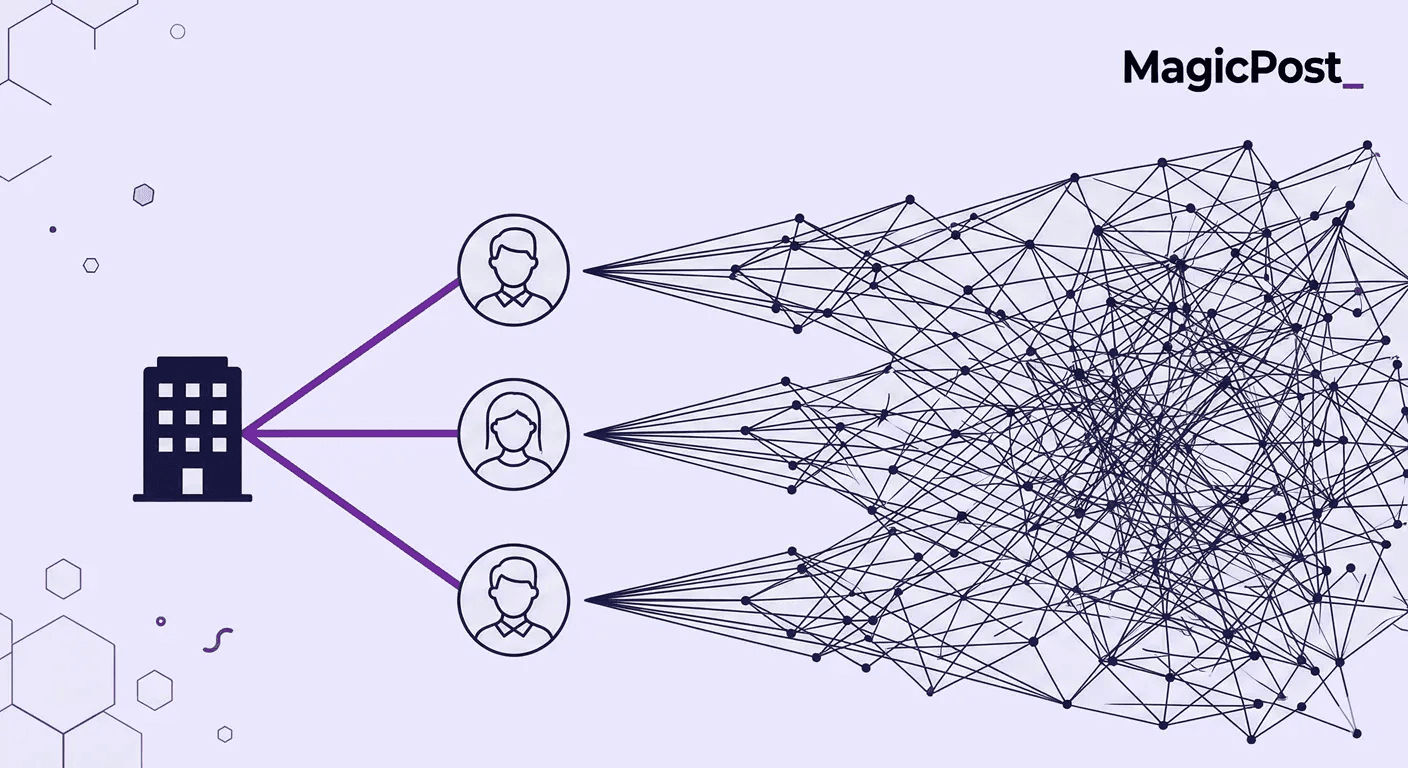
Content shared by employees gets 561% more reach than the same content posted through a company page.
A team of ten active reps isn’t ten times the visibility; it’s a multiplier that reaches different networks, different sectors, and different decision-makers simultaneously.
The challenge is consistency. Getting ten reps to post three times a week doesn’t happen through a Slack message asking them to “post more on LinkedIn.” You need to make it faster and less intimidating to publish than to skip it.
What Holds Sales Teams Back from Posting?
Time: Reps are measured on dials and pipeline, not LinkedIn activity. Anything that feels like extra work gets deprioritized.
Blank page anxiety: Not knowing what to say, worrying about sounding wrong, or not trusting their own writing are all common reasons.
Fear of the corporate voice: Nobody wants to share something that sounds like a press release; authenticity matters to reps as much as it matters to buyers.
The teams that crack this give reps tools that produce content in their own voice, not templated company messaging, and make the process fast enough that it doesn’t compete with actual selling time.
For a deeper look at building a team-wide program, see our guide to employee advocacy software and what separates the programs that actually get employees posting from the ones that die in a Slack channel.
✅ Pro Tip: The fastest way to build a team social selling habit is to make the first post the easiest one. Run a short workshop, let reps generate their first post with an AI tool in their own voice, and get it live in the session. The hardest part is always starting. Once someone has one post live with real engagement, the second one is much easier.
Is LinkedIn Social Selling Automation Safe?
Using a tool to draft content and schedule posts through LinkedIn’s official API is completely safe; it’s the same mechanism LinkedIn itself uses. But using browser extensions to send mass connection requests, scrape profiles, or simulate human clicks isn’t.
LinkedIn actively scans for over 6,000 extension IDs associated with automation and data scraping. Getting flagged isn’t a slap on the wrist; accounts that trigger these systems can face permanent restrictions.
Any tool you use for social selling should be built on OAuth-authenticated API access, not a browser extension that intercepts your session. MagicPost is a LinkedIn-verified partner: every post goes out through the official API.
👍 For more on what causes account restrictions, see our guide to LinkedIn account safety.
Build Your LinkedIn Presence for Social Selling with MagicPost
Social selling on LinkedIn isn’t a hack. It’s a long game with a compounding return. The reps who build a consistent content presence now will be the ones whose outreach lands in six months because prospects already know their name.
The barrier isn’t strategy, as most sales understand the logic. Time is. Twenty minutes a day is achievable for any quota-carrying rep if the drafting step doesn’t eat the whole window. That’s the problem worth solving first.
Ready to build your LinkedIn presence without losing an hour a day to it? Try MagicPost for free; no credit card is required.
FAQ
What is social selling on LinkedIn?
Social selling on LinkedIn is using your personal profile and content to build credibility with potential buyers and generate inbound pipeline before you reach out directly. It’s measured by LinkedIn's Social Selling Index (SSI) and includes four pillars: professional brand, finding the right people, engaging with insights, and building relationships.
For a full breakdown of how to build your LinkedIn strategy, see our guide to LinkedIn content strategy.
How do I improve my LinkedIn Social Selling Index (SSI)?
The fastest way to improve your SSI is consistent content publishing combined with genuine engagement on others' posts. Your professional brand pillar responds directly to posting frequency and profile completeness. The engagement and relationship pillars respond to how actively you comment and connect.
Use the LinkedIn engagement rate calculator to understand which of your posts are actually working.
How many times a week should a sales rep post on LinkedIn?
Three times a week is the practical target for most reps. It’s visible enough to stay top-of-mind and manageable enough to sustain alongside a full sales role. Posting daily is worth it if you can maintain quality, but inconsistent daily posting is worse than consistent three times a week.
See our full breakdown of the best posting frequency on LinkedIn for the data behind this.
What types of LinkedIn posts work best for B2B sales?
The posts that generate the most engagement and pipeline for salespeople tend to be specific and opinionated: lessons from real client situations, a contrarian take on industry advice, a short data-backed observation with a clear point of view. Generic motivational content and thinly-veiled product pitches consistently underperform.
For structure and format, see our guide to writing LinkedIn posts that get read and the LinkedIn post examples for reference.
What is the difference between social selling and LinkedIn automation?
Social selling is a strategy: building relationships and credibility through content and genuine engagement. LinkedIn automation is a category of tools, some of which are safe (content drafting and scheduling via the official API) and some of which are not (mass connection requests, profile scraping, and session hijacking via browser extensions).
The safest approach to scaling social selling uses API-verified tools for content publishing and keeps outreach human. See our guide to automating LinkedIn posts safely for the practical setup.
LinkedIn Content Agency: Do You Actually Need One in 2026?
Wondering whether a LinkedIn content agency is worth the cost? Here’s what they do, what they charge, and when a dedicated platform is the better choice.
Comment obtenir plus de followers sur LinkedIn en 2026
Vous avez du mal à développer votre présence sur LinkedIn ? Découvrez les stratégies, cadres et habitudes de publication exacts qui vous aident réellement à obtenir plus de followers sur LinkedIn en 2026.
Publications LinkedIn avec IA : Comment utiliser l'IA sans avoir l'air d'une IA
Fatigué des contenus génériques et robotiques ? Apprenez à écrire des publications LinkedIn avec IA qui ressemblent vraiment à vous en utilisant un cadre d'humanisation éprouvé étape par étape.
Comment créer un calendrier éditorial LinkedIn (2026)
Apprenez à créer un calendrier éditorial LinkedIn qui vous permet de rester cohérent, organisé et de publier sans stress. Comprend un cadre de mix de contenu pratique.
Qu'est-ce que l'engagement LinkedIn (et comment le maîtriser en 2026)
Vous avez du mal avec votre engagement sur LinkedIn ? Découvrez comment l'algorithme de LinkedIn le mesure, les références pour 2026 et les 4 piliers pour augmenter vos interactions.
8 façons d'apporter une réelle valeur sur LinkedIn
Apprenez à créer des publications LinkedIn précieuses qui éduquent, engagent et renforcent la confiance. Découvrez des conseils pratiques, des visuels, des timings, et des erreurs courantes à éviter.