" height="26.80529977783203px" id="tymKb8bqC" width="128.00300311279295px"/><path d="M 0 2.417 L 0 0 L 12.909 0 L 12.909 2.417 Z" fill="rgb(126, 78, 253)" height="2.417099999999998px" id="aYr4em6zK" transform="translate(128.341 22.325)" width="12.908999999999992px"/></svg>)

"/><stop offset="1" stop-color="rgb(118, 37, 250)"/></linearGradient></defs><g d="M 19.242 21.22 L 19.362 6.204 L 19.272 6.204 L 13.757 21.22 L 10.161 21.22 L 4.796 6.204 L 4.706 6.204 L 4.825 21.22 L 0 21.22 L 0 0 L 7.283 0 L 12.109 13.607 L 12.229 13.607 L 16.844 0 L 24.247 0 L 24.247 21.22 Z M 26.421 26.113 L 26.421 23.445 L 41.407 23.445 L 41.407 26.113 Z" fill="transparent" height="26.112508199679183px" id="DvfaAIHYn" width="41.40731898311435px"><path d="M 19.242 21.22 L 19.362 6.204 L 19.272 6.204 L 13.757 21.22 L 10.161 21.22 L 4.796 6.204 L 4.706 6.204 L 4.825 21.22 L 0 21.22 L 0 0 L 7.283 0 L 12.109 13.607 L 12.229 13.607 L 16.844 0 L 24.247 0 L 24.247 21.22 Z" fill="rgb(46, 46, 46)" height="21.220180016149442px" id="pLsxRCobd" width="24.247352589074694px"/><path d="M 0 2.668 L 0 0 L 14.986 0 L 14.986 2.668 Z" fill="url(%23yD9d4I5GR-3279285344-linear-gradient)" height="2.6675085048549647px" id="yD9d4I5GR" transform="translate(26.421 23.445)" width="14.986002836263765px"/></g></svg>)

Naïlé Titah
Every December, LinkedIn fills up with the same post: a snowy stock photo, a logo in the corner, "Wishing all our connections a happy holiday season and a prosperous New Year." Polite, professional, and completely invisible. You have scrolled past a hundred of them and could not name one.
That is the corporate holiday card problem. The post exists to be sent, not read, so the feed treats it like a card and moves on. The good news: the holiday posts that actually land are not harder to write, just more specific and more human. This page shows you what those look like, with real examples and three fill-in templates you can adapt in five minutes.
One honest note up front: we did not isolate "holiday post" as a measured content type, so we will not hand you a fake "holiday posts get X% more reach" stat. What we can tell you is what kind of writing wins on LinkedIn generally.
TL;DR: The corporate holiday card is invisible; holiday posts that work are specific and human: gratitude with names, a real moment from the year. Holidays are a timing peg for a gratitude or year-review post, and the easiest posts to schedule early.
The one number that should change how you write yours
Across our corpus of more than 1.1 million LinkedIn posts, the median post earns an engagement rate of 0.39% of the author's followers. That is the baseline every post fights against.
Now look at warm, human posts specifically. Posts we classify as a positive message (encouragement, gratitude, good wishes, the family a holiday post belongs to) earn a median 0.61%, meaningfully above the 0.39% baseline.
Read that the right way. A warm, generous message is not a weak post on LinkedIn; the warmth is not the problem. The corporate card fails because it is warm and generic at once, and generic is what kills it. Keep the warmth, drop the template-card voice, and you are already in the lane that beats the median. (Caveat: 0.61% is the median for positive-message posts of all kinds, not holiday posts in particular, so treat it as a directional signal, not a holiday-specific promise.)



What the holiday posts that actually work have in common
We pulled real holiday-season posts that traveled, and the pattern is consistent: the winners are not "happier" than the corporate card, they are more specific and they cost the author something to write. A name, a real moment, an honest thought. Three, kept verbatim.
1. The wish that gives the reader something to do. Gary Vaynerchuk does not just wave at the season, he turns it into a small prompt:
"Happy holidays 🌲 my friends .. let’s use the joy of these days to rev up our plans in 2025 for more joy, piece of mind, happiness, good vibes …." Gary Vaynerchuk (source)
Still a holiday wish, but it hands the reader a question, so the comments fill up. A card asks for nothing; this asks for one small reflection.
2. The real moment from the year. Tejaswee Tripathy does not say "we value our team," she shows one specific thing that happened:
"We planned quiet Christmas surprise for our employees at Novotel Vizag🎅🎄 It felt special to do something quietly for people who give their best every single day. We chose people over schedules and surprised our team👭 Red velvet cake on the table 🍰A specially planned dinner for the team." Tejaswee Tripathy (source)
Red velvet cake. A named hotel. A real choice ("people over schedules"). You cannot copy-paste this onto another company, which is exactly why it works.
3. The gratitude that names what it thanks. Brené Brown's note reads like a year-in-review wrapped in a thank-you:
"A huge thank you to this community for supporting Strong Ground, for engaging in meaningful debate about what it means to lead in this difficult time, and for being thoughtful with your intentions and words in the comments. I'm thinking about doing a read-along series starting in January." Brené Brown (source)
She thanks the community for a named thing (Strong Ground, the debate, the comments) and points forward to January. The gratitude is real because it is attached to something real.
The thread through all three: the holiday is the timing, not the content. Nobody engaged because it was December. They engaged because of a question, a cake, a named community. The season just gave the author a reason to press publish.
The peg: holidays are a date, your post still needs a subject
The most useful idea on the page. A holiday is a peg, the same way a work anniversary is: a natural date that gives you permission to post something you would not otherwise have an excuse to share.
So do not write "a holiday post." Write a gratitude post, a year-in-review post, or a lesson-from-this-year post, and let the holiday make it timely. The date is the hook; the content is yours. Get that order right and you never stare at a blank "happy holidays" box again. (For the full menu of subjects that earn attention, see what to post on LinkedIn.)
Write it now, schedule it for the date. Seasonal posts are the single easiest kind of post to prepare ahead, because you already know the date months in advance. Draft your holiday note when you are calm in November, then schedule it to post on the day so it goes out at the right moment while you are actually offline with family. That is the natural product fit for seasonal content: written early, published on time, zero scramble.
Three templates you can fill in today
Each maps to a pattern above. Swap the brackets, keep the specificity, and delete anything that sounds like a card.
Template 1: The year-gratitude note (names the people)
This year, [specific thing your audience/team/clients helped happen]. I want to thank [name a real group: my team, this community, the [N] clients who trusted us] for [the specific thing they did, not "your support"]. [One honest line about what it meant to you.] Happy holidays. See you in [next year] with [the one thing you're excited to build].
The whole job: make the thank-you un-copy-pasteable. If another company could post your exact words, you have written a card.
Template 2: The human wish (costs you something to write)
[Honest one-line observation about this time of year, the busy season, the slowing down, the reflecting.] So here's my actual wish for you this holiday: [something specific and a little vulnerable, not "prosperity and success", but "the kind of rest that doesn't feel like guilt" or "one project next year that scares you a bit"]. [Optional small question to invite replies: what's the one thing you're hoping for next year?] Happy holidays.
The vulnerability is the point. A greeting-card wish is invisible; a wish that sounds like a real person saying a real thing gets read.
Template 3: The year-in-review peg (the holiday is the excuse)
[Year] taught me [one real lesson, stated plainly]. The moment it clicked: [one specific story, two or three sentences, a real scene]. What I'm taking into [next year]: [the change you're making because of it]. The holidays are a good time to look back, so: thank you for being here while I figured this out. More next year.
Here the holiday does nothing but give you permission to reflect out loud. The lesson and the scene are the post; the season is the on-ramp.
A short checklist before you publish
Could anyone else post this word for word? If yes, add a name, a number, or a specific moment until they could not.
Did you ask for anything, or just announce? A small question doubles your comments.
Is there one real detail? A cake, a client count, a named project. One concrete thing beats ten warm adjectives.
Did you schedule it? You know the date. Write it early so the day itself is yours.
For more reusable structures beyond the holidays, the full LinkedIn post templates library has fill-in formats for launches, lessons, wins and more, all built on the same idea: structure makes posting easy, specificity makes it land.
Where the data and examples come from
The two engagement figures come from MagicPost's corpus of more than 1.1 million LinkedIn posts published over the trailing twelve months, reshares and excluded posts filtered out. Engagement rate is likes relative to the author's follower count, reported as a median (never an average). The overall median is 0.39%; the median for positive-message posts is 0.61%. Honest caveat: we did not isolate "holiday post" as a content type, so 0.61% describes positive-message posts in general, used here as a directional signal, not a holiday-specific result. The three examples are real public LinkedIn posts, quoted verbatim with attribution and a source link, chosen to illustrate the specific-and-human pattern rather than for statistical representativeness. Figures dated June 2026.
Preguntas frecuentes
What should you post on LinkedIn for the holidays?
Post a specific, human message rather than a generic "happy holidays" card. The holiday posts that earn engagement do one of three things: thank a named group for a real thing, share one concrete moment from the year, or offer a genuine wish that costs something to write instead of "wishing you prosperity and success." The framework: treat the holiday as the timing, not the topic. Write a gratitude post, a year-in-review post, or a lesson-from-this-year post, and let the date make it timely. Across more than 1.1 million posts, warm positive-message posts earn a median 0.61% engagement rate versus a 0.39% baseline, so the warmth is an asset; only the generic version fails.
How do I write a "happy holidays" post that doesn't sound corporate?
Make it un-copy-pasteable. The corporate card fails because any company could post the exact same words. Fix that by adding one thing only you could write: a real name, a specific number, an actual moment from your year, or an honest thought. Drop phrases like "prosperity and success" and "we value our connections," and replace them with a concrete detail or a small question that invites replies. The three fill-in templates above are built for exactly this.
When should I post my holiday message on LinkedIn?
On or just before the holiday itself, so it lands while the season is top of mind. The practical move: write it early, while you are calm, then schedule it to publish on the day. Seasonal posts are the easiest content to prepare in advance because you already know the date, and scheduling means it goes out on time while you are actually offline with family.
Do holiday posts perform well on LinkedIn?
We cannot answer with a holiday-specific number, because we did not isolate "holiday post" as a content type, and we will not invent one. What the data does show: posts classified as a positive message (the family holiday wishes belong to) earn a median 0.61% engagement rate, above the 0.39% median across all posts. So warm, human messages perform well as a category. The deciding factor is not the holiday, it is whether the post is specific and human or generic and card-like.
What's the difference between a holiday post and a work-anniversary post?
Same logic, different date. Both are pegged posts: a date gives you a natural reason to publish something reflective. A holiday post pegs a gratitude or year-review message to a shared seasonal date; a work-anniversary post pegs a lessons-learned message to your personal date. In both, the date is the hook and the content is yours, which is why the same "specific beats generic" rule decides whether either one lands.
> Stop writing posts that disappear. With MagicPost you can write, schedule and analyze all your LinkedIn content in one place, so your holiday note (and every other post) goes out at the right moment and earns its spot in the feed instead of scrolling past like a card.
5 Mejores Plantillas de Publicación en LinkedIn (2026)
5 plantillas para publicaciones en LinkedIn: narrativa, artículo en lista, reflexión personal, queja y análisis. Guías paso a paso para crear publicaciones atractivas y aumentar la visibilidad.
13 ejemplos de publicaciones en LinkedIn que generan resultados (2026)
Roba estos 13 ejemplos de publicaciones en LinkedIn comprobados para convertir tu contenido en clientes potenciales y autoridad. Incluye plantillas y una descomposición completa de lo que funciona.
¿Qué publicar en LinkedIn? (2026)
Aumenta tu impacto en LinkedIn con nuestra guía experta. Explora poderosas estrategias de publicación y tipos de contenido para involucrar eficazmente a tu red.
Cómo Anunciar un Nuevo Trabajo en LinkedIn: (+ 5 Plantillas Pre-Hechas)
Domina tu nuevo anuncio de trabajo en LinkedIn. Amplía tu red, atrae oportunidades y consigue 5 plantillas de publicaciones listas para usar para que sea sencillo.
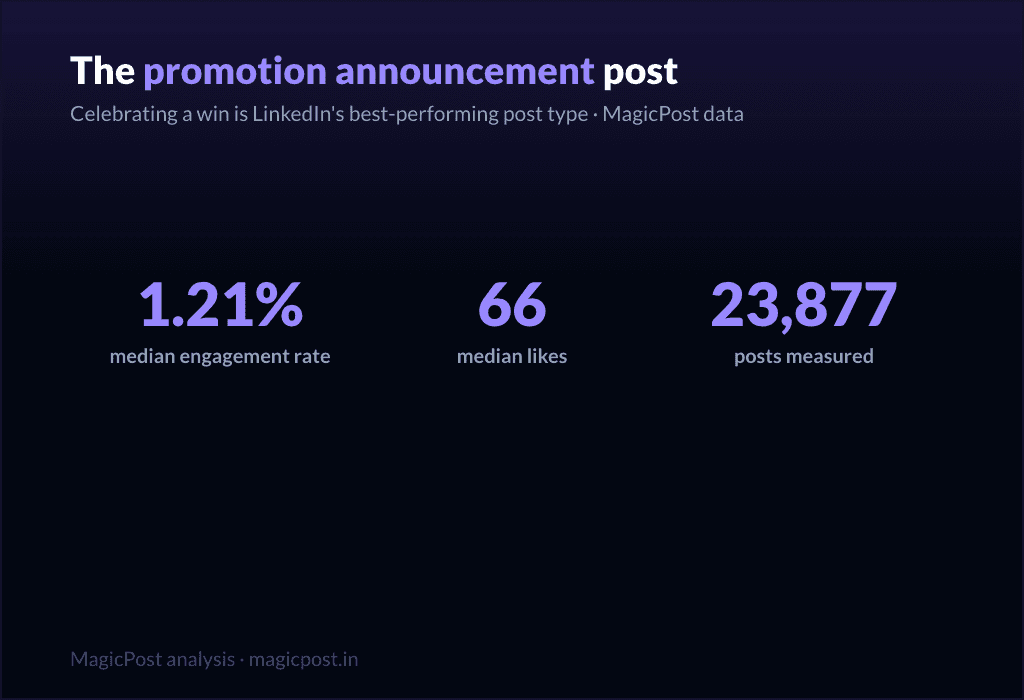
Mejores ejemplos de publicaciones de promoción en LinkedIn (2026)
¿Necesitas escribir una publicación de venta pero no sabes por dónde empezar? Te mostraré ejemplos de las publicaciones de promoción más efectivas para que puedas adaptarlas a tus necesidades.
LinkedIn Abierto a Nuevas Oportunidades: Qué Es y Cómo Funciona (2026)
Descubre cómo la función Open to Work de LinkedIn puede transformar tu búsqueda de empleo en 2025. Consejos, pros, contras y trucos para destacar ante los reclutadores.
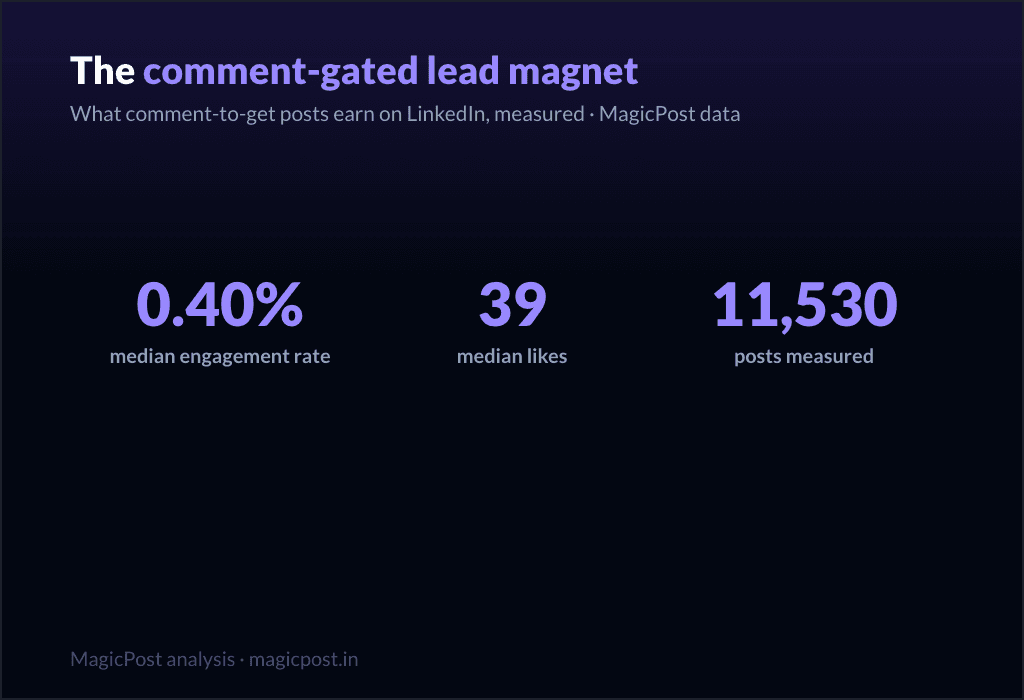
Imanes de Leads de LinkedIn: Una Guía para Leads que Realmente Funcionan
Descubre cómo crear imanes de leads poderosos que atraen leads de calidad, despiertan el deseo y guían a tu audiencia hacia convertirse en clientes de pago.
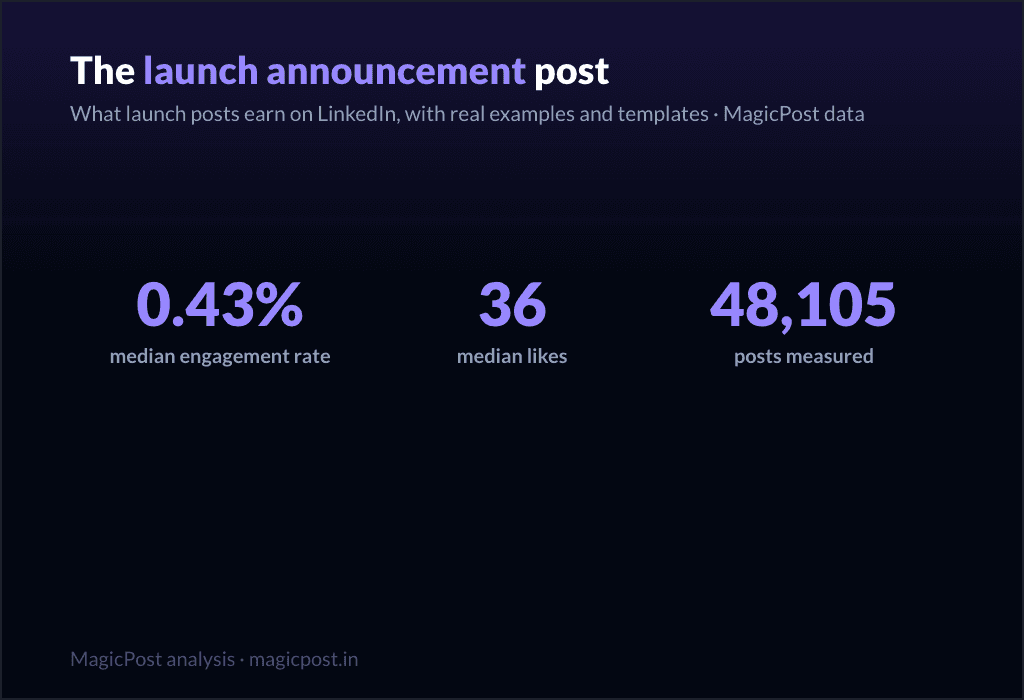
The LinkedIn Product Launch Post: Real Examples, Templates, and What Launches Actually Earn
The LinkedIn product launch post: real examples, 3 templates, and the data (launches earn 0.43% median ER). Lead with the problem, not the product.
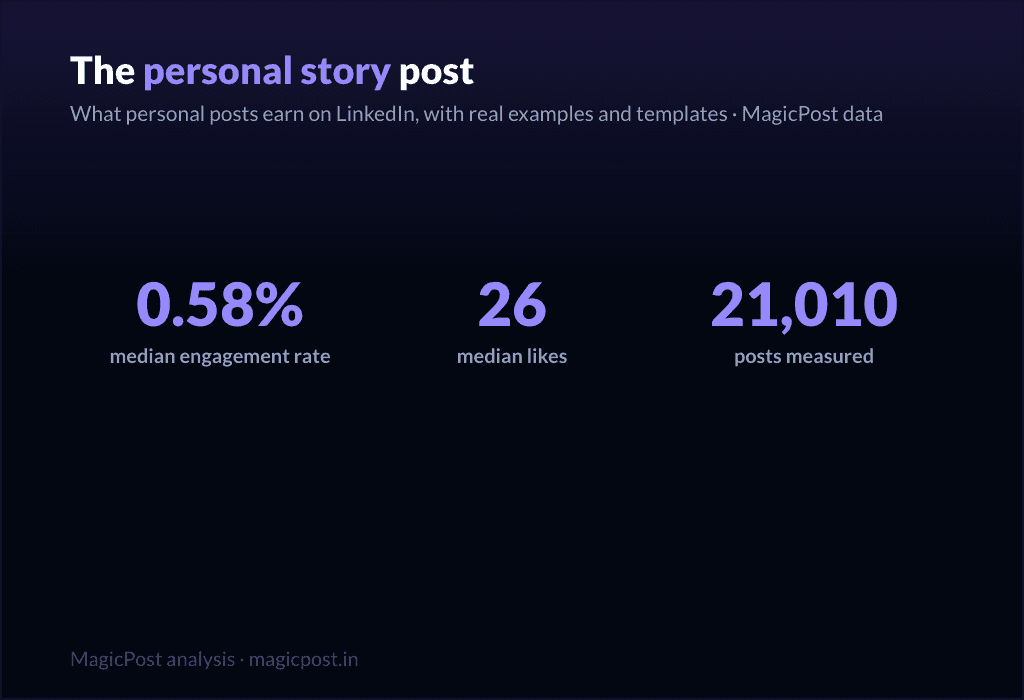
The Personal Story LinkedIn Post: Why Vulnerability Wins (and How to Write Yours)
The personal story LinkedIn post: challenges overcome earn 1.03% median ER, hard moments 0.80%, vs 0.39% platform median. Examples and templates.
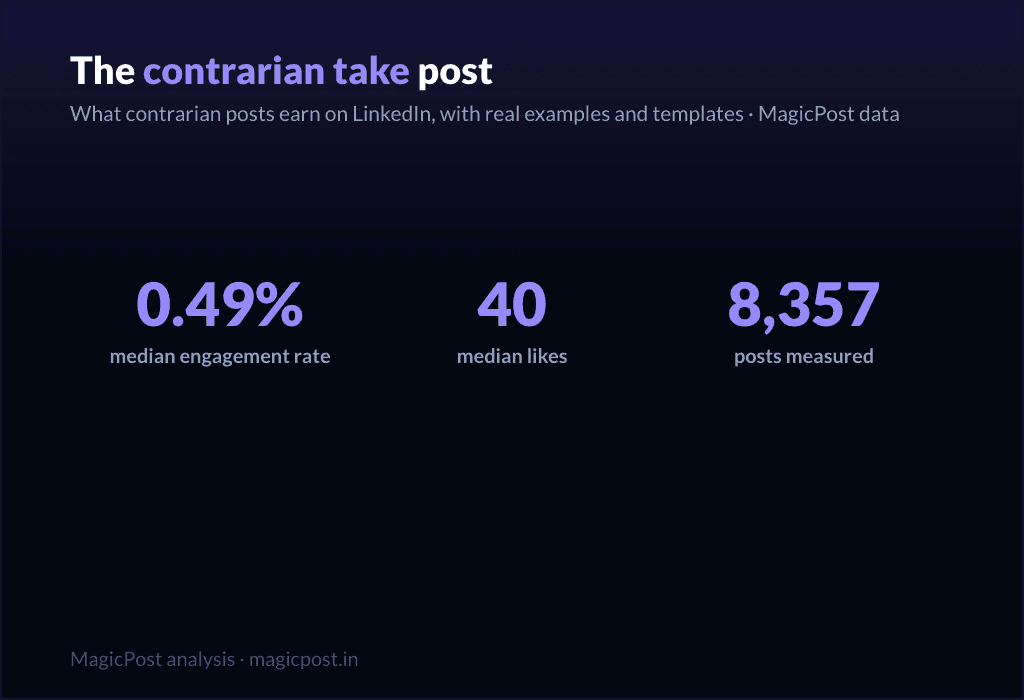
The Contrarian LinkedIn Post: What Provocation Actually Earns (Spoiler: Less Than You Think)
The contrarian LinkedIn post, measured: 0.49% median ER. Better than average, far below sincerity. What separates real takes from rage-bait.