El employee advocacy es la práctica por la que los empleados promocionan su empresa en sus propias redes sociales, principalmente LinkedIn, compartiendo contenido de la empresa, ideas y experiencias con su propia voz, lo que los convierte en embajadores de marca.
La lógica es sencilla: el alcance orgánico se reduce, los anuncios son cada vez más caros, y la visibilidad de las marcas sigue cayendo; sin embargo, el conjunto de los empleados tiene un alcance y una credibilidad muy superiores a los de cualquier página de empresa.
En lugar de depender de una sola voz corporativa, el advocacy activa decenas de voces humanas y de confianza.
¿Qué es el employee advocacy?
Formalmente, el employee advocacy es una estrategia estructurada en la que una empresa facilita a sus empleados compartir contenido de marca, ideas originales y experiencias personales en sus perfiles sociales propios, con el objetivo de aumentar el alcance, la credibilidad y el impacto en el negocio.
Se aplica tanto en entornos B2B como en startups y grandes corporaciones, y funciona porque los perfiles personales superan a las cuentas de empresa: la gente interactúa más con personas, confía más en sus opiniones y actúa con más frecuencia ante un post de alguien cercano a su sector.
Hay una distinción que importa más que cualquier otra, y nuestros datos la hacen concreta. Existen dos modelos. En el advocacy orientado a la distribución, los administradores envían contenido preaprobado y los empleados hacen clic en «compartir». En el advocacy orientado a la creación, los empleados publican contenido original con su propia voz.
El segundo genera mucho más engagement y mayor adopción, porque las audiencias (y el algoritmo de LinkedIn) premian la autenticidad y penalizan los posts idénticos y basados en plantillas.
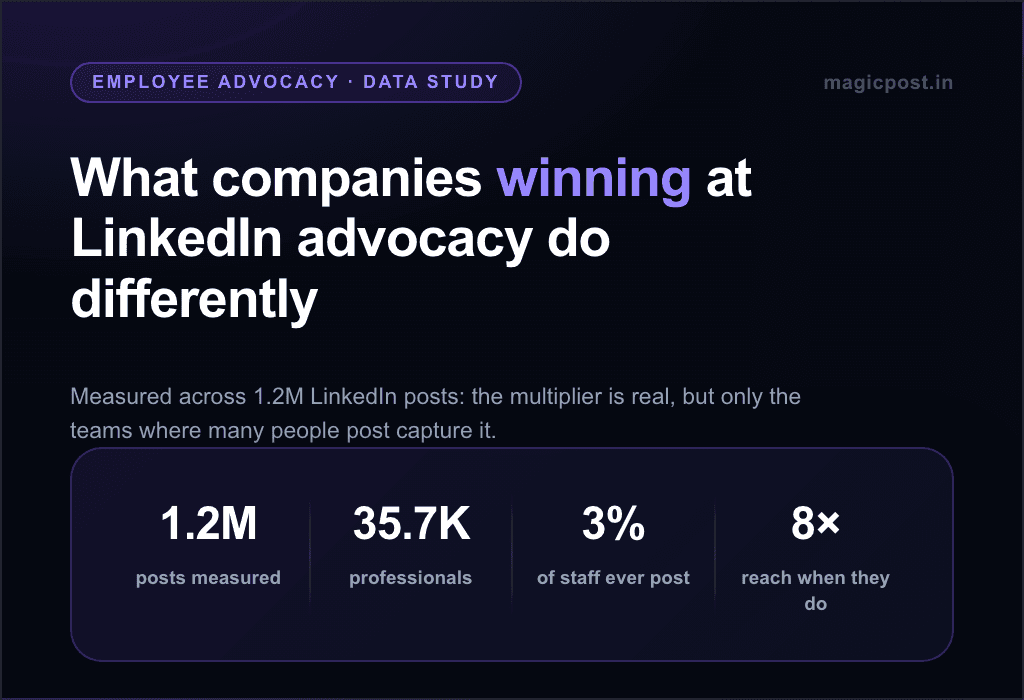
Y solo funciona cuando participan muchos empleados: en nuestro análisis de 1,3 millones de posts en LinkedIn (doce meses hasta septiembre de 2026, 39.729 profesionales), la persona que más publica genera del 90 % al 96 % del alcance de la empresa en ColdIQ, Capgemini, SAP, IBM y Oracle, frente al 29 % en HubSpot y el 35 % en AWS, dentro de las empresas de nuestro corpus de investigación.
(Los datos completos están en nuestro estudio sobre employee advocacy.)
¿Cuáles son los beneficios del employee advocacy?
El employee advocacy convierte a los empleados en un canal de distribución y confianza escalable que afecta simultáneamente a la notoriedad, el compromiso, las oportunidades comerciales y la contratación:
Mayor alcance orgánico. Las redes combinadas de los empleados eclipsan a la página de la marca, y las propias cifras de LinkedIn indican que el contenido compartido por los empleados genera aproximadamente ocho veces más interacción que el mismo contenido en una página de empresa.
Mayor confianza y compromiso. El público confía más en las personas que en los logotipos, por lo que el contenido de los empleados genera más comentarios, conversaciones e interés entrante.
Más oportunidades comerciales, sin más gasto en publicidad. Las publicaciones auténticas de las personas que realizan el trabajo atraen a clientes potenciales cualificados que los canales de pago rara vez logran igualar.
Una marca empleadora más fuerte. Los candidatos confían mucho más en lo que dicen los empleados sobre cómo es trabajar en un lugar que en lo que dice la empresa, por lo que el employee advocacy también sirve para la selección de personal.
Employee advocacy: 4 casos de uso principales
El advocacy da resultados concretos en varias áreas, y un mismo post puede servir a varias a la vez:
Ventas / social selling. Los comerciales comparten experimentos, resultados y puntos de vista, y atraen a compradores que ya se interesan por su enfoque.
Marketing / alcance. El equipo amplifica lanzamientos, estudios e ideas a través de muchos perfiles de confianza en lugar de una sola página de empresa.
Marca empleadora / contratación. Los empleados que muestran su trabajo y su cultura atraen a candidatos que comparten los valores de la empresa.
Thought leadership. Fundadores y expertos construyen una autoridad que se acumula y eleva la credibilidad de toda la empresa.
Cómo se ve un buen employee advocacy
Las empresas que triunfan con el advocacy no son las que tienen mayores presupuestos de marca, sino aquellas en las que más empleados publican con su propia voz.
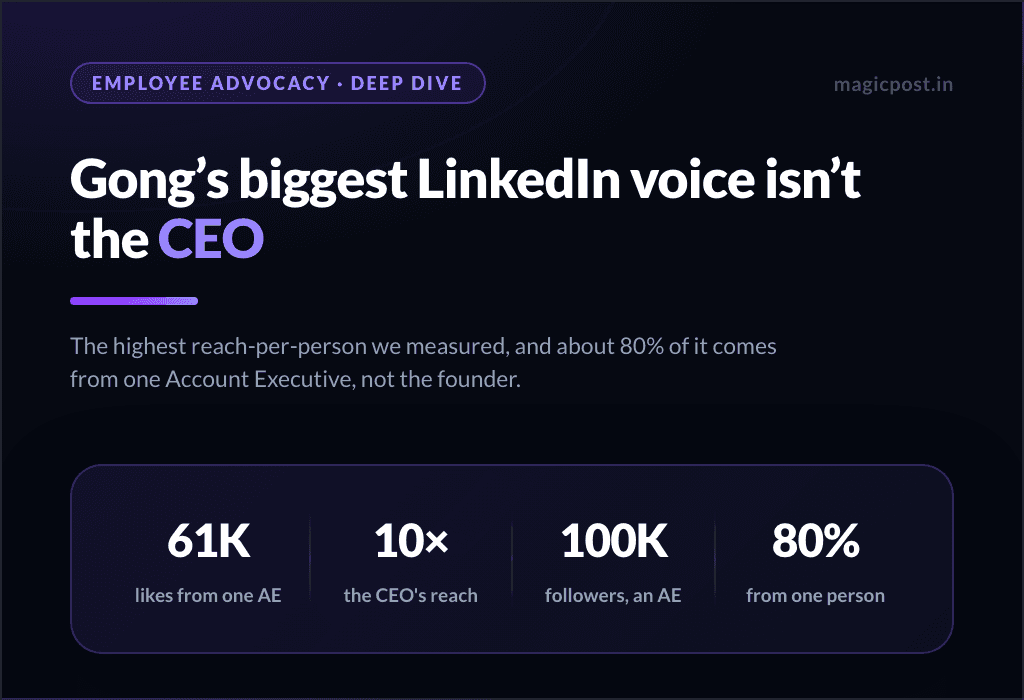
En nuestros datos, equipos GTM como ColdIQ y Clay publican más que empresas miles de veces más grandes, y en compañías como Gong la mayor voz en LinkedIn no es el CEO sino un comercial de primera línea. El patrón común es la distribución: alcance repartido entre muchas personas, cada una en su área, publicando de forma constante.
Puedes ver los desgloses medidos en nuestros ejemplos de employee advocacy, y el paso a paso en nuestra guía para construir un programa de employee advocacy.
¿Te preguntas dónde está tu equipo hoy? El análisis de LinkedIn de MagicPost muestra cómo se distribuye el alcance entre tus personas, para que puedas ver si depende de una sola voz o de muchas.
Por qué funciona el Employee Advocacy, en pocas palabras
El employee advocacy convierte a los empleados en un canal de crecimiento escalable: más alcance, más confianza y más oportunidades de venta sin depender únicamente de la adquisición de pago.
Las empresas que la estructuran correctamente, logrando que muchas personas publiquen de manera auténtica en lugar de un solo ejecutivo, superan a sus competidores en visibilidad y captación de clientes.
La parte difícil es mantenerla a lo largo del tiempo, por lo que la mayoría de los programas necesitan tanto un proceso como una herramienta. Conseguir que todo un equipo publique con su propia voz es el propósito con el que se ha creado MagicPost para empresas.
Su generador de publicaciones con IA está entrenado a partir del perfil de cada persona, así que lo que escribe sigue sonando a esa persona.
Comparamos las plataformas en nuestro comparativa de plataformas de employee advocacy, con una lista de candidatos más amplia en nuestra selección de las mejores herramientas de employee advocacy para LinkedIn.
Puedes gestionar todo el contenido de LinkedIn de tu equipo desde un mismo sitio con MagicPost, o reservar una demo corta para verlo con nosotros.
Cómo MagicPost gestiona tu programa de employee advocacy
Preguntas frecuentes
¿Qué es el employee advocacy en pocas palabras?
El employee advocacy, en pocas palabras, ocurre cuando los empleados de una empresa comparten contenido sobre su trabajo y su empleador en sus propios perfiles sociales, principalmente LinkedIn, en lugar de depender únicamente de la página de empresa.
Dado que la gente confía e interactúa más con personas que con logotipos, un equipo que publica puede llegar a una audiencia mucho mayor y más creíble de lo que la empresa podría alcanzar por sí sola.
¿Por qué es importante el employee advocacy?
Porque tanto el alcance orgánico como la eficiencia de la publicidad pagada están cayendo, mientras que las redes de confianza de los empleados no. El contenido compartido por empleados genera mucho más engagement que el de las páginas de empresa, impulsa pipeline entrante sin gasto publicitario adicional y fortalece el employer branding.
Para la mayoría de las empresas, es el canal de distribución con mayor ROI que ya tienen pero que rara vez estructuran.
¿Qué es un ejemplo de employee advocacy?
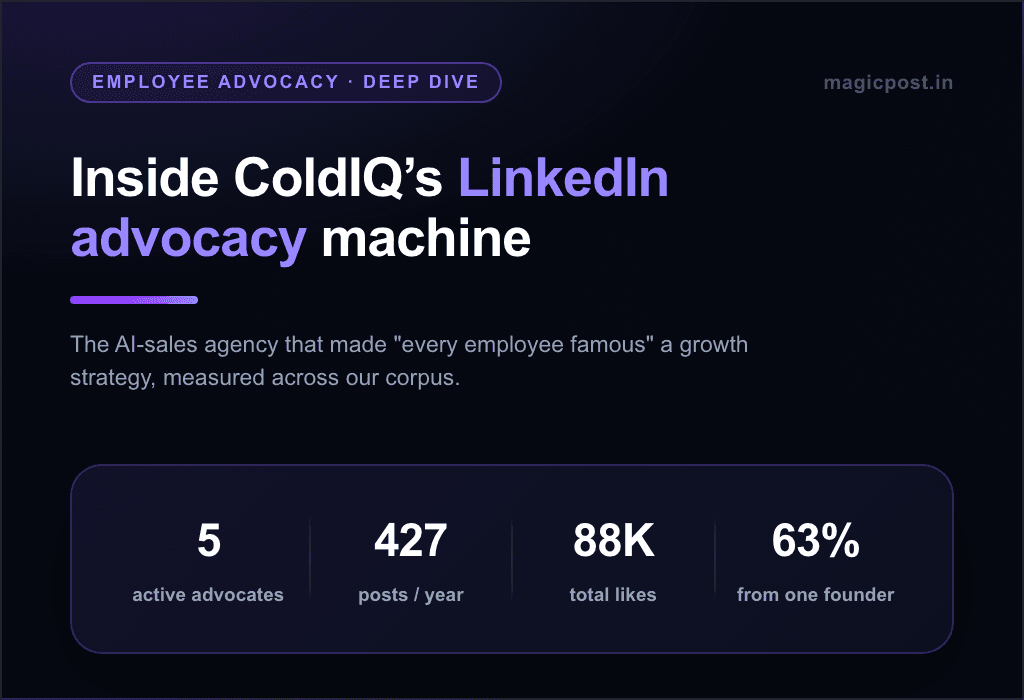
Un ejemplo claro es la empresa GTM ColdIQ, cuyos empleados publican a diario en LinkedIn con su propia voz, generando decenas de miles de likes al año; o Gong, donde un Account Executive es la mayor voz de la empresa en LinkedIn. Más ejemplos medidos están en nuestros ejemplos de employee advocacy.
¿Cómo se empieza con el employee advocacy?
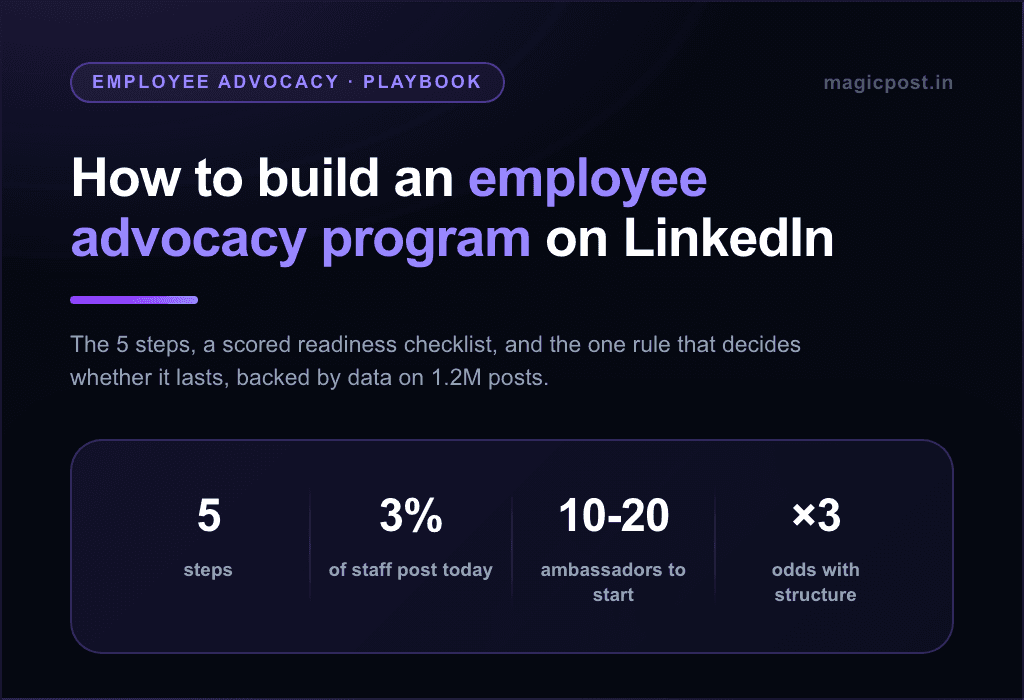
Empieza con voluntarios en lugar de mandatos, asigna a cada persona un tema que encaje con su experiencia real, haz que el liderazgo publique primero y elimina las fricciones que frenan a la gente (no saber qué publicar, falta de tiempo). Nuestra guía para construir un programa de employee advocacy detalla la cadencia y las métricas.
¿El employee advocacy funciona de verdad?
Sí, cuando está distribuido. El alcance se multiplica solo cuando participan muchos empleados; los programas que dependen de una sola persona son frágiles. En nuestros datos de 1,3 millones de posts, las empresas que realmente ganan son aquellas en las que ninguna voz individual sostiene sola el programa.
¿Qué significa employee advocacy?
Employee advocacy significa que son los empleados, y no la página de marca, quienes publican sobre su empresa y su trabajo desde sus perfiles personales de LinkedIn.
La definición abarca dos modelos: compartir contenido corporativo preaprobado, o publicar contenido original con la voz propia del empleado. El segundo llega más lejos, porque las audiencias y el algoritmo de LinkedIn premian los posts personales y no basados en plantillas.