L'employee advocacy est la pratique qui consiste, pour les collaborateurs, à promouvoir leur entreprise sur leurs propres réseaux sociaux, principalement LinkedIn, en partageant du contenu de l'entreprise, des idées et des expériences avec leur propre voix, ce qui en fait des ambassadeurs de la marque.
La logique est simple : la portée s'effondre, la publicité coûte plus cher et la visibilité organique ne cesse de se réduire, mais les collaborateurs d'une entreprise disposent collectivement de bien plus de portée et de crédibilité que sa page de marque.
Plutôt que de s'appuyer sur une seule voix corporate, l'advocacy en active des dizaines, humaines et dignes de confiance.
Qu'est-ce que l'employee advocacy ?
Formellement, l'employee advocacy est une stratégie structurée par laquelle une entreprise permet à ses collaborateurs de partager du contenu de marque, des idées originales et des expériences personnelles sur leurs profils sociaux personnels, afin d'accroître la portée, la crédibilité et l'impact business.
Elle s'applique en B2B, dans les startups comme dans les grandes entreprises, et elle fonctionne parce que les profils personnels surpassent les comptes de marque : les gens interagissent davantage avec des individus, font plus confiance à leurs avis et passent plus souvent à l'action après un post perçu comme venant d'un pair.
Une distinction compte plus que toutes les autres, et nos données la rendent concrète. Il existe deux modèles. Dans l'advocacy centrée sur la distribution, les administrateurs poussent du contenu pré-approuvé et les collaborateurs cliquent sur « partager ». Dans l'advocacy centrée sur la création, les collaborateurs publient du contenu original avec leur propre voix.
Le second modèle génère beaucoup plus d'engagement et d'adoption, parce que les audiences (et l'algorithme de LinkedIn) récompensent l'authenticité et pénalisent les posts identiques et formatés.
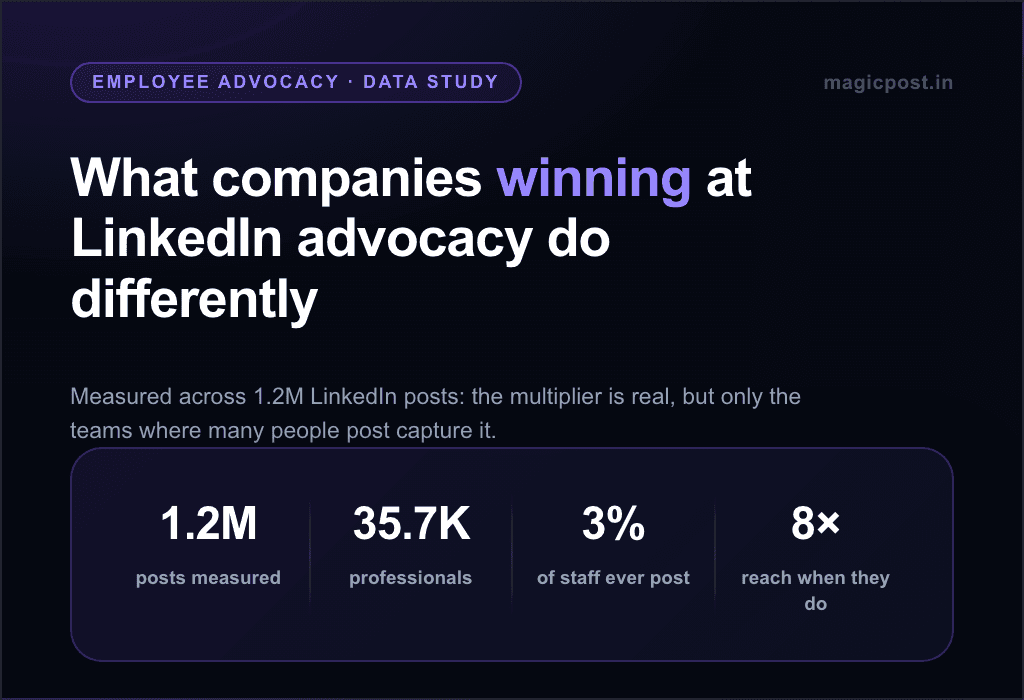
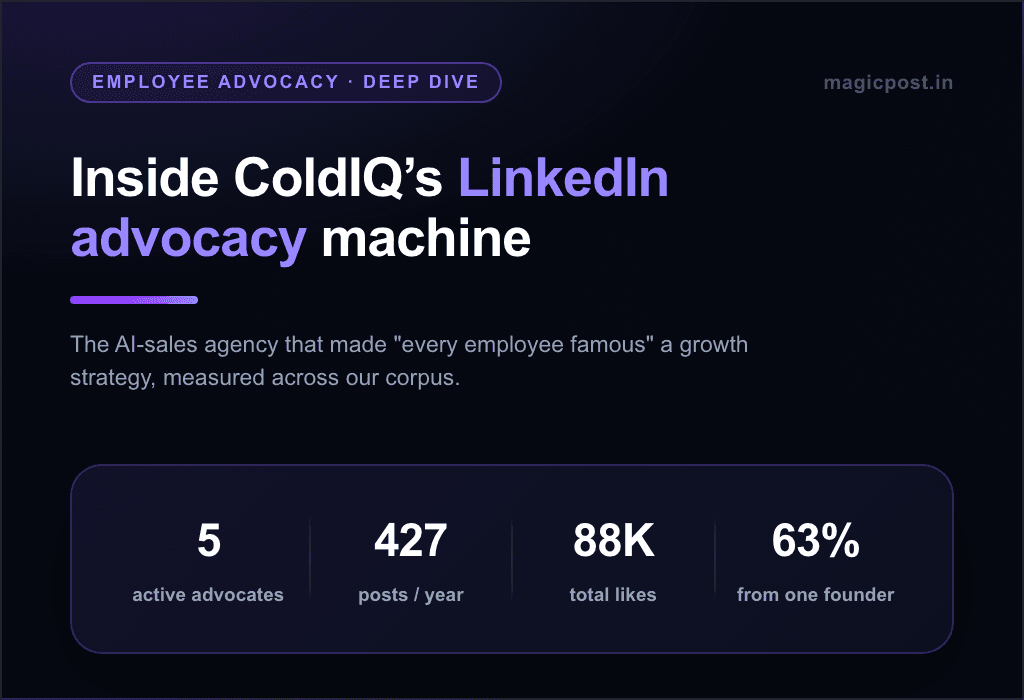
Et cela ne fonctionne que lorsque beaucoup de collaborateurs participent. Dans notre mesure de 1,3 million de posts LinkedIn (douze mois jusqu'à septembre 2026, 39 729 professionnels), la personne qui publie le plus produit de 90 % à 96 % de la portée de l'entreprise chez ColdIQ, Capgemini, SAP, IBM et Oracle.
Cette même part tombe à 29 % chez HubSpot et à 35 % chez AWS, parmi les entreprises de notre corpus de recherche. (Toutes les données figurent dans notre étude sur l'employee advocacy.)
Quels sont les avantages de l'employee advocacy ?
L'employee advocacy transforme les collaborateurs en un canal de distribution et de confiance qui passe à l'échelle et agit d'un coup sur la notoriété, l'engagement, le pipeline et le recrutement :
Une portée organique élargie. Les réseaux cumulés des collaborateurs éclipsent la page de marque, et les propres chiffres de LinkedIn montrent que le contenu partagé par les collaborateurs génère environ huit fois plus d'engagement que le même contenu sur une page d'entreprise.
Une confiance et un engagement accrus. Les audiences font plus confiance aux personnes qu'aux logos : les contenus des collaborateurs récoltent plus de commentaires, de conversations et de marques d'intérêt entrantes.
Plus de pipeline, sans dépenses publicitaires supplémentaires. Des posts authentiques, signés par les personnes les plus proches du terrain, attirent des prospects qualifiés que les canaux payants égalent rarement.
Une marque employeur plus forte. Les candidats croient bien plus les collaborateurs qui racontent leur quotidien que le discours de la marque : l'advocacy sert donc aussi de canal de recrutement.
Employee advocacy : 4 cas d'usage principaux
L'advocacy produit des résultats concrets dans plusieurs fonctions, et un même post peut en servir plusieurs à la fois :
Ventes / social selling. Les commerciaux partagent des expérimentations, des résultats et des points de vue, attirant des acheteurs déjà intéressés par leur approche.
Marketing / portée. L'équipe amplifie les lancements, les recherches et les idées à travers de nombreux profils de confiance plutôt que par une seule page de marque.
Marque employeur / recrutement. Les collaborateurs qui montrent leur travail et la culture maison attirent des candidats qui partagent les mêmes valeurs.
Thought leadership. Les fondateurs et les experts construisent une autorité qui se cumule dans le temps et rejaillit sur la crédibilité de toute l'entreprise.
À quoi ressemble une employee advocacy réussie
Les entreprises qui gagnent en advocacy ne sont pas celles qui ont les plus gros budgets de marque, mais celles où le plus grand nombre de collaborateurs publient avec leur propre voix.
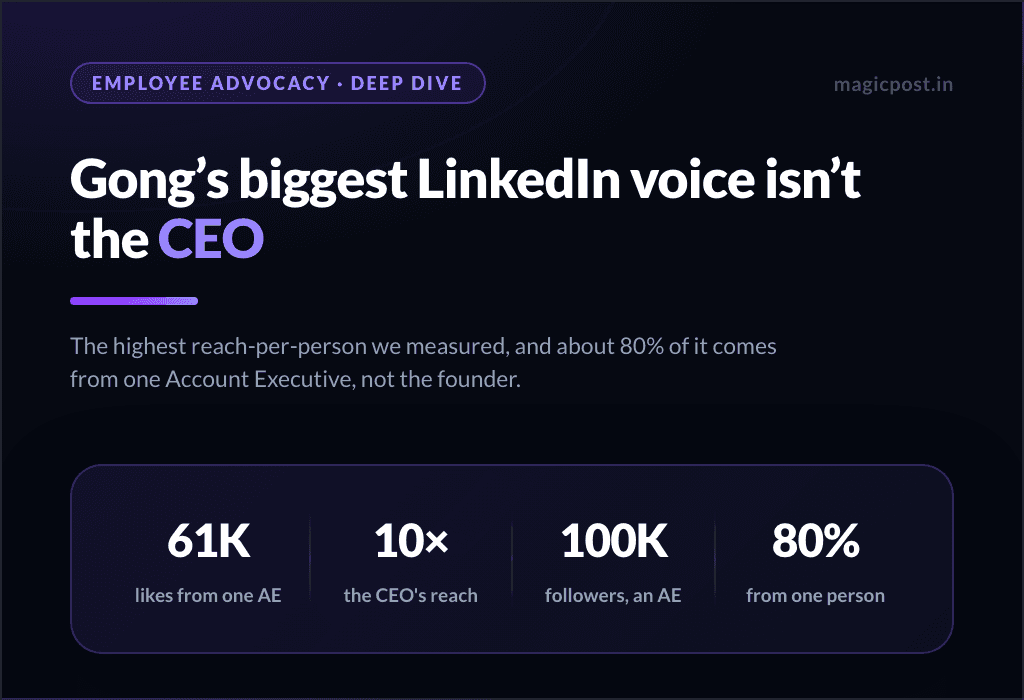
Dans nos données, des équipes GTM comme ColdIQ et Clay publient davantage que des entreprises des milliers de fois plus grandes, et dans des sociétés comme Gong, la plus grande voix LinkedIn est un commercial de terrain, pas le PDG.
Le schéma commun, c'est la distribution : une portée répartie sur de nombreuses personnes, chacune sur son terrain, publiant avec régularité.
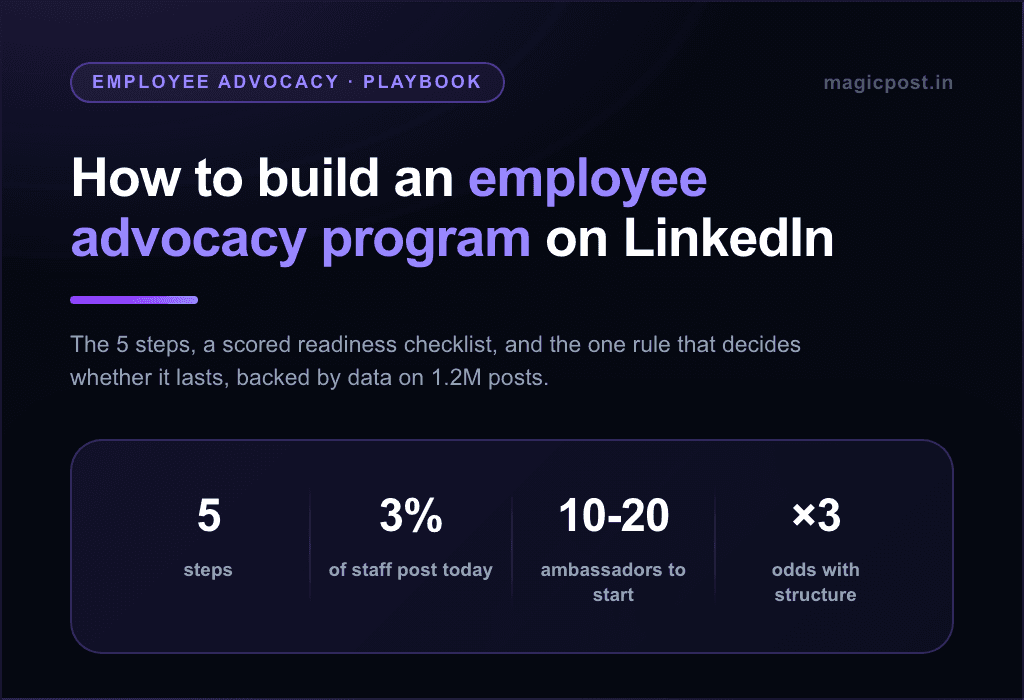
Le détail des mesures est dans nos exemples d'employee advocacy, et la méthode pas à pas dans notre guide pour construire un programme d'employee advocacy.
Curieux de savoir où en est votre équipe aujourd'hui ? Les analytics LinkedIn de MagicPost montrent comment la portée se répartit entre vos collaborateurs, pour savoir si elle repose sur une seule voix ou sur plusieurs.
Pourquoi l'employee advocacy fonctionne, en bref
L'employee advocacy transforme les collaborateurs en canal de croissance qui passe à l'échelle : plus de portée, plus de confiance et plus de pipeline, sans dépendre uniquement de l'acquisition payante. Les entreprises qui la structurent correctement, en faisant publier beaucoup de monde avec authenticité plutôt qu'un seul dirigeant, dépassent leurs concurrents en visibilité et en inbound.
Le plus dur, c'est de tenir dans la durée : la plupart des programmes ont besoin à la fois d'un processus et d'un outil. Faire publier toute une équipe avec sa propre voix, c'est précisément ce pour quoi MagicPost pour les entreprises a été conçu.
Son générateur de posts IA est entraîné sur le profil de chaque personne : le résultat lui ressemble toujours.
Les plateformes sont comparées dans notre comparatif des logiciels d'employee advocacy, avec une liste plus large dans notre sélection des meilleurs outils d'employee advocacy pour LinkedIn.
Vous pouvez gérer l'ensemble du contenu LinkedIn de votre équipe depuis un seul endroit avec MagicPost, ou réserver une courte démo pour en parler.
Comment MagicPost permet de piloter votre programme d'employee advocacy
FAQ
Qu'est-ce que l'employee advocacy, en termes simples ?
L'employee advocacy, en termes simples, c'est lorsque les collaborateurs d'une entreprise partagent du contenu sur leur travail et leur employeur sur leurs propres profils sociaux, principalement LinkedIn, au lieu de s'appuyer uniquement sur la page de marque.
Parce que les gens font davantage confiance aux individus qu'aux logos et interagissent davantage avec eux, une équipe qui publie peut toucher une audience bien plus large et plus crédible que l'entreprise ne le pourrait seule.
Pourquoi l'employee advocacy est-elle importante ?
Parce que la portée organique et l'efficacité du payant déclinent toutes deux, alors que les réseaux de confiance des collaborateurs, non. Le contenu partagé par les collaborateurs récolte bien plus d'engagement que le contenu de la page de marque, génère du pipeline entrant sans dépense publicitaire supplémentaire et renforce la marque employeur.
Pour la plupart des entreprises, c'est le canal de distribution au meilleur ROI qu'elles possèdent déjà mais structurent rarement.
Quel est un exemple d'employee advocacy ?
Un exemple clair est l'entreprise GTM ColdIQ, dont les collaborateurs publient chaque jour sur LinkedIn avec leur propre voix, générant des dizaines de milliers de likes par an, ou Gong, où un Account Executive est la plus grande voix LinkedIn de l'entreprise. D'autres exemples mesurés figurent dans nos exemples d'employee advocacy.
Comment lancer l'employee advocacy ?
Commencez par des volontaires plutôt que par des obligations, donnez à chacun un sujet qui correspond à son expertise réelle, faites publier la direction en premier et levez les freins qui bloquent les gens (ne pas savoir quoi publier, manque de temps). Notre guide pour construire un programme d'employee advocacy détaille le rythme et les indicateurs.
L'employee advocacy fonctionne-t-elle vraiment ?
Oui, lorsqu'elle est distribuée. La portée ne se multiplie que lorsque beaucoup de collaborateurs participent ; les programmes qui dépendent d'une seule personne sont fragiles. Dans nos données portant sur 1,3 million de posts, les entreprises qui gagnent vraiment sont celles où aucune voix unique ne porte le programme.
Que signifie l'employee advocacy ?
L'employee advocacy signifie que ce sont les collaborateurs, et non la page de marque, qui publient sur leur entreprise et sur leur travail depuis leurs profils LinkedIn personnels.
La définition recouvre deux modèles : partager du contenu d'entreprise pré-approuvé, ou publier du contenu original avec sa propre voix. Le second modèle porte plus loin, parce que les audiences et l'algorithme de LinkedIn récompensent les posts personnels, non formatés.