LinkedIn quietly killed its native carousel feature years ago, and yet the format never died. It just moved: today a "carousel" is a multi-page PDF uploaded as a document, swiped through slide by slide. The mechanics are simple.
The interesting part is that, across 69,864 carousels published in the last 12 months, the format still over-delivers, and there is a clear slide count where the payoff kicks in that almost nobody reaches.
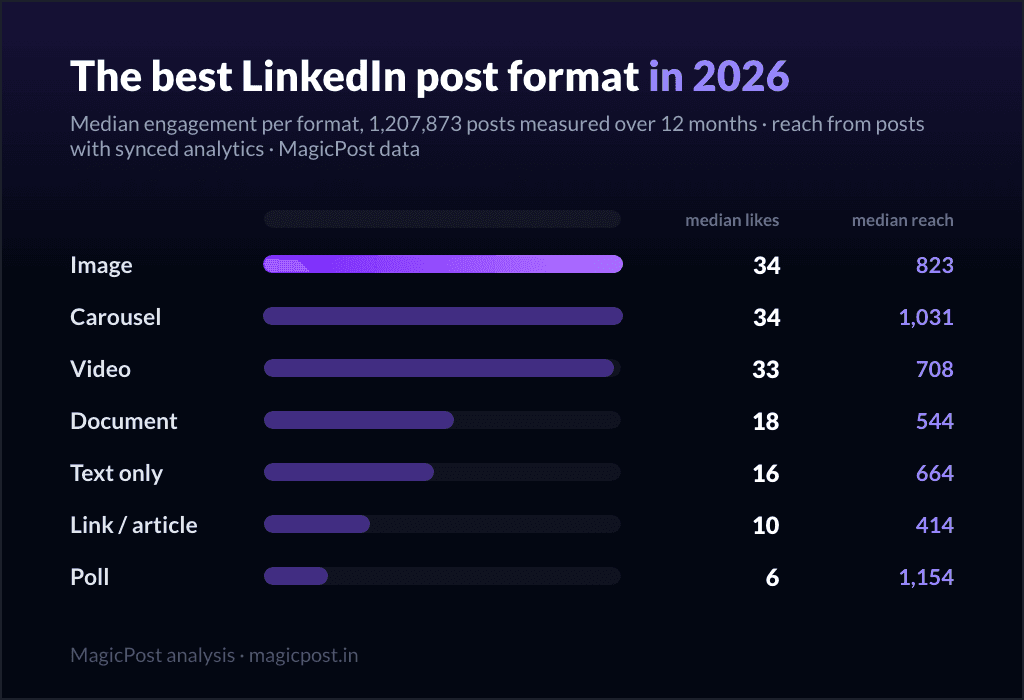
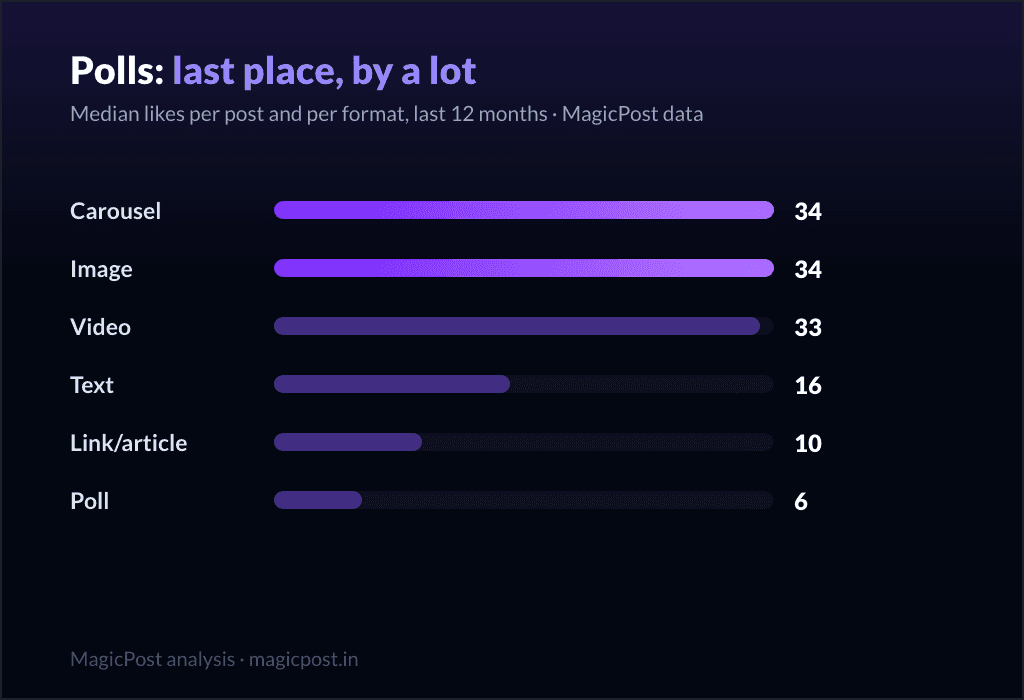
The short version: the median carousel earns 34 likes and 9 comments, ties for the best engagement of any format on LinkedIn, and pulls the best creator-made reach we measured.
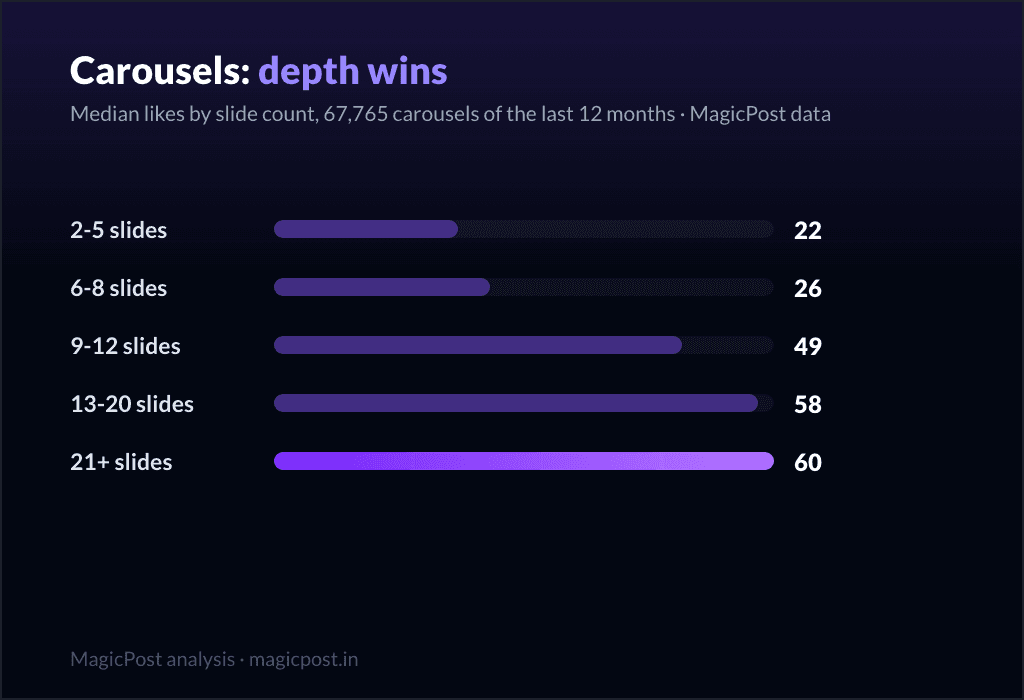
But the engagement is not flat across length. A short carousel earns 22 median likes; a deep one earns 60. And the median carousel is only 8 slides, which is to say most people stop exactly where the reward starts climbing.
Here is the curve, then the how-to.
Do LinkedIn carousels still work in 2026?
Yes, and the data is not subtle about it. The median carousel earns 34 likes and 9 comments over the last 12 months. That ties the image post for the top of the format ranking and beats text-only posts by roughly double, with link posts and polls trailing far behind. (The pillar has the full board; we will not repeat another fixture's numbers here.)
The bigger surprise is reach. Being seen and being rewarded are two different markets, and carousels win both:
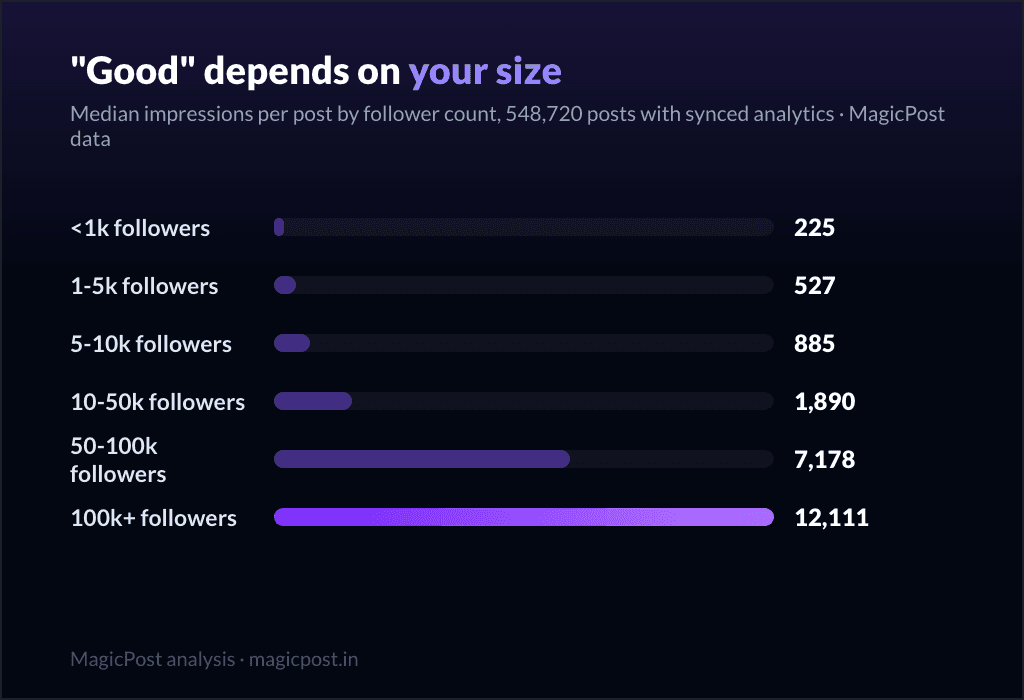
Post type | Posts with synced analytics | Median impressions |
Carousels | 34,694 | 1,031 |
Everything else | 532,263 | 750 |
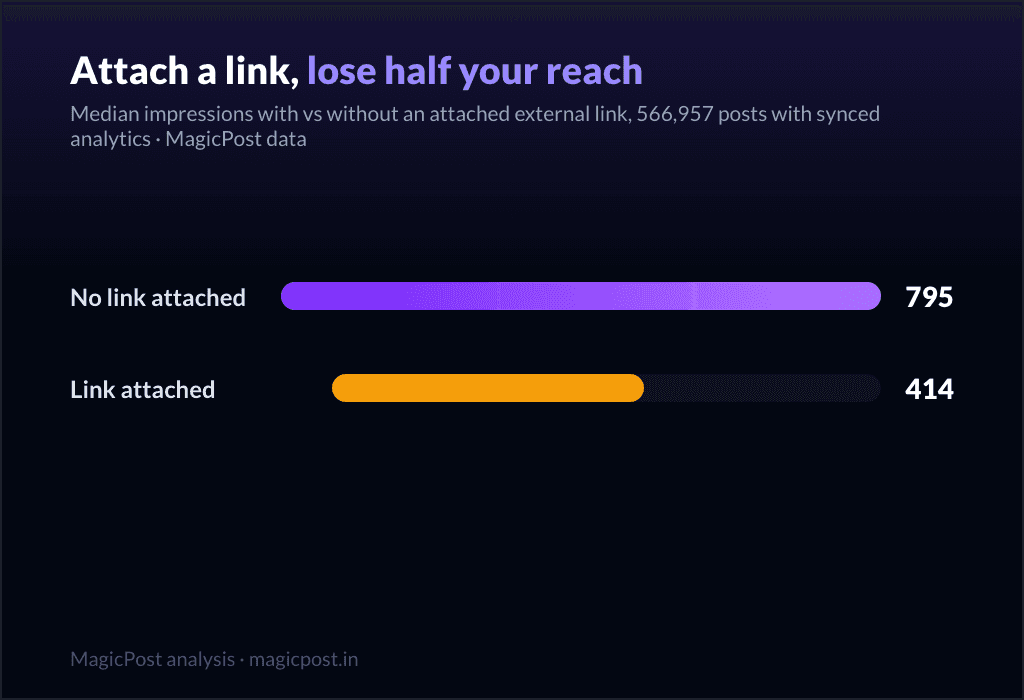
A carousel pulls 1,031 median impressions versus 750 for non-carousel posts (measured on the 567k posts with synced analytics). The format the platform stopped supporting natively is still the one its algorithm pushes hardest. If you have been told carousels are over, the data says the opposite: they are the closest thing LinkedIn has to a reach cheat code.
The depth effect: the slide count almost nobody reaches
This is the centerpiece finding. Carousel engagement is not flat. It climbs, hard, with slide count:
Slides | Carousels measured | Median likes |
2 to 5 | 11,829 | 22 |
6 to 8 | 22,373 | 26 |
9 to 12 | 21,978 | 49 |
13 to 20 | 8,270 | 58 |
21+ | 3,315 | 60 |
A carousel goes from 26 median likes at 6 to 8 slides to 49 at 9 to 12 slides, almost double, the moment it crosses into double digits. From there it keeps climbing to 58 (13 to 20 slides) and 60 (21+). A deep carousel earns 2.7 times the engagement of a 2-to-5-slide teaser.
Now the cruel part. The median carousel on LinkedIn is 8 slides, which sits in the 6-to-8 bucket, one row below where the payoff starts. Most people run out of steam around slide eight and stop exactly where the data says to keep going.
The takeaway is blunt: aim for at least 9 slides, ideally 13 to 20. Not padding, real content, one idea per slide.
Not sure what your carousel should even be about? MagicPost's post ideas turns a topic into angles and outlines you can build slides from, so you start with 12 slides worth of substance instead of stretching three.
The carousel wave: four years of rise and cooldown
The 12-month snapshot hides a story. Carousels had a moment, and that moment has a shape:
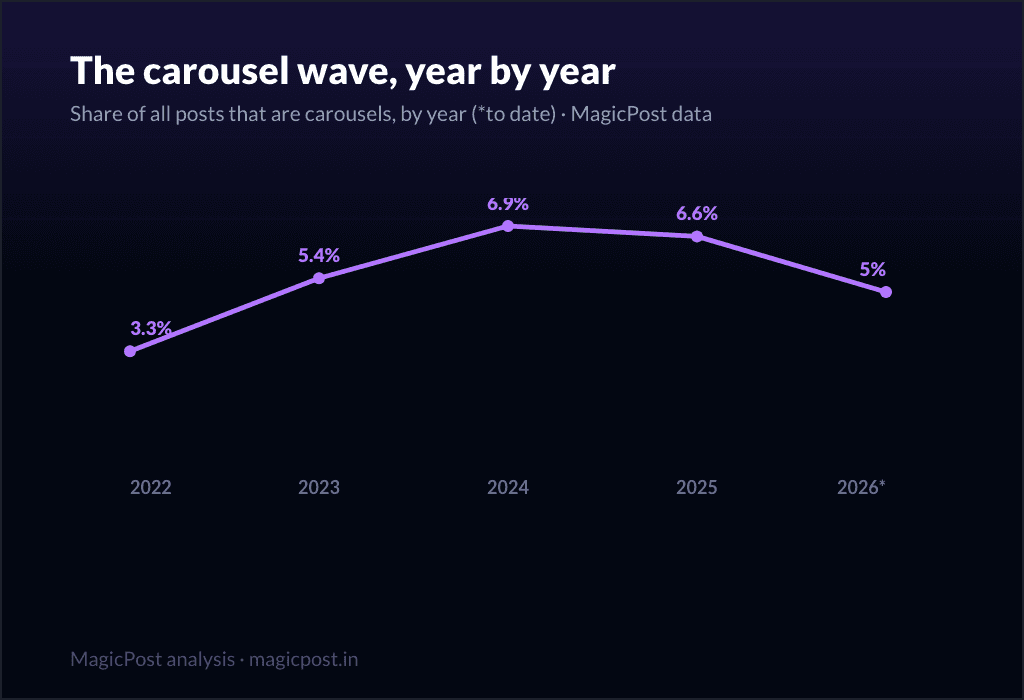
Year | Share of the feed | Median likes per carousel |
2022 | 3.3% | 23 |
2023 | 5.4% | 23 |
2024 | 6.9% | 34 |
2025 | 6.6% | 33 |
2026 (to date) | 5.0% | 34 |
Two lines moving in opposite directions. The share of the feed peaked at 6.9% in 2024 and has cooled to 5.0% so far in 2026: the carousel fad faded and creators rotated elsewhere.
But the engagement held. The median jumped from 23 likes in 2022 to 34 in 2024 and has stayed there since. Cooled in popularity, still over-delivering in performance, which is exactly the combination you want: less crowded, still rewarded.
(History note: our corpus grows year to year, so these are medians within each year, read directionally. The rise-then-cooldown shape survives that caveat comfortably.)
The carousel masters
A ranking hides a selection effect worth naming: people do not build carousels at random. Polished frameworks go on slides; quick reactions go in text. Part of the carousel's number is the work behind it. So the masters below matter because they show the ceiling, not the median.

Tim Tebow earns 2,869 median likes per carousel (on 12 carousels), against an 1,828 overall median. The carousel beats even his own baseline. Profile.
Alex Hormozi earns 2,715 median likes per carousel (on 14), the frameworks-on-slides playbook taken to its logical end: one idea per slide, every slide a screenshot worth saving. Profile.
Tony Robbins earns 1,716 median likes per carousel (on 17), well above his 1,117 overall median. Profile.
Worth noting: two of the three are not "LinkedIn creators" at all. The format carries. And if you want to study real winning carousels beyond three faces, browse 2M+ posts and filter by format to see how the best ones are built, slide by slide.
How to create a LinkedIn carousel (step by step)
You do not need to be a designer. You need a tool that exports a clean PDF (Canva, Figma, Google Slides, PowerPoint all work) and a willingness to go past slide eight. Here is the whole flow.
1. Design your slides
Build your carousel in your design tool of choice. Canva has a deep template library if you want a head start; Figma and Slides give you more control. If you want a builder made for this specific job, we lined up the options in our LinkedIn carousel generator ranking and in the best Contentdrips alternatives for LinkedIn.
Whatever you use, the export target is the same: a PDF, because that is the only thing LinkedIn's document upload accepts.
Sizing rules that keep your carousel sharp on every screen:
Use a 1200 x 1500 pixel canvas (a 4:5 portrait ratio). Portrait fills more of the mobile feed than square or landscape, and most of your audience is on a phone. Design mobile-first.
Keep titles under 255 characters so they are not truncated, and the intro caption to roughly 150 characters so the hook lands before LinkedIn cuts it with a "see more."
2. Apply the design rules that actually move engagement
The slide-count data tells you to go deep. These craft rules tell you how to make depth readable rather than exhausting:
One idea per slide. A slide is a beat, not a paragraph. If a slide makes two points, split it into two. This is also how you naturally reach 9-plus slides without padding.
Big type, minimal text. Short sentences, simple words, lots of whitespace. People swipe; they do not study. If a slide needs squinting, it loses.
The cover slide is your hook. Slide one is the whole game. It is the only thing that shows in the feed, so it has to earn the swipe. Lead with the promise or the tension, not your logo.
The last slide is your call to action. Once they have swiped to the end, you have their attention and their goodwill. Use it: ask for a follow, point to a comment, link a resource. Do not waste the closer on a "thanks for reading."
Stay on-brand. Consistent colors, a small logo, the same font family across slides. It reads as polished and makes your carousels recognizable in the feed.
3. Upload and publish
LinkedIn no longer has a native carousel button, so you publish through the document feature:
From your feed, click Start a post.
Click the document icon (you may need the plus sign or "more" to find it), then Add a document, and upload your PDF. You can also drag and drop the file straight into the post box.
Give it a document title. This shows above the carousel in the feed, so make it a hook in its own right. Keep it under 150 characters.
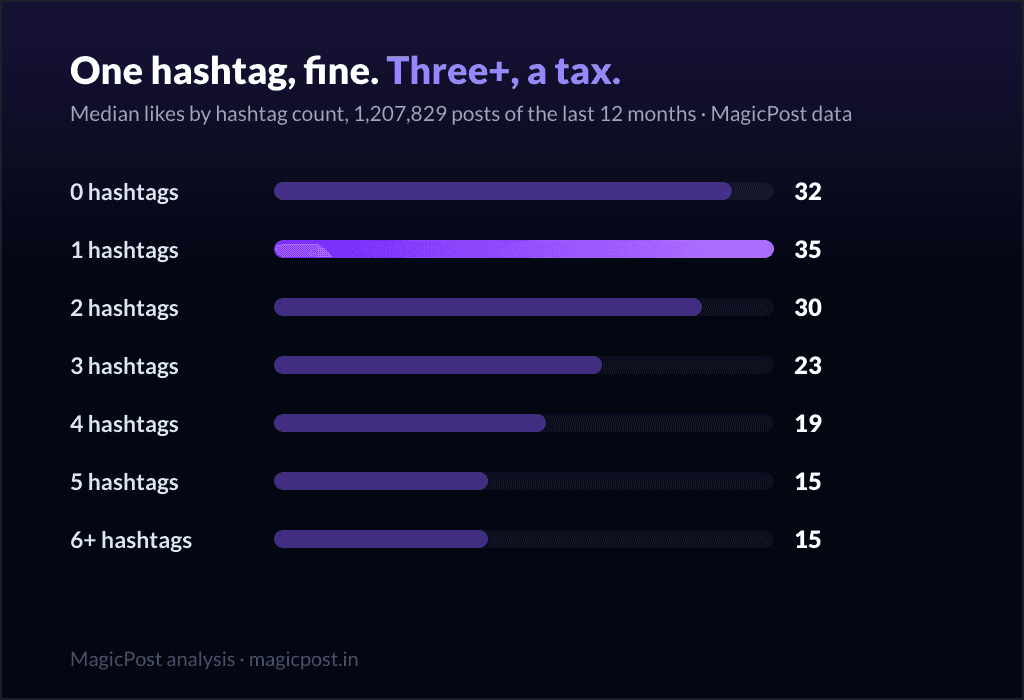
Write the caption. A short tease of what is inside, plus `@` mentions and one or two relevant `#` hashtags. Do not over-hashtag; one well-chosen tag beats five.
Hit Post.
One thing the tool will not let you fix: you cannot edit a carousel once it is live. No swapping a slide, no fixing a typo, no re-ordering. Proofread the PDF before you upload, because the only correction is delete and repost.
What this means for your next carousel
Build it. Carousels tie for the best engagement on LinkedIn (34 median likes) and pull the most creator-made reach (1,031 median impressions). The format the platform stopped supporting is still the one it pushes hardest.
Go past 8 slides. The median carousel stops at 8, one row below where the payoff starts. Aim for 9 to 20: a deep carousel earns 2.7x a short one.
One idea per slide, hook on the cover, CTA on the last. Depth only works if each slide is readable on a phone.
Lean in while it is uncooled. Share of the feed dropped from 6.9% to 5.0%, but engagement held at 34. Less competition, same reward.
And whatever you post, how the 2026 algorithm weighs your content still sets the ceiling.
Run your carousels from one place. MagicPost keeps the caption, the queue and the post-mortem numbers under one roof, so the work that goes into a deep carousel does not get lost between three tabs.
Where this data comes from
The numbers on this page come from MagicPost's own corpus, not a third-party report. Core figures: 69,864 LinkedIn carousels (PDF document posts) published over the last 12 months, reshares and deleted posts excluded, grouped by slide count and compared on median engagement. Reach figures come from the 566,957 posts with synced analytics (34,694 of them carousels), aggregated and anonymized. History: the same corpus from 2022 to mid-2026, medians taken within each year, read directionally since the corpus grows over time. Carousel masters: minimum 10 carousels over 12 months, 5,000+ followers, people only. We report medians rather than averages throughout, so a few viral document posts cannot pull a row off its true center. Numbers current as of June 2026.
FAQ
Do LinkedIn carousels still work?
Yes. Across 69,864 carousels measured over the last 12 months, the median carousel earns 34 likes and 9 comments, which ties the image post for the best engagement of any LinkedIn format and roughly doubles text-only posts. Carousels also pull the most creator-made reach we measured: 1,031 median impressions versus 750 for non-carousel posts (on 567k posts with synced analytics). Their share of the feed cooled from a 6.9% peak in 2024 to 5.0% in 2026, but the engagement held steady, so the format is less crowded and still over-delivers.
How many slides should a LinkedIn carousel have?
At least 9, ideally 13 to 20. Engagement climbs sharply with depth: 2-to-5-slide carousels earn 22 median likes, 6-to-8 earn 26, but 9-to-12 jump to 49, 13-to-20 reach 58, and 21+ hit 60. A deep carousel earns about 2.7 times the engagement of a short one. The catch: the median carousel is only 8 slides, so most people stop one bucket short of the payoff.
How do I create a LinkedIn carousel post?
Design your slides in a tool like Canva, Figma, or Google Slides on a 1200 x 1500 pixel (4:5 portrait) canvas, then export as a PDF. On LinkedIn, click Start a post, choose Add a document, upload the PDF, give it a hook-worthy title under 150 characters, write a short caption, and publish. LinkedIn no longer has a native carousel button, so the document upload is the only route.
Can you edit a LinkedIn carousel after posting?
No. Once a carousel (document post) is live, you cannot swap a slide, fix a typo, or re-order pages. The only correction is to delete the post and re-upload a fixed PDF, which loses any engagement the original earned. Proofread the PDF before uploading.
What size should a LinkedIn carousel be?
Use a 1200 x 1500 pixel canvas, a 4:5 portrait ratio. Portrait fills more of the mobile feed than square or landscape, and most of your audience reads on a phone. Keep the document title under 255 characters and the caption hook to roughly 150 characters so nothing gets truncated.