Everyone knows they should post on LinkedIn, but the ones who actually build authority understand that the algorithm rewards specific activity.
The 2025 Edelman-LinkedIn report found that 53% of B2B decision-makers consider thought leadership more important than overall brand recognition when evaluating vendors.
This guide covers what actually drives that authority and how to build it without it consuming your week.
What Is LinkedIn Thought Leadership?
LinkedIn thought leadership means consistently sharing original perspectives, hard-won insights, and genuine expertise on the platform so that your target audience comes to associate your name with a specific area of knowledge.

It’s different from personal branding, which is broader, and from content marketing, which is company-facing.
Thought leadership is individual and earned through the quality of what you say, not the frequency with which you say it.
📌 In practice, it means when a VP of Sales is building a shortlist of vendors, they’ve already seen your name in their feed, read something you wrote that made them think differently, and formed a view of you as someone who understands the problem. That’s the outcome. The posts are just the mechanism.
By the Numbers |
|---|
95% of B2B buyers aren’t actively in a purchasing process at any given moment. Thought leadership is how you stay relevant to the 95% until they’re ready. |
60% of decision-makers are willing to pay a premium to work with organizations that consistently demonstrate strong thought leadership. |
86% of decision-makers favor perspectives that challenge their existing assumptions, and 91% seek insights that uncover risks or opportunities they hadn’t considered. |
Why Your LinkedIn Posts Aren't Building Authority
The failure mode is almost always the same for most execs or professionals. They start posting, gain some early traction, then gradually drift toward safer, more generic content because it’s easier to produce.
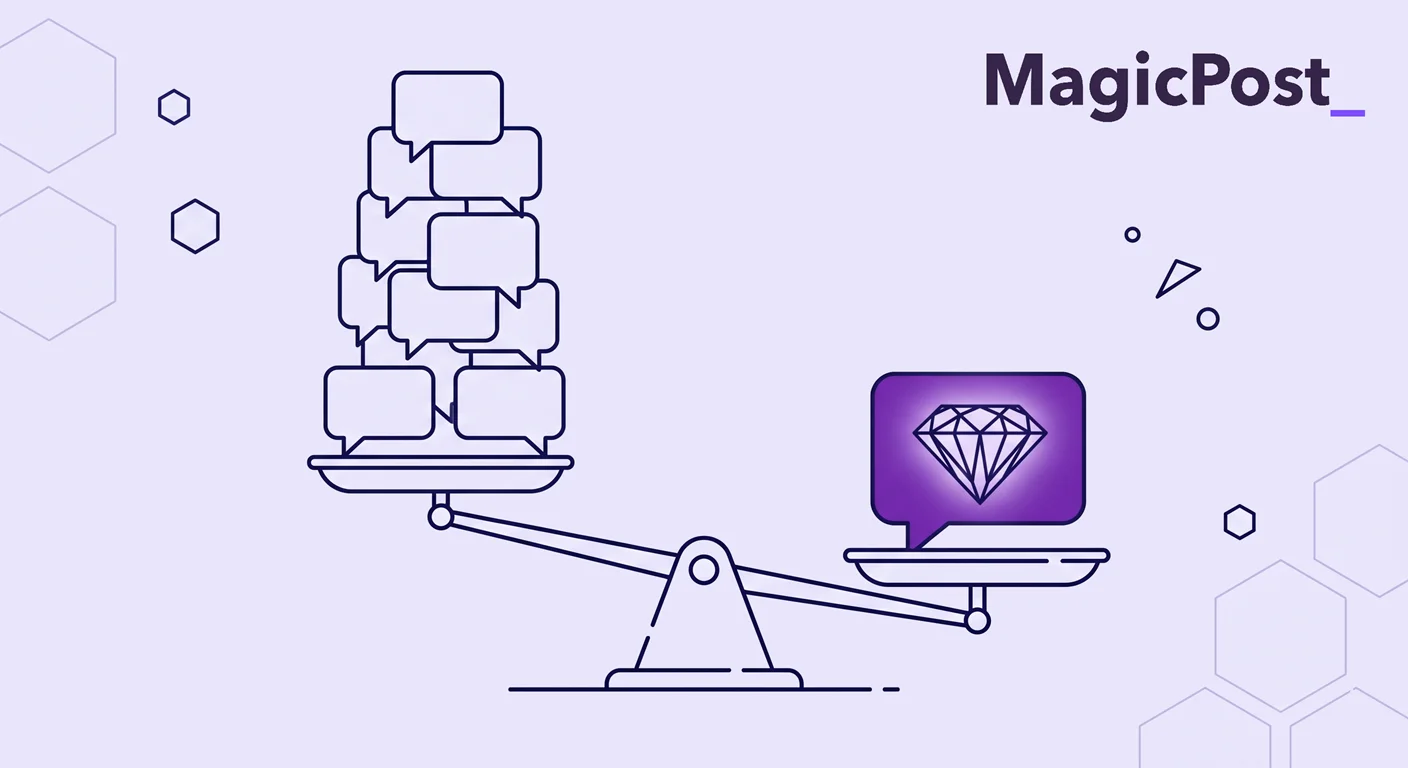
Within a few months the posts sound like everyone else in their sector and the engagement drops. They conclude that LinkedIn doesn’t work for them.
📌 The problem isn’t effort or consistency. It’s specificity. Generic advice is everywhere on LinkedIn. Posts that begin with “Here are 5 lessons I learned…” and end with “What do you think?” could’ve been written by anyone, and that’s exactly how the algorithm treats them.
Failure Pattern | What It Looks Like | Why It Backfires |
|---|---|---|
Generic advice recycling | Restating common industry wisdom without a specific original angle or experience to back it up | Posts with no concrete detail and no lived experience sit 23% below their author’s average post since July 27, 2026. The audience has seen it before and doesn’t engage. |
AI output without a voice | Posts generated with a generic prompt that produce polished but impersonal content | At equal substance, sounding like AI cost about 9% of impressions before July 27, 2026, with no extra cost detected since. A post with no specifics loses more. |
Posting for vanity metrics | Optimizing for likes and impressions rather than pipeline signals like profile visits, connection requests, and inbound messages | High reach with no business outcome. Leads to burnout when the effort doesn’t convert. |
The underlying issue is that most people treat LinkedIn thought leadership as a content problem when it’s actually a positioning problem. The question isn’t “What should I post today?” It’s “What do I know that is genuinely difficult to know, and who needs to hear it?”
✅ Pro Tip: The fastest way to identify your thought leadership angle is to find the thing you explain differently from everyone else in your sector. Don’t write a contrarian take for its own sake, but a specific perspective formed from real experiences that others in your field consistently get wrong or oversimplify.
What Does the LinkedIn Algorithm Reward in 2026?
Early engagement is only part of the picture. What our data ties to reach is substance: specific, knowledge-rich detail that shows the content comes from lived experience rather than a generic template.
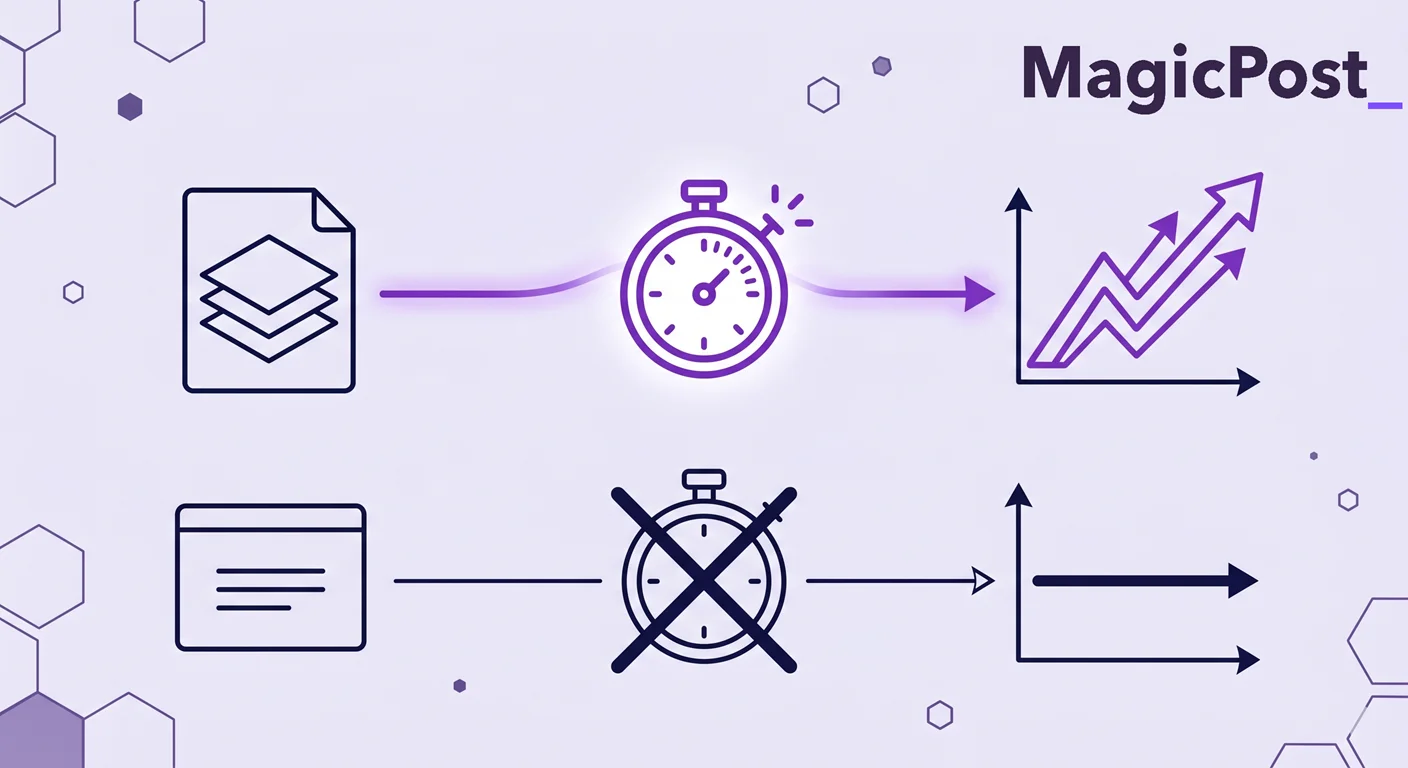
Here’s what that means in practice.
Format Performance
Format choice directly affects baseline reach before a single person engages. According to Meet Lea's 2026 content format statistics, carousel and PDF document posts generate an average engagement rate of 24.42%, compared to 4.10% for standard text posts.
A likely reason is dwell time: swiping through a carousel keeps people on the post longer.
Format | Average Engagement Rate | Why It Performs |
|---|---|---|
Carousel/PDF document | 24.42% | Forces interaction (swiping); signals high dwell time to the algorithm |
Image post | 6.05% | Stops the scroll; works best with a strong visual paired with a specific insight |
Polls | 4.40% | Sparks discussion and generates comment threads; best used with thought-provoking options |
Text post (1,300 to 1,600 chars) | 4.10% | Triggers the “See More” cutoff at ~140 chars, which counts as an interaction |
Text post (under 300 chars) | Low | No cutoff, no interaction signal; algorithm treats it as low-effort |
Post with a link | Lower reach | Wherever the link sits. Since mid-May 2026, against the author’s posts without links: a typed URL 21% below, a link card 19%, a “link in the comments” line 16% |
Character Count
For standard text posts, the optimal length is between 1,300 and 1,600 characters. Research on nearly five million LinkedIn posts identifies 224 to 227 words as a specific sweet spot, producing a 5.8 times higher probability of strong engagement.
The reason is that at roughly 140 characters, LinkedIn truncates the post with “See More.” Getting a reader to click that is itself an engagement signal. A post that’s too short never triggers the cutoff. A post that’s too long loses readers before they get to the point.
Knowledge-Rich Content
The signals that set genuine expertise apart from recycled content include:
First-person markers tied to specific experiences, not generic observations.
Industry-specific language and terminology that signals domain knowledge.
Specific numbers, timeframes, or outcomes from real situations.
Perspectives that challenge or add nuance to widely held views in the sector.
Engagement in the comments that reflects genuine back-and-forth, not just reactions.
Sounding like AI is a smaller cost than a post with no substance. In our study of LinkedIn algorithm changes in 2026, posts that read like AI got about 9% fewer impressions before July 27, at equal substance, with no extra cost detected since. Posts with no concrete detail and no lived experience went from 13% to 23% below their author’s average post since July 27.
Engagement pods buy a faster start and little else. In the same study, early comments from a pod gave a post 31% more views at one hour, and it finished no higher than the author’s comparable posts. LinkedIn’s Professional Community Policies also ask members not to agree ahead of time to like or reshare each other’s content.
How to Build a LinkedIn Thought Leadership Strategy That Works
The executives who build the most authority on LinkedIn know who they’re talking to, what specific territory they own, and what they’re trying to achieve commercially.

1. Define Your Territory
Broad niches produce generic content.
“Marketing” is a niche.
“Retention marketing for B2B SaaS companies under $10M ARR” is a territory.
The second version produces a natural content brief because every post comes from direct experience in that specific space.
To find yours, ask yourself the following questions:
What do you know that takes years to learn?
What mistake do you see smart people making repeatedly in your sector?
Those answers are your thought leadership, and they are things a generic AI prompt can’t replicate.
2. Connect the Content to Business Outcomes
Thought leadership that doesn’t connect to pipeline is a hobby.
The Edelman-LinkedIn data shows that 95% of hidden buyers never speak to sales but are more receptive to outreach from names they recognize.
The signal your content is working isn’t impressions; it’s profile visits from the right job titles, connection requests from target accounts, and messages that begin with “I’ve been following your posts.”
3. Use a Content Mix That Works
Effective LinkedIn thought leadership isn’t one format repeated forever. A mix of content types covers different objectives:
Content Type | Purpose | Cadence |
|---|---|---|
Point-of-view post (text, 200-250 words) | Stakes your position on a specific industry question; drives comments and profile visits | 2 to 3 times per week |
Carousel or document post | Teaches a specific framework, process, or breakdown in depth; drives saves and shares | Once per week |
Behind-the-scenes or experience post | Builds trust and authenticity; shows the person behind the expertise | Once per week |
Engagement with others' content | Increases visibility in relevant conversations; builds relationships with peers and prospects | Daily, 10 to 15 minutes |
What Should You Post About as a LinkedIn Thought Leader?
Here’s a useful question: “What do I know that my target audience needs to hear and can’t easily find elsewhere?”
Starting from here produces content that’s specific by design because it’s anchored in your actual experience rather than in a content calendar.
Content Angles That Perform
The following angles consistently perform well on LinkedIn:
A counterintuitive lesson: Something you believed early in your career that you now know was wrong, explained with specifics. These posts generate comments because they invite disagreement and reflection.
A pattern you keep seeing: A mistake or gap you observe repeatedly in your sector. “I have reviewed 50 sales decks this year, and they all make the same error” is specific, credible, and immediately useful.
A process breakdown: A step-by-step explanation of how you approach a specific problem. Carousels work particularly well here because they reward the reader for engaging with multiple slides.
A data point with a take: One relevant statistic paired with your specific interpretation of what it means for your audience. Not just sharing the stat, but telling them what to do with it.
The honest failure: What went wrong in a real situation, why, and what you’d do differently. These posts build more trust than success stories because they’re rarer and harder to fake.
LinkedIn Thought Leadership Mistakes to Avoid
The content that consistently underperforms shares a common characteristic: it could’ve been written by someone who has never done the work.
Posts that list generic advice without context, celebrate milestones without insight, or open with “I am so grateful” before making a vague point about hustle and growth are algorithmically and psychologically weak.
They produce engagement from people being polite, not from people who found the content genuinely useful.
✅ Pro Tip: One reliable test before publishing is to ask whether someone could’ve written this post without the specific experience you have. If the answer is yes, the post is too generic. Add one specific detail, data point, or counterintuitive insight that only comes from having done the work, and the post becomes harder to replicate and more worth reading.
How to Stay Consistent With LinkedIn Thought Leadership?
If you’re an executive with a full-time role, the consistency problem is real. Writing a post from scratch every morning isn’t sustainable alongside a job, and inconsistency is worse than not posting at all algorithmically and audience-wise.
The solution is a production system, not more willpower. The executives who post consistently without burnout have figured out the same things:
They capture ideas in real time. A note on the phone during a client call, an observation from a meeting, or a reaction to something they read. The raw material is always there; the problem is that it evaporates if not captured immediately.
They batch, not trickle. One 30-minute session at the start of the week produces three to four drafts. Publishing them across the week gives the impression of daily presence without daily effort.
They use AI for the draft, not the idea. The insight, the angle, and the specific experience are theirs. An AI post generator helps structure and format it quickly. The result sounds like them because the substance is theirs.
They schedule in advance. Publishing manually at peak time every day is unrealistic. Scheduling tools that publish through LinkedIn's official API handle timing automatically without introducing reach suppression risk.
The tools that work best learn your voice from your past posts rather than producing generic output you have to rewrite. The writing section of our best LinkedIn tools comparison covers tools that draft from your own published posts.
MagicPost connects to your LinkedIn profile, imports your writing style, generates drafts in your tone, auto-publishes using LinkedIn’s official API, and tracks your content’s performance. The drafting step goes from 30 minutes to 5.
Final Thoughts
You don’t need to be the most prolific executive on LinkedIn to build authority; you just need to be specific.
In 2026, posts built on real detail and lived experience hold their reach better than generic ones, which is good news for people with genuine expertise.
Know your territory, post from real experience, and create a system that makes consistency achievable without it being the first thing that gets cut when the week gets busy.
Want to build your LinkedIn presence without spending an hour a day on it? Try MagicPost for free; no credit card is required.
FAQ
What is LinkedIn thought leadership?
LinkedIn thought leadership is the practice of sharing original perspectives and genuine expertise on the platform consistently enough that your target audience comes to recognize you as a credible authority in a specific area.
It’s distinct from personal branding (which is broader) and from company content marketing (which is brand-facing). The commercial outcome is that buyers know your name before your sales team reaches out.
For more on building a LinkedIn strategy, see our guide to LinkedIn content strategy.
How often should you post for LinkedIn thought leadership?
Three to four times per week is the practical target for most executives. The research on optimal LinkedIn posting frequency consistently shows that consistency matters more than volume.
One post per day that maintains quality and specificity outperforms daily posting that drifts into generic territory by month two. The goal is a sustainable cadence, not a maximum one.
What types of LinkedIn posts build the most authority?
The posts that build authority most reliably are the ones that could only have been written by someone with your specific experience: counterintuitive lessons from real situations, specific patterns you observe in your sector, honest breakdowns of what went wrong and why, and frameworks you have developed from doing the actual work.
See our guide to how to write a LinkedIn post and the best LinkedIn post types for format-specific guidance.
Does the LinkedIn algorithm favor thought leadership content?
The data points that way. In MagicPost's 2026 data, posts with no concrete detail and no lived experience sit 23% below their author's average post since July 27, down from 13% below. At equal substance, sounding like AI cost about 9% before July 27, with no extra cost detected since.
Engagement pods only speed up the start: early pod comments brought 31% more views at one hour and no higher final reach.
Format matters too: carousel and document posts average 24.42% engagement compared to 4.10% for standard text, partly because of dwell time but also because the format incentivizes genuine content depth.
Should you hire a ghostwriter or agency for LinkedIn thought leadership?
For most founders and executives, a ghostwriter or agency introduces more risk than it solves. The primary failure mode is voice dilution: agencies managing multiple accounts simultaneously tend to homogenize tone and miss the specific industry nuance that makes thought leadership credible.
The LinkedIn content agency guide covers when an agency genuinely makes sense versus when a dedicated platform is the more cost-effective and authentic solution.
For most people posting organic thought leadership rather than running complex paid campaigns, a voice-matched AI tool covers the use case at a fraction of the cost and with full control over the output.